Stablecoins power some of the most important features you use on Novacrust, such as USD Accounts, Virtual Cards, international payouts, and seamless conversions. Today, we’re excited to take that even further.
We’re officially rolling out full support for USDC and USDT, giving you a faster, more stable, and more flexible way to fund and use your Novacrust account. Whether you’re making routine transactions or managing high-value payments, stablecoins make the entire process smoother and more reliable.
What You Can Now Do
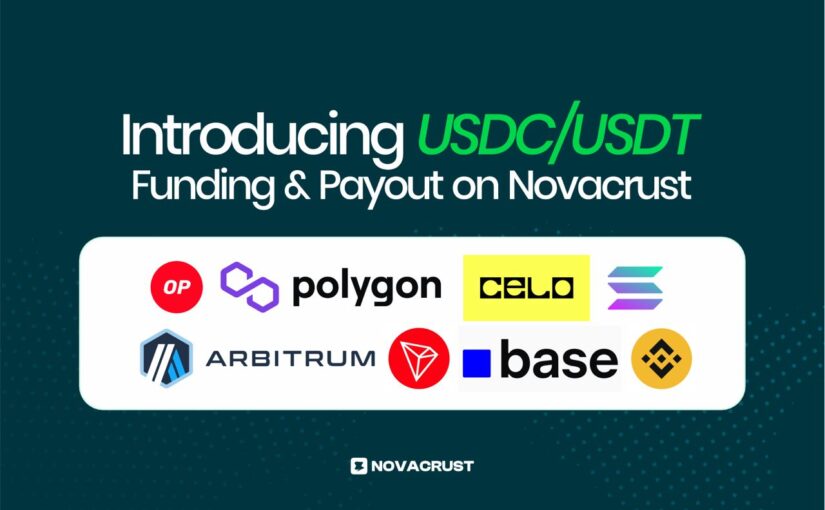
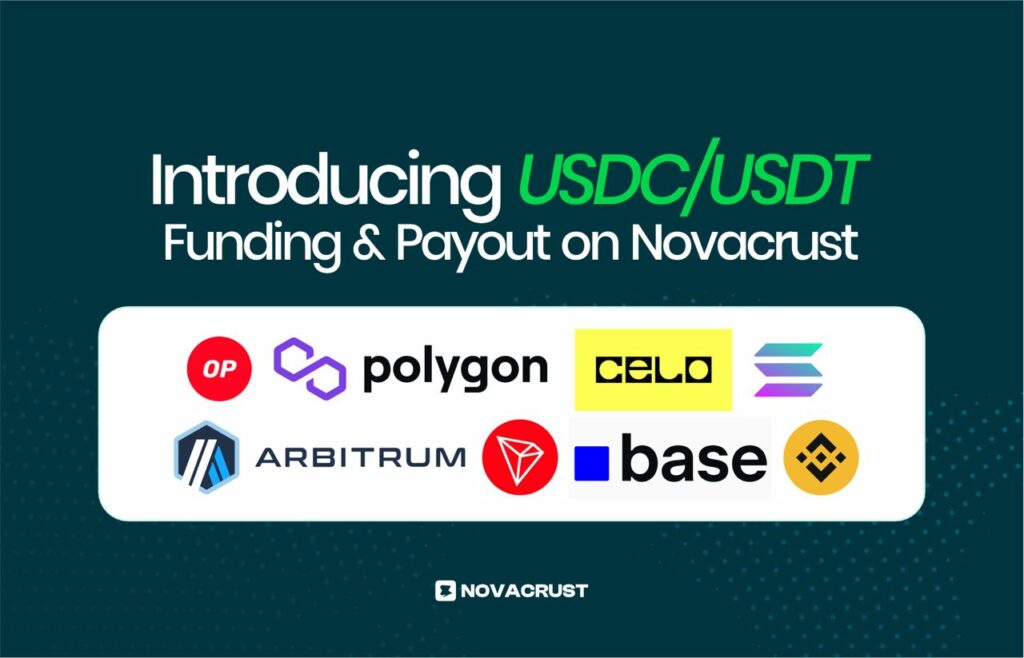
Fund your USD Account with USDC/USDT: Instantly top up using stablecoins across multiple chains, including Solana, Celo, Optimism, Polygon, BNB Smart Chain, Tron, and more.
Payout in Stablecoins: Withdraw or receive payments in USDC or USDT with speed and predictability.
Save in Stablecoins: Hold value in USD-denominated assets without worrying about local currency fluctuations.
Convert to Cash & Send to Local Accounts: Easily convert stablecoins to local currency and send to bank accounts or mobile money in supported countries.
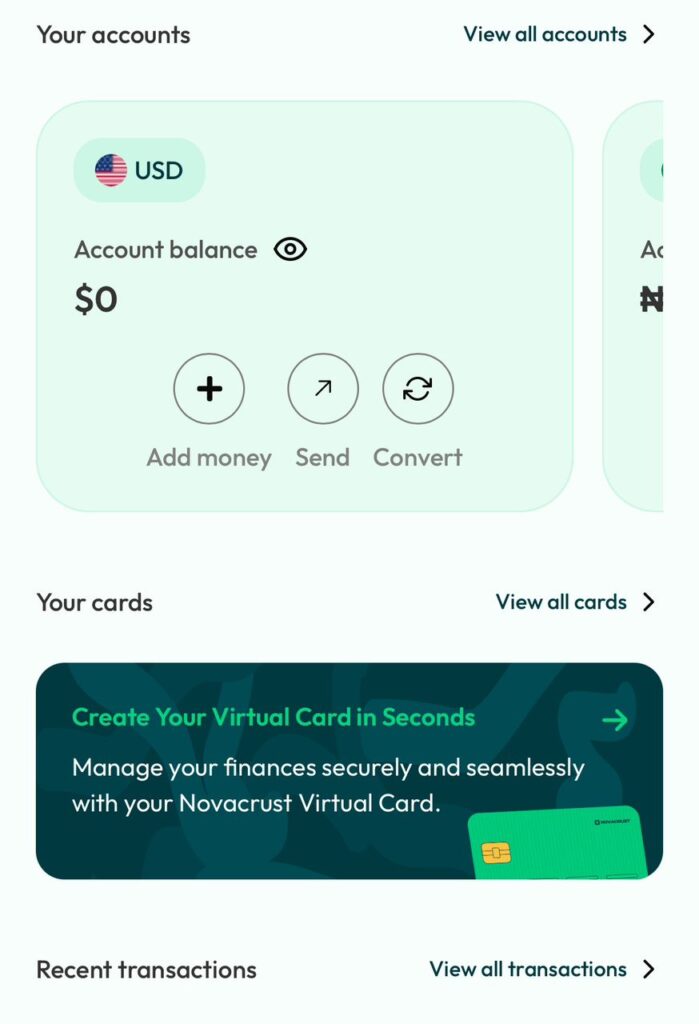
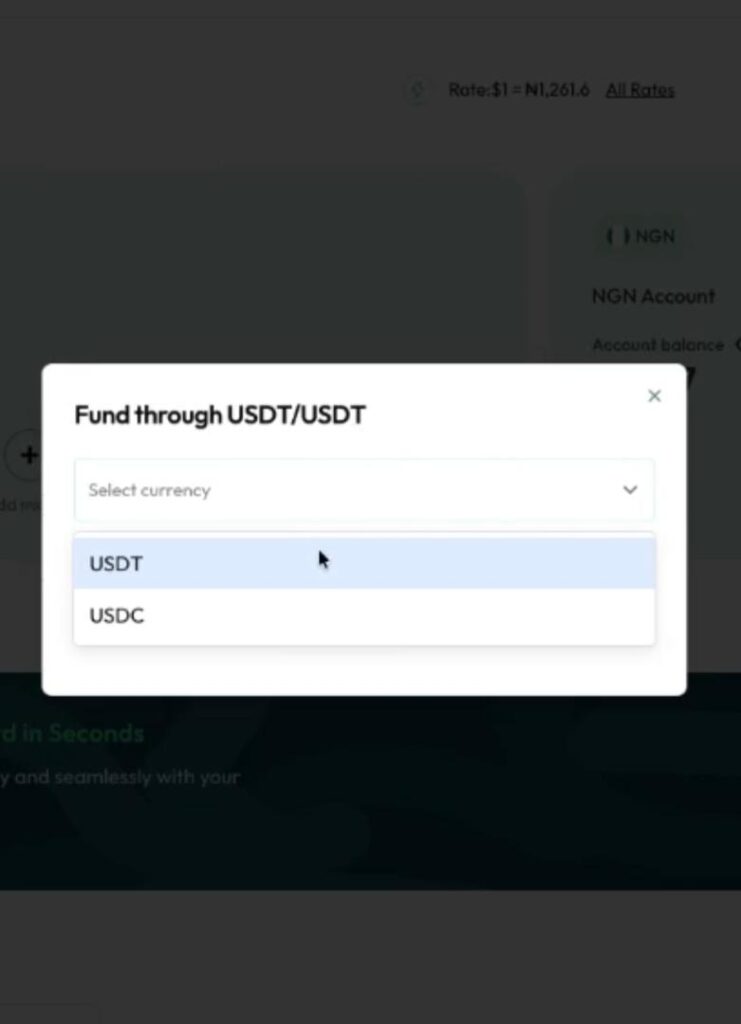
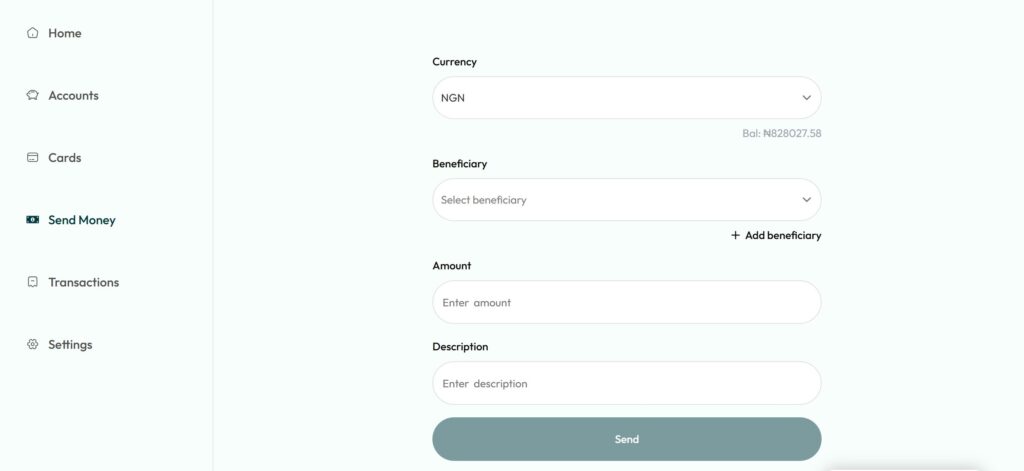
To help you get started, here’s a quick guide on how to access and use USDC and USDT on Novacrust:
At Novacrust, we’re building a borderless payment experience for freelancers, remote workers, and businesses by making it easy to receive and move money across different channels.
A few months ago, we launched USD Accounts in your name, allowing you to receive ACH and Wire transfers seamlessly, convert your funds to local currencies, and even send money to others directly from your dashboard.
Since then, many of you, especially freelancers and remote teams, have asked if we could make receiving payments even more flexible with options like Zelle, Cash App, PayPal, Revolut, and payment links.
We listened.
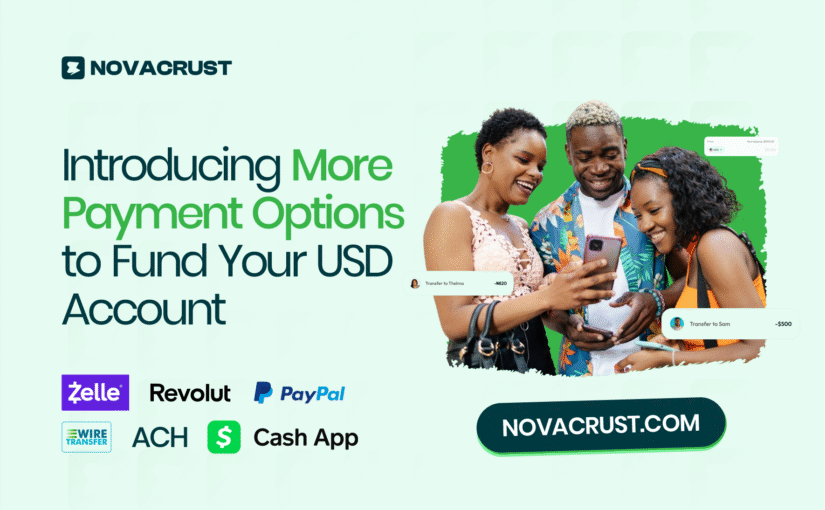
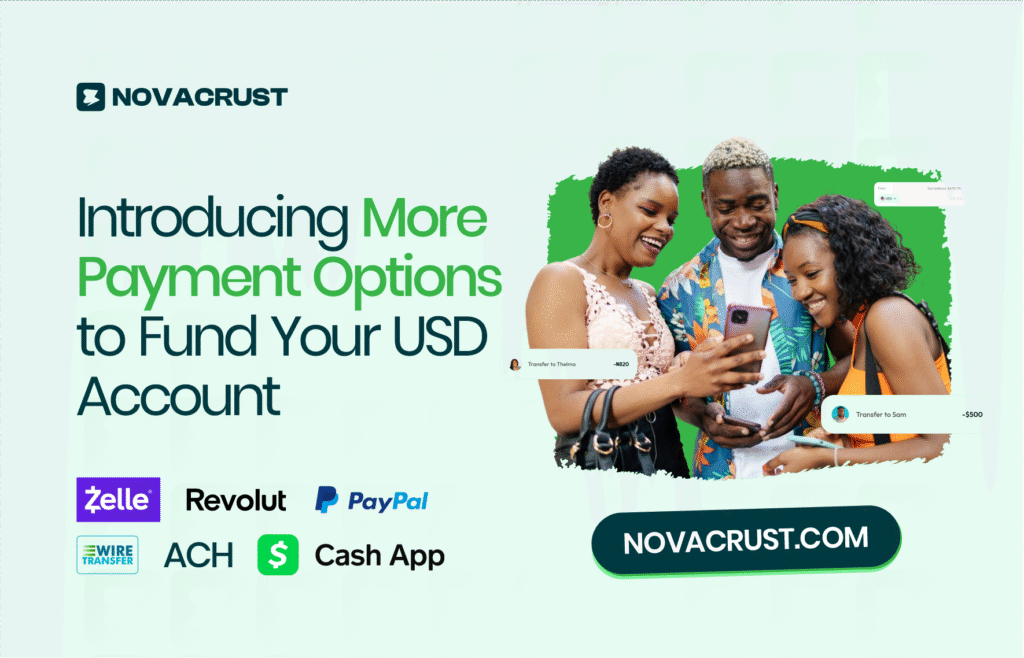
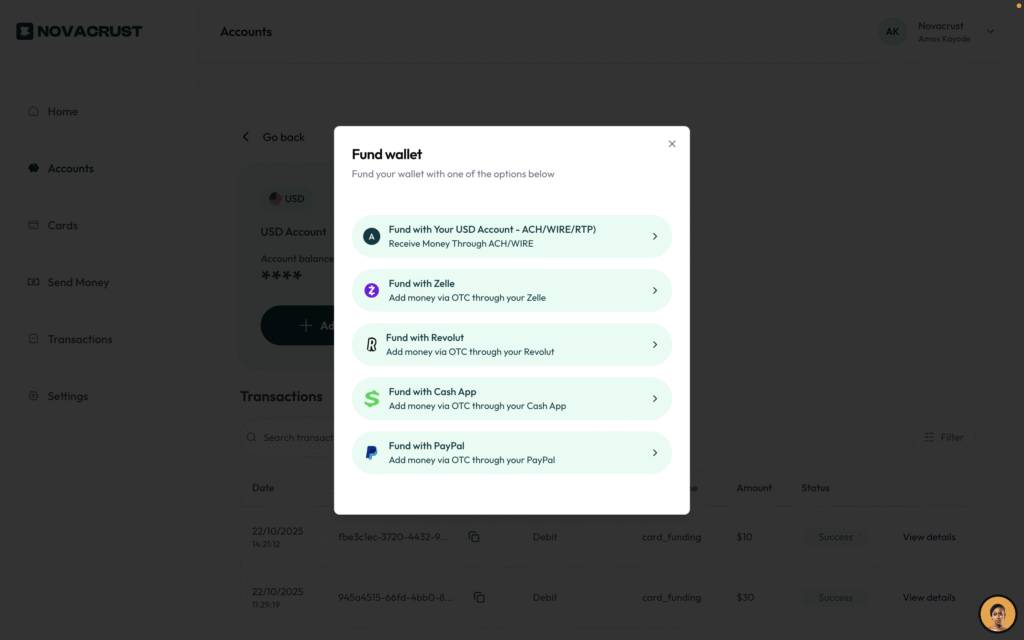
Now, with Novacrust, you can receive payments through Zelle, Cash App, PayPal, and Revolut – all credited straight to your USD account on Novacrust.
You can be the most talented developer in your country. You can win innovation awards. You can land international clients. And still lose opportunities not because you’re not good enough, but because they simply can’t pay you.
Kali Kimanzi knows this reality too well. As someone who’s navigated the gap between African innovation and European optimization, who’s registered businesses on two continents, and who’s watched transaction fees eat into hard-earned payments, he’s learned that talent without access is just potential waiting to be unlocked.
In this conversation, Kali shares what nobody posts on LinkedIn: the rejections, the waiting, the payment nightmares, and the unglamorous truth about building a global career from Africa.
Can you briefly introduce yourself and tell us what you do?
My name is Kali Kimanzi. I’m the CTO and Co-founder of CodeX Safari, and I also serve as the CEO.
At CodeX Safari, we build technical solutions both hardware and software for businesses, governments, and NGOs. We also develop internal products that help businesses manage their operations more efficiently.
One of our key products is Codex POS Store, which is an inventory and point-of-sale platform.
Currently, we work with clients across Kenya and internationally, including the United States, as we are incorporated both in Kenya and in Wyoming, USA.
How did your journey into the digital or creative space begin?
My journey began during my university days. My background is in Mathematics and Computer Science.
In 2019, I went to Austria to pursue my Master’s degree in Computer Science. During that time, I got my first experience working in the digital space within a larger company.
Over time, I started comparing what was happening in Europe and Africa. Europe is more focused on optimization improving existing systems while Africa is still in the innovation stage, where there are many problems to solve.
I saw bigger opportunities in Africa, especially in Nairobi. That’s what led me to start my company and eventually return in 2022 to focus on building it fully.
What first inspired you to start building your career online?
For me, it has always been about solving problems.
From high school, I was involved in innovation programs where we created solutions for societal challenges. In university, I was recognized among the top innovators in the country for a water management system I digitized using IoT devices.
That experience showed me there is a huge gap where technology can improve systems and make life more efficient.
So my inspiration has always been to build solutions that automate processes and improve how society functions.
What were some of the biggest challenges you faced when you were just starting out?
One of the biggest challenges was not just building solutions, but getting people to adopt them.
Many businesses across Africa are not yet fully digital. A large number of business owners belong to older generations Gen X and baby boomers who are not as quick to adopt new technology.
So even when we had strong solutions, it took time for them to understand the value:
How it improves their business
How it makes operations easier
Why they should trust it
Adoption has been one of the biggest challenges, because building a solution is one thing, getting people to trust and use it is another.
Did you ever face issues receiving payments from international clients? How did that impact your growth?
Yes, receiving payments was very difficult in the beginning.
There were high transaction fees, especially with platforms like PayPal. You could receive $500 and lose a significant portion to fees and conversion charges.
This affected growth because even when you had clients, accessing your money wasn’t always smooth.
What was your very first international payment experience like?
It involved a lot of waiting.
On paypal, SWIFT transfers were supposed to take about 4 to 5 days, but in reality, it could take a week and a half or even two weeks.
So most of the time, I just waited for days, hoping the payment would come through.
How did you handle the payment challenges at the time?
I adjusted and adapted.
There weren’t many options, so I learned to be patient and plan around delays.
In your opinion, how important is having a reliable dollar payment account for freelancers and digital creators?
It’s like oxygen for freelancers.
Without a reliable way to receive payments, you miss out on opportunities not because you lack skills, but because clients cannot pay you easily.
Was there a particular moment or opportunity that really changed things for you?
Yes.
At one point, I had to register a business in the United States just to be able to receive payments properly. That meant paying taxes both in Wyoming and in Kenya, which wasn’t ideal.
But it became a breakthrough moment because it allowed us to operate internationally and receive payments more reliably.
What skills or mindset helped you grow the most in your career?
Networking and continuous learning.
You can be highly skilled, but if you don’t network, opportunities won’t find you. Most of the projects I’ve worked on came through connections, conversations, and referrals.
What lessons would you share with African freelancers looking to work with global clients today?
Trust and reliability are everything.
When clients trust you and you deliver consistently and on time, they don’t just come back, they refer you.
Growth often comes from referrals, and over time, that builds into something much bigger.
How do you stay consistent and motivated even during slow or challenging periods?
I remind myself that I’m not alone.
I talk to other entrepreneurs, and I’ve realized that everyone faces challenges, even if they are different.
That helped me understand that business is about challenges, it’s how you respond to them that matters.
What is one honest truth about building a global career that nobody tells young African creators and freelancers?
There will be a lot of rejection.
You might face hundreds or even thousands of rejections, but that’s part of the process.
People only show success online, they don’t show how many times they failed before getting there.
Platforms like Novacrust are trying to make international payments easier for freelancers. What are your thoughts on solutions like this?
Solutions like this are very important because they bring inclusion.
Without access to global payment systems, you’re excluded from opportunities—not because you lack skills, but because you can’t get paid.
But when that barrier is removed, you can offer your services globally and access more opportunities.
Would you consider signing up for a platform like Novacrust? Why or why not?
Yes, I would and I already have.
Because I understand what it means to have access to a system that makes payments easier.
Being able to receive money and move it into local systems like mobile payments is very important, especially in Africa.
Kali’s journey highlights a key reality: talent alone is not enough. Access, systems, and persistence play a major role in building a global career.
From navigating payment barriers to building innovative solutions, his story shows that success comes from consistency, adaptability, and resilience.
For African freelancers and creators, the opportunity is global but unlocking it requires the right tools, mindset, and determination.
We have been listening, and we built something you are going to love.
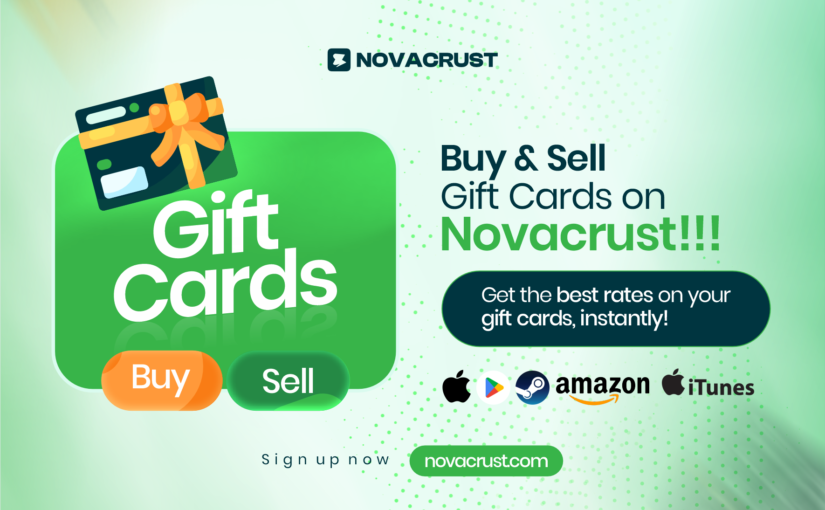
One of the most requested features on Novacrust is finally here. You can now buy and sell/convert your gift cards directly to local currency on Novacrust. No third parties. No shady rates. No stress.
The Problem We Solved
Gift cards have become one of the most common ways people across Africa receive payments from international clients, rewards from global platforms, and money from family abroad. But actually getting value from them has always been a headache. The options were limited, the rates were bad, and trust was always a risk.
Novacrust has changed all of that.
What the Gift Card Feature Does
Novacrust’s gift card feature is the one place to buy and sell/convert gift cards at competitive rates, with your local currency equivalent ready to use the moment the transaction is done.
Here is what you can do:
Buy Gift Cards — Purchase gift cards for popular brands directly on Novacrust, paid for in your local currency.
Sell Gift Cards — Trade in your gift cards and receive the equivalent value in local currency instantly in your Novacrust wallet.
Convert to Cash — Send your converted funds directly to your bank account or mobile money wallet across Africa.
Use It Across Novacrust — Hold your balance in your wallet, use it for transfers, or combine it with other Novacrust features including your USD Account, Virtual Dollar Card, and crypto conversions.
Supported brands include Amazon, iTunes, Google Play, Apple, Steam, and more.
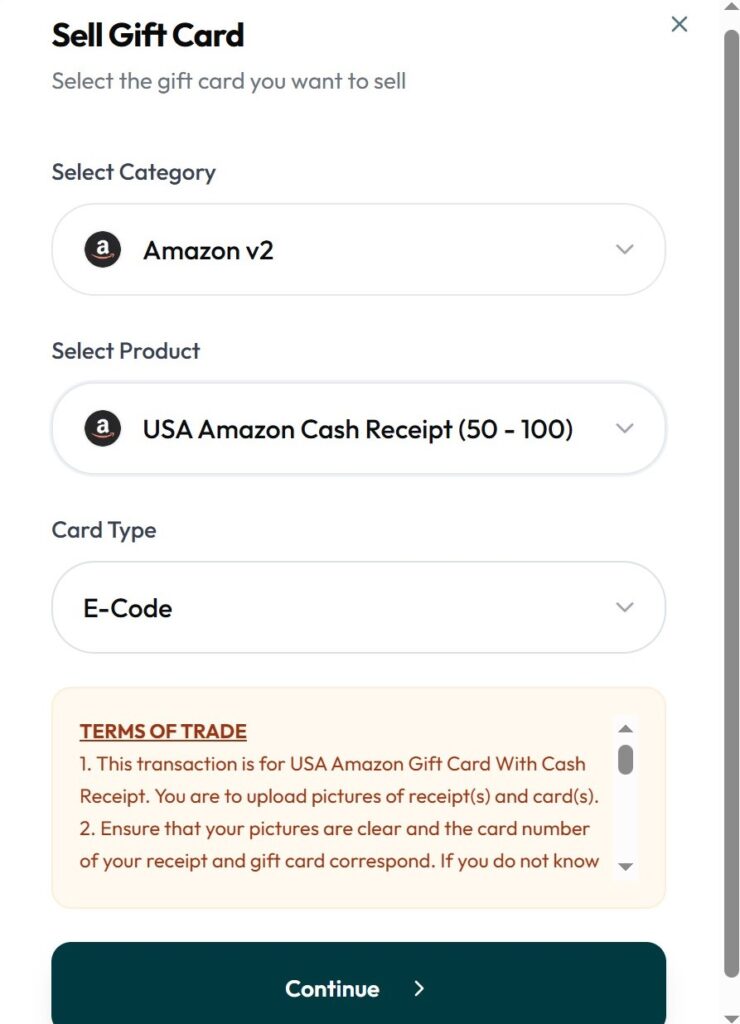
How to Convert Your Gift Card on Novacrust
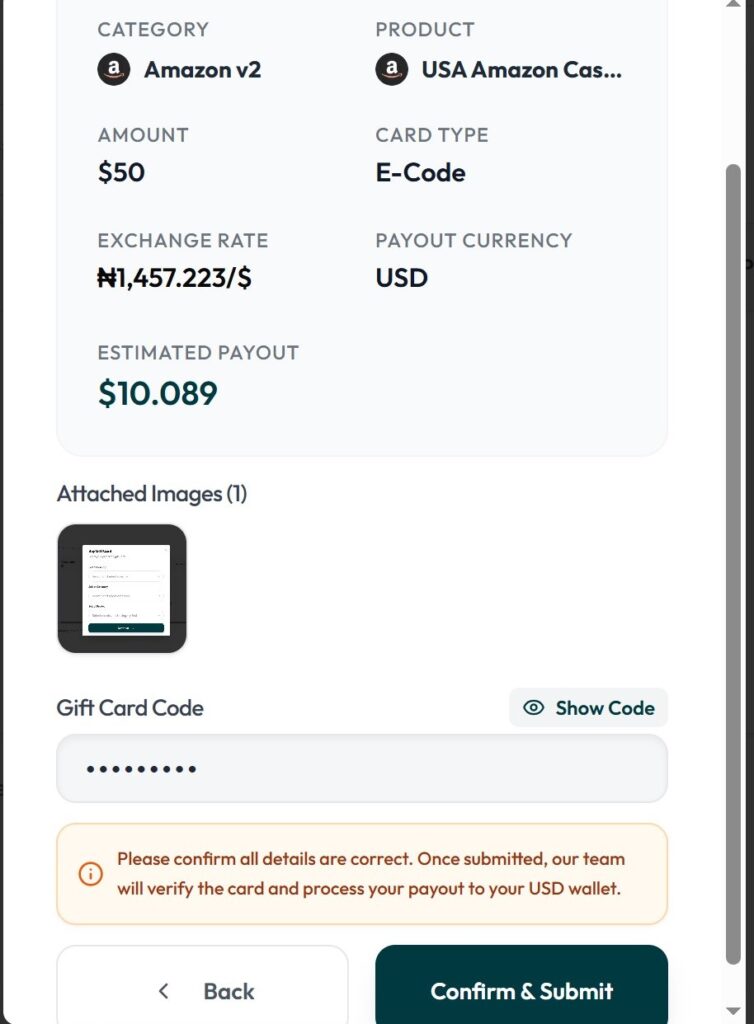
Here is a simple step process on how to buy and sell/convert Giftcards on Novacrust
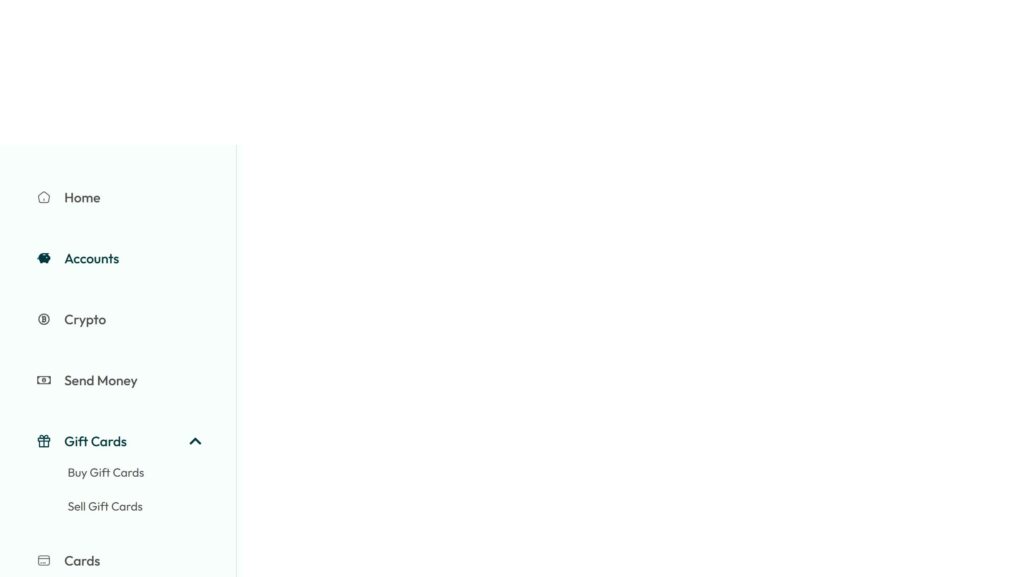
Step 2. Go to your dashboard and tap on Gift Cards
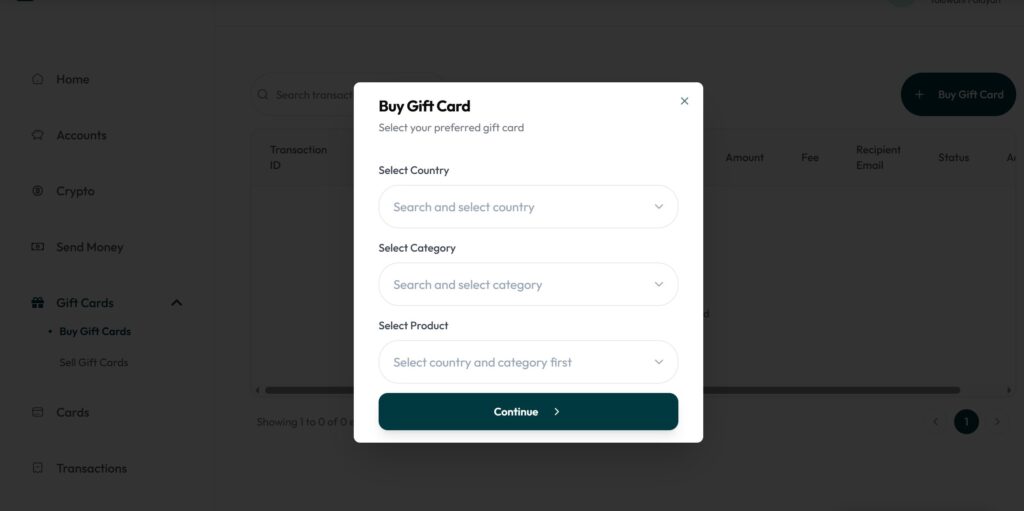
3. Click on Buy gift card and fill in your details and select continue
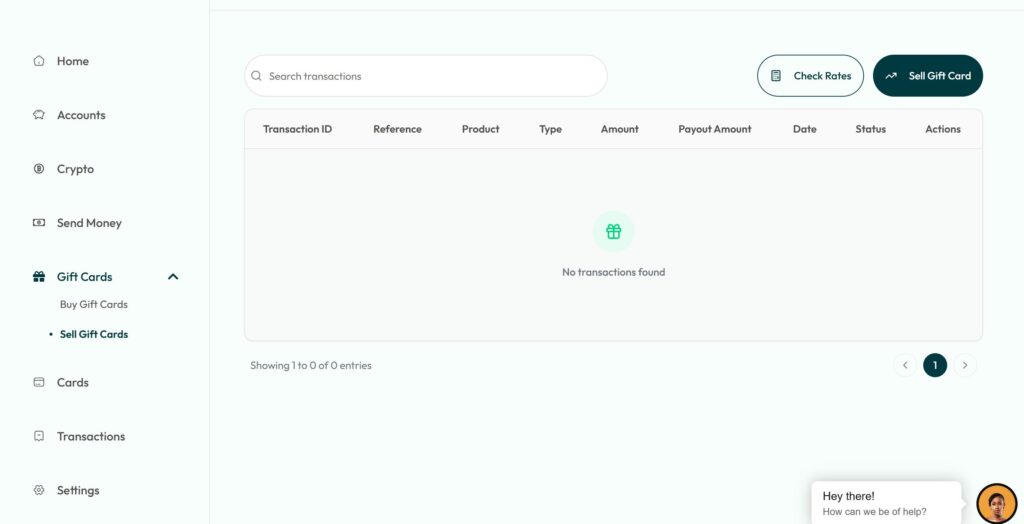
4. Select sell gift card
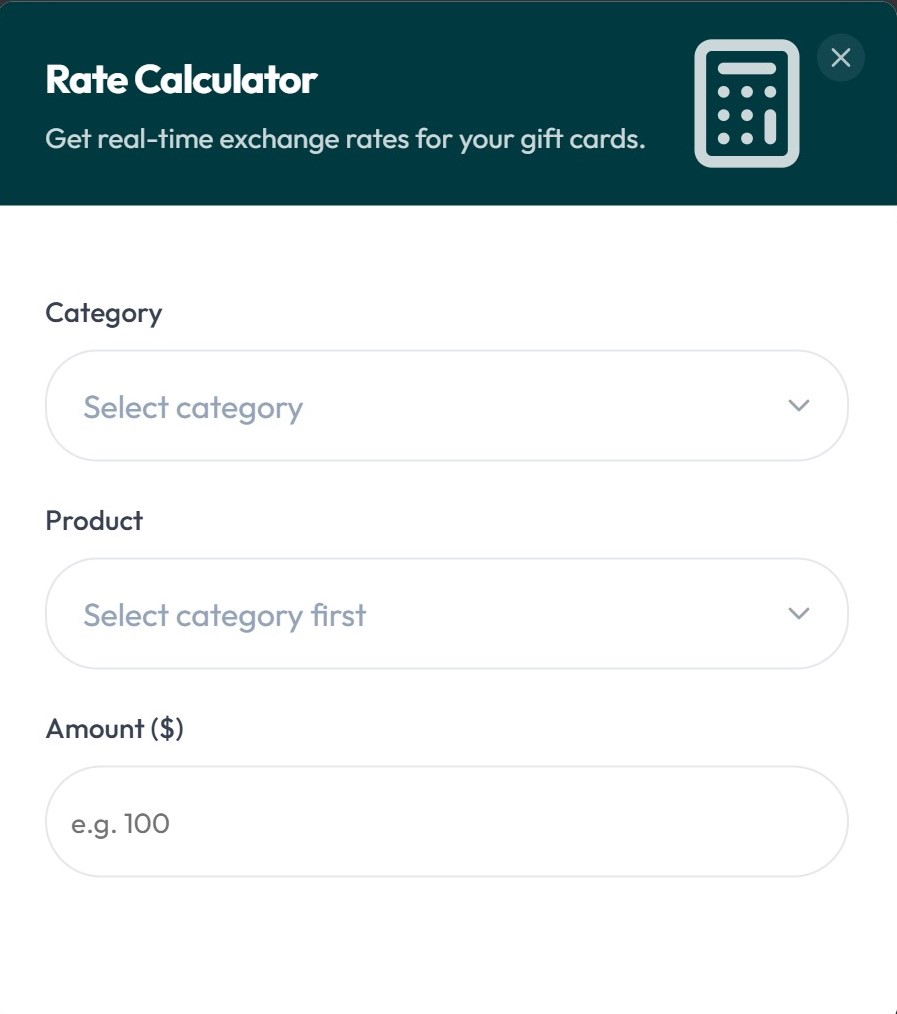
5. Check rates with our rate calculator to get real-time exchange rates for your gift card
Sell the gift card you wish to trade and select continue.
Confirm and submit
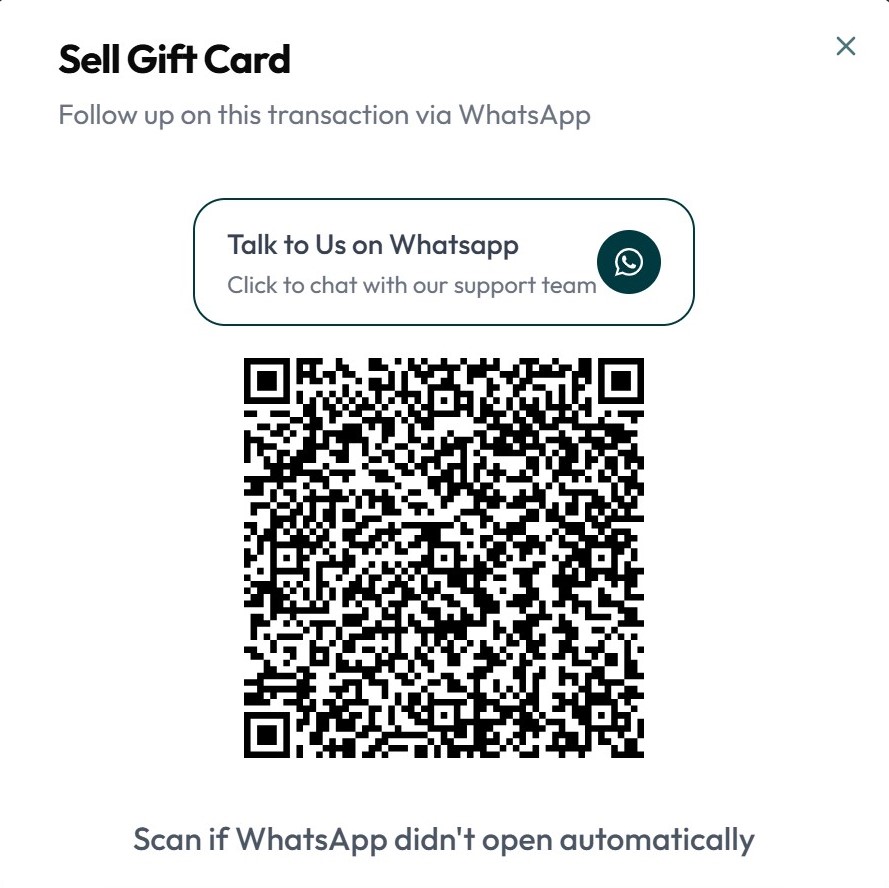
Transaction is successful and in your wallet. Send us a message if you have any inquiries about your trade.
Freelancers, creators, remote workers, anyone receiving international payments knows that gift cards are quite resourceful. Now instead of hunting for a buyer or taking a terrible rate, you have a platform that handles it cleanly, quickly, and at a rate you can trust.
Sign up at novacrust.com and trade your first gift card today.
You received $500 from a client. By the time it hits your Nigerian bank account, it feels like you lost money without spending anything.
This is why thousands of freelancers and remote workers keep searching:
best usd to naira rate app
exchange usd to naira online
wise vs payoneer rate
grey rate today
The real problem is not getting paid in dollars. The real problem is how much of those dollars you keep after conversion.
Many African freelancers now use Novacrust because it allows them to receive USD, convert at competitive rates, and withdraw to their bank without the silent losses that happen across multiple platforms.
This guide breaks down how the most popular apps handle USD to NGN conversion and what actually gives you the best value.
Why USD to Naira conversion is where freelancers lose money
Most freelancers focus on receiving USD from clients. Very few pay attention to what happens during conversion.
Losses usually happen through:
Hidden exchange rate margins
Multiple conversion steps
Transfer and withdrawal fees
Delays that force you to convert at bad rates
This is why people keep comparing wise vs payoneer rate and checking grey rate today before converting.
How conversion typically works with popular platforms
You finished the job. The client paid. Now your money is sitting in USD online and getting it into naira, cedis, or shillings without losing a painful chunk to fees feels harder than the work you did.
This is why many African freelancers now use Novacrust to receive USD payments from Upwork, Fiverr, and remote clients, convert at better rates, and withdraw directly to their local bank or mobile money without stress.
From unpaid gigs to managing international clients, Cynthia shares the lessons, struggles, and solutions that helped her build a global freelance career
Can you briefly introduce yourself and tell us what you do?
I am Cynthia Ozumba, an Executive Operations Assistant and an Online Business Manager (OBM). I help brands with systems, automation, and coaching.
I work with clients across different parts of the world, offering services like administrative support, virtual assistance, and system optimization.
I started with writing and social media management, but over time, I transitioned into operations and executive support, which is my current focus.
How did your journey into the digital or creative space begin?
My journey began with writing for coaches creating copy for seminars, courses, and marketing campaigns. I realized I could help clients manage their online presence while building my own skills.
From there, I transitioned into social media management and virtual assistance. I noticed I could scale my services and offer more value to clients. Over time, this led me to become an Executive Operations Assistant, managing multiple international clients with diverse needs.
What first inspired you to start building your career online?
I realized that even posting once a week on LinkedIn or Facebook could resonate with people. I would get questions, DMs, and requests for advice.
I thought: Why hide my journey when I can actually build a brand around my experience and knowledge?
So I started sharing my insights, my career path, and what I was learning. My goal was to create a space where people could gain knowledge and experience to succeed in their own online careers.
What were some of the biggest challenges you faced when you were just starting out?
Starting out came with many challenges:
Confidence: I struggled to present myself well in interviews, especially with international clients. Sometimes my speech would falter, or I would feel unsure of myself.
Positioning: Being Nigerian presented its own hurdles. Many clients and platforms had doubts about hiring talent from Africa, so I had to prove my skills and professionalism.
Payment issues: In the early stages of my journey, there were limited options for receiving international payments. I had to manually arrange payments through platforms like Payoneer or bank transfers, which wasn’t always smooth.
Despite these challenges, I stayed consistent, learned quickly, and kept improving.
Was there a particular moment or opportunity that really changed things for you?
Yes. One breakthrough came when a client reached out after seeing my comments on LinkedIn. She needed temporary help because she was about to have her first baby. I took a three-week assignment, and that became my first real international paid experience.
Before this, I had done volunteer work or small local gigs. That opportunity gave me credibility, confidence, and a portfolio that opened doors to other international clients.
Many young Africans want to work online today. From your experience, what do you think is the biggest mistake beginners make?
The biggest mistake beginners make isn’t always a lack of skill it’s:
Poor positioning: They know the work but can’t package themselves for clients.
Seeking quick money: Many expect high pay without putting in consistent effort.
Underestimating perception barriers: Being from Africa, clients may question reliability or skill.
Beginners often focus on the wrong things instead of building their brand, skillset, and visibility.
Have you ever had moments where things were slow or discouraging? How did you push through them?
Absolutely. There were months when I applied for multiple jobs without getting any offers. At times, I faced rejections or limited opportunities.
I pushed through by keeping a mindset of persistence: treating every “no” as data, not failure. I reminded myself of my skills and value, kept learning, and diversified the platforms I applied onUpwork, LinkedIn, Contra, GetMagic, etc.
Have you worked with international clients or global teams before?
Yes, I have worked with clients across different countries including the UK, USA, Germany, Australia, and Canada.
What has that experience been like for you?
Working internationally gave me exposure I couldn’t have gained locally. I’ve learned how to manage people, work across different time zones, and adapt to different communication styles. It has helped me grow professionally and understand how global businesses operate.
One challenge many freelancers face is getting paid by international clients. Have you ever experienced any issues receiving payments from outside your country?
Yes. Early on, payment issues were a major challenge. Platforms were limited, and clients often had difficulty sending money.
How did you handle those payment challenges at the time?
I arranged alternative payment methods manually Payoneer, bank transfers, and later, platforms that simplified receiving USD or crypto payments. I learned to communicate clearly with clients and provide multiple payment options.
In your opinion, how important is it for freelancers and digital creators to have access to a reliable dollar payment account?
It’s crucial. Reliable dollar accounts allow freelancers to receive payments quickly, manage earnings, and work confidently with global clients without worrying about lost or delayed payments.
Do you think payment limitations affect how African freelancers work with global clients?
Absolutely. Payment restrictions limit opportunities, reduce trust, and can discourage talented freelancers from pursuing global work. Having access to platforms that make payments seamless is a game-changer.
Platforms like Novacrust are trying to make international payments easier for freelancers and digital service providers. What are your thoughts on solutions like this?
I think platforms like Novacrust are excellent initiatives. Linking accounts from Upwork, Fiverr, and other platforms allows freelancers to receive international payments easily, even in Nigeria. This reduces barriers, improves trust, and empowers African freelancers to compete globally.
If someone wants to start working with international clients today, what are a few things they should prepare for?
Get a high-income skill: Focus on skills clients need, not what friends suggest.
Optimize your profile: LinkedIn, portfolio, and resume should be professional.
Build a strong portfolio: Clients decide based on what they see, not personal meetings.
Give it time: Treat “no” as data, not failure.
Diversify platforms: Don’t put all eggs in one basket—Upwork, LinkedIn, Contra, GetMagic, etc.
Set boundaries: Protect your time, respect yourself, and gain hands-on experience.
What keeps you grounded when the journey becomes difficult?
My “why.”
I constantly remind myself of the reason I started, the goals I have, and the kind of life I want to build. That purpose keeps me going even when things get difficult.
If you could go back and advise your younger self at the beginning of your career, what would you say?
Don’t be afraid to ask for help.
Don’t be ashamed of charging your worth.
Build confidence and put yourself out there, even for small opportunities.
Finally, what one honest truth would you share with young creators and freelancers in Africa who want to build a global career?
Imagine being awake while your own country is asleep. Opportunities abroad require consistent effort, patience, and resilience. Focus on building skills, positioning yourself well, and creating value. Success doesn’t come overnight, but if you stay persistent and confident, you can compete on a global level.
Cynthia’s journey proves that resilience, skill-building, and strategic action are the keys to success. Start small, optimize your profile, diversify your client base, and never underestimate the power of persistence. Working with international clients is not just a dream it’s achievable for African freelancers with the right approach.
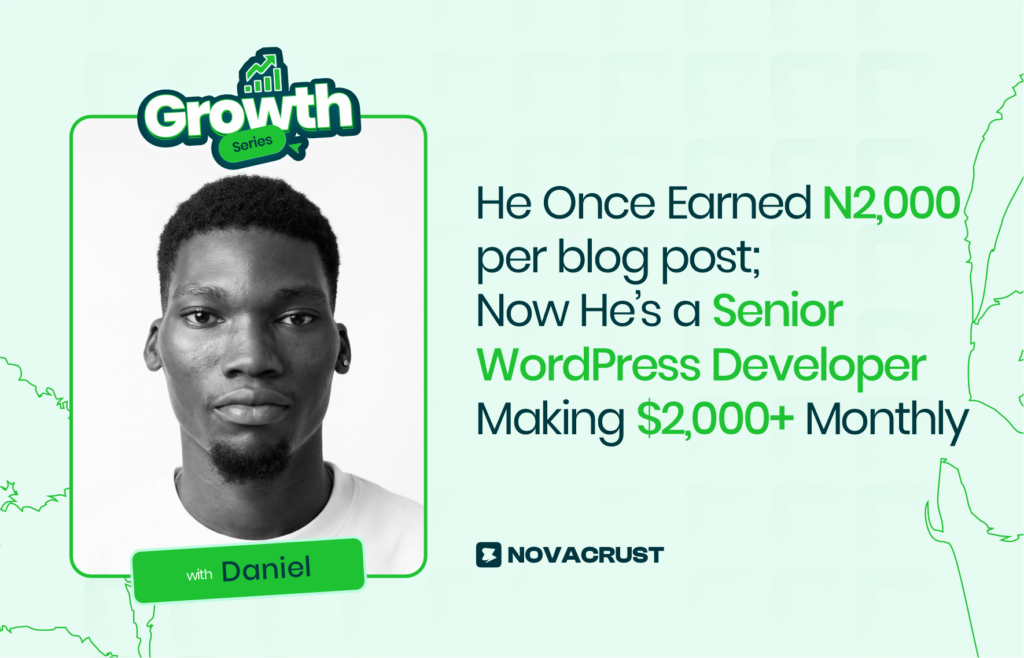
Ayoola Daniel has lived the journey many young Africans dream of today. In this interview, he shares his story of the early struggles, hard lessons about freelancing, and how he’s building systems to help others succeed in web development and SEO.
Let’s dive in. Daniel, can you tell us about yourself? Who is Ayoola Daniel?
My name is Daniel Ayoola. I’m a WordPress developer and an SEO specialist. I build websites that don’t just exist, they convert visitors into leads and get visibility on search engines. SEO has always been a huge part of my work, and before I went full-time into WordPress development, I already had a strong background in it. Everything I do now revolves around building WordPress websites that perform well in search.
You’ve had quite the journey in tech. What was your first tech-related job?
I started with content writing for blogs. Back then, we were writing blog posts of 1,000 to 1,500 words, and each blog post paid about ₦2,000. There was no AI, it was pure creative writing. Some of those contents are still live today.
My first WordPress job was building a blog website for someone for ₦20,000. That first project gave me hope that I could earn more and showed me that this path was possible. I’ve never looked back since.
Did you always know you wanted to be a web developer?
Not really. If you had asked me back then, I wouldn’t have known. I just feel happy with how things turned out.
You help founders launch fast, SEO-ready WordPress sites. How did you develop your expertise in WordPress and SEO?
I’ve been using WordPress since around 2015, already a decade now. I started by writing for music blogs and even ran my own site,admissionlist.com.ng, which got around 50,000 search visits per month and was monetized with Google AdSense. When JAMB CAPS came along, admission list sites became less useful, and traffic dropped. That experience discouraged me at the time, but it was part of my learning journey.
When I helped PaidHR move their website from Webflow to WordPress, I saw firsthand how much easier it became to scale content and boost search performance. That’s when I truly understood the potential of WordPress for building and growing web projects
Was there a turning point where you shifted from client work to building for yourself and educating others?
Yes. There came a point where I wanted to not just serve clients but also create systems that could help others learn. That mindset shift was crucial.
What major challenges have you faced in this journey?
One challenge freelancers face is past clients expecting old pricing even when you’ve improved your skills. Some clients don’t understand growth; they just compare what you charge now to what you did before. It can be frustrating, but it’s part of the process.
Have you ever felt like quitting? How did you push through?
Yes. There was a time I almost gave up on freelancing, payment issues, refund problems, pricing challenges. But I kept showing up because no one else would do it for me. You have to push yourself; nobody is going to save you.
What hard truths about freelancing did you learn the hard way?
Skills alone aren’t enough. You must market yourself and be visible. The algorithm favors those who put themselves out there. Even if you’re not perfect at first, showing up consistently helps you improve and attract opportunities.
You emphasize systems and SEO. What mindset should web creators have?
If you’re building a website, you’re building a presence, not just a website. It’s about delivering value and solving problems, not just having a page online.
How do you stay productive when projects or clients challenge you?
Clarity is key. I ask questions, understand the client’s needs, and provide proper recommendations. Clients hire me because I’m an expert. That trust helps guide every project.
Have you mentored others?
Yes. I run WPforStarters, a free WordPress education platform. Over 50,000+ people have accessed the WordPress roadmap I created. I run bootcamps and had the opportunity to speak at WordCamp this year, a global WordPress event. Many of my past students are doing well now, and that makes me proud.
Has giving back through teaching helped your career?
Absolutely. Helping the community gives me visibility. People tag me when they have WordPress problems, and my tutorials reach thousands. Community engagement keeps me relevant and opens up opportunities.
If someone wants to start in WordPress, web development, or SEO today, what should they do?
Follow a structured learning approach. Watch tutorials, practice consistently, and use resources like wpforstarters.com, it’s free. Structured learning is key.
How do you handle payments with international clients?
Through Stripe. When we started ManageMySite, a registered company in the USA, the incorporation made accepting payments from anywhere easy and secure.
What are you earning now compared to when you started?
I started with ₦2,000 per article. Now, I’m earning around $2,000 per month on average. It’s proof that consistency and strategy pay off.
What would influence your decision to take an international opportunity?
The opportunity must align with growth, impact, and long-term value.
What advice would you give your younger self?
Focus on getting better, follow structured learning, and be patient. Rejection and doubt are part of the journey, don’t let them stop you.
How do you define success?
Success is growth seeing how far I’ve come personally and professionally.
If you weren’t doing tech, what career would you have chosen?
I’m also a “celebrity shoe cleaner.” I refurbish, customize, and clean sneakers. I run a laundry startup, LaundryBoy, which services parts of Lagos through a subscription model. These are side hustles I enjoy.
What keeps you grounded?
My friends. They hold me accountable, push me to be better, and celebrate wins together.
One honest truth for young African web creators?
It’s not easy. Freelancing has no stability. Save your money and stay consistent. Only you can save yourself in times of need.
Daniel’s story is a reminder that perseverance, strategy, and community can transform a freelance career. From writing ₦2,000 articles to running businesses and educating thousands, his journey shows that with consistency and structured learning, the impossible becomes possible.
Imagine being able to earn in dollars while working from home in Lagos, Accra, or just about anywhere in Africa. Sounds amazing, right? The reality for many African freelancers, however, is often frustrating. Getting paid by international clients can be slow, expensive, and complicated. High fees, long processing times, and banking restrictions make accessing your hard-earned money stressful.
It doesn’t always have to be this way. African freelancers can receive payments quickly, securely, and with minimal fees if they use the right platforms. Here are the top solutions:
Novacrust is a versatile platform designed not only for freelancers but also for businesses, crypto users, and anyone who needs a virtual dollar card for international transactions. With Novacrust, you can:
Create a USD account in minutes to receive payments directly from clients and platforms
Fund your account through USDT or USDC and convert instantly to Naira
Use a virtual USD card to pay for subscriptions, online services, or gift cards
Access priority customer support and exclusive perks if you transact regularly
Enjoy fast, low-cost conversions and first access to new features
Novacrust gives you complete control over your international earnings and spending, helping you avoid delays, high fees, and complicated processes.
Chipper Cash is a popular cross-border payments platform in Africa. Freelancers and small businesses can receive payments from international clients and withdraw directly to local banks or mobile wallets. It is known for fast transfers, low fees, and ease of use, making it a convenient choice for many professionals.
PayPal remains one of the most widely recognized global payment platforms. Freelancers can invoice clients worldwide and receive payments instantly. While withdrawals to African banks often carry high fees and slower processing, it remains a trusted solution for freelancers working with international clients.
Payoneer allows freelancers and businesses to receive international payments directly into local bank accounts. It is widely used on freelance marketplaces like Upwork and Fiverr and supports multiple currencies, prepaid cards, and business accounts. Currency conversion and withdrawal fees can apply, but it remains a reliable choice for global transactions.
Wise is ideal for freelancers who want transparent, low-cost international transfers. You can receive payments in multiple currencies and convert them at real exchange rates. While very affordable and fast, withdrawals to some African banks may not always be instant.
Grey is an emerging payment platform in Africa focused on freelancers and small businesses. It allows users to receive payments from international clients, manage multiple currencies, and access funds in local banks. Grey emphasizes low fees and simple account management, helping freelancers handle global payments efficiently.
Flutterwave offers virtual accounts and cards that make it easy for freelancers and businesses to receive international payments. It works well for invoice-based payments, online marketplaces, and small business transactions. Fees and processing times vary depending on the client’s payment method, but it is a widely trusted platform across Africa.
The Solution Freelancers, businesses, crypto users, and anyone needing a virtual USD card no longer need to struggle with payment delays, high fees, or complicated processes. Platforms like Novacrust make it simple to receive international payments, convert crypto or USD to Naira instantly, and even spend globally through a virtual card. Combined with other trusted platforms like Chipper Cash, Grey, Payoneer, and Wise, accessing your international funds has never been easier.
Start Receiving and Using International Payments Today Sign up on Novacrust, create your USD account, fund it through USDT or USDC, and start receiving payments from clients, paying for subscriptions, or converting crypto with ease. Take control of your money and experience fast, secure, and hassle-free global transactions today.
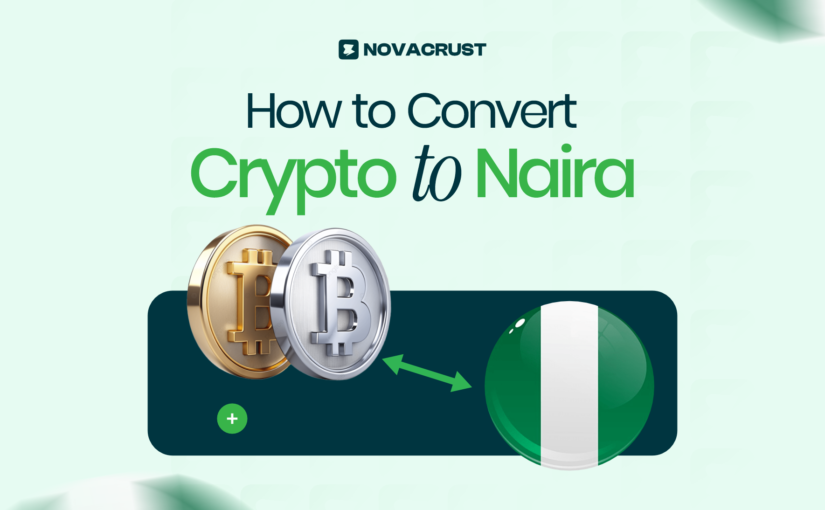
Have you ever received crypto payments from clients or friends and struggled to access the cash in Naira? Maybe you spent hours figuring out how to sell your crypto, lost money to high fees, or waited days just to get your funds. Converting crypto to Naira can be confusing and frustrating, especially if you need access to your money fast.
The good news is that with Novacrust, converting crypto to Naira is simple, fast, and secure. Here’s how you can do it in just a few steps:
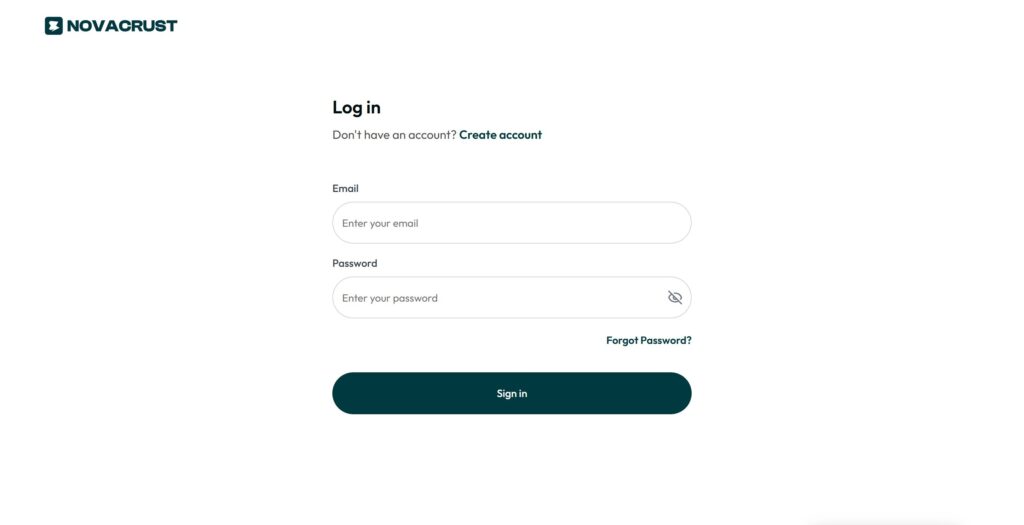
Step One: Create Your Novacrust Account
Visit app.novacrust.com and sign up for a free account. Setting up your account is quick and easy, giving you access to all Novacrust features.
Step Two: Log In and Access Quick Actions
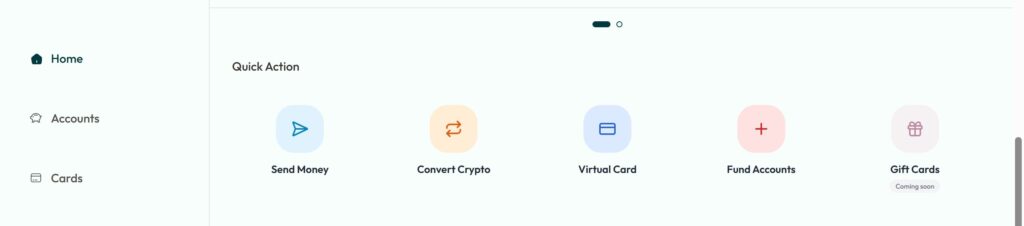
Once you log in, go to your dashboard. You will see a section called Quick Actions. Here, click on Convert Crypto to get started.
Step Three: Fund Your Crypto Wallet
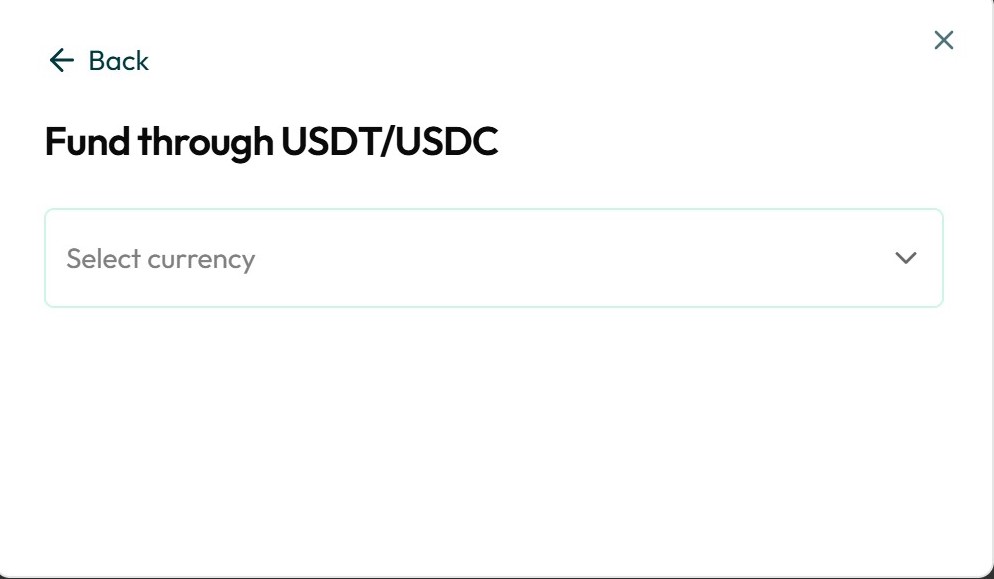
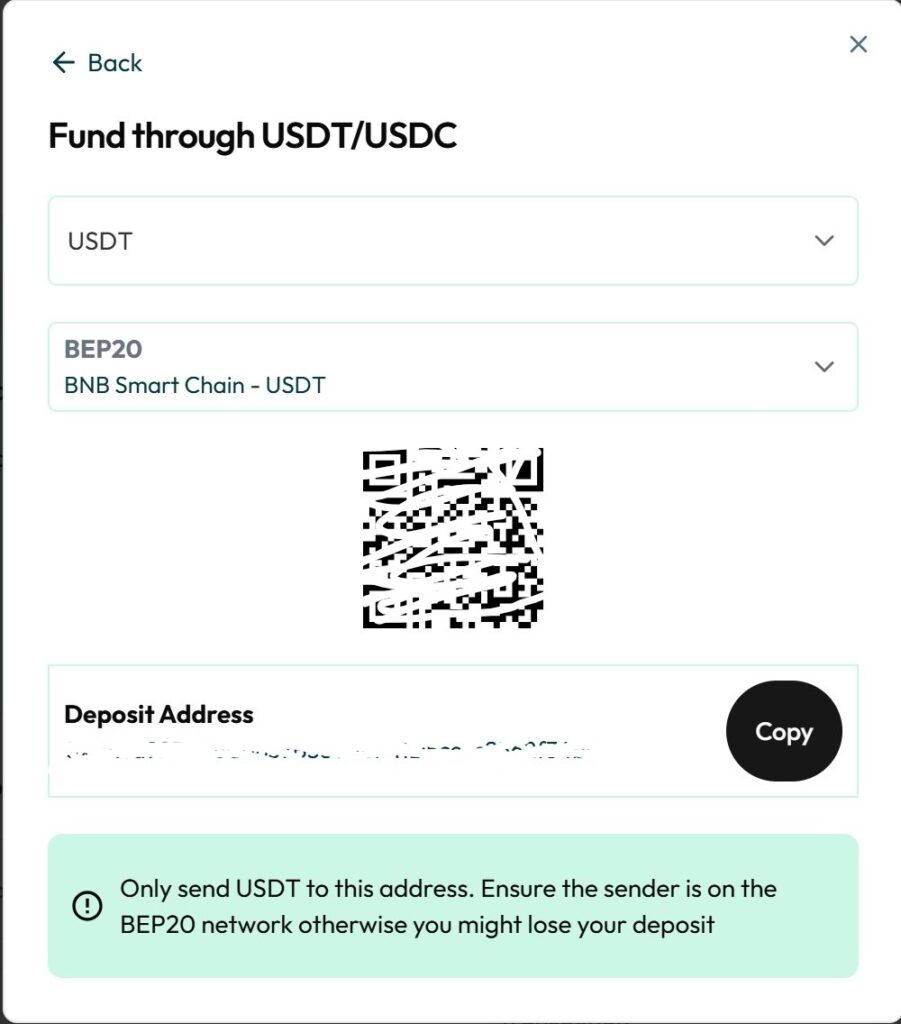
Choose which cryptocurrency you want to use to fund your account, such as USDT or USDC. Select the wallet you want to fund. You will need to create a wallet address if it’s your first time using the site. Don’t worry, it only takes a few minutes. You can even create multiple wallet addresses if you prefer.
Step Four: Deposit Crypto
Once your wallet address is ready, fund it by either copying the wallet address or scanning the QR code. Your funds will appear in your Novacrust USD account securely and quickly.
Step Five: Convert Crypto to Naira
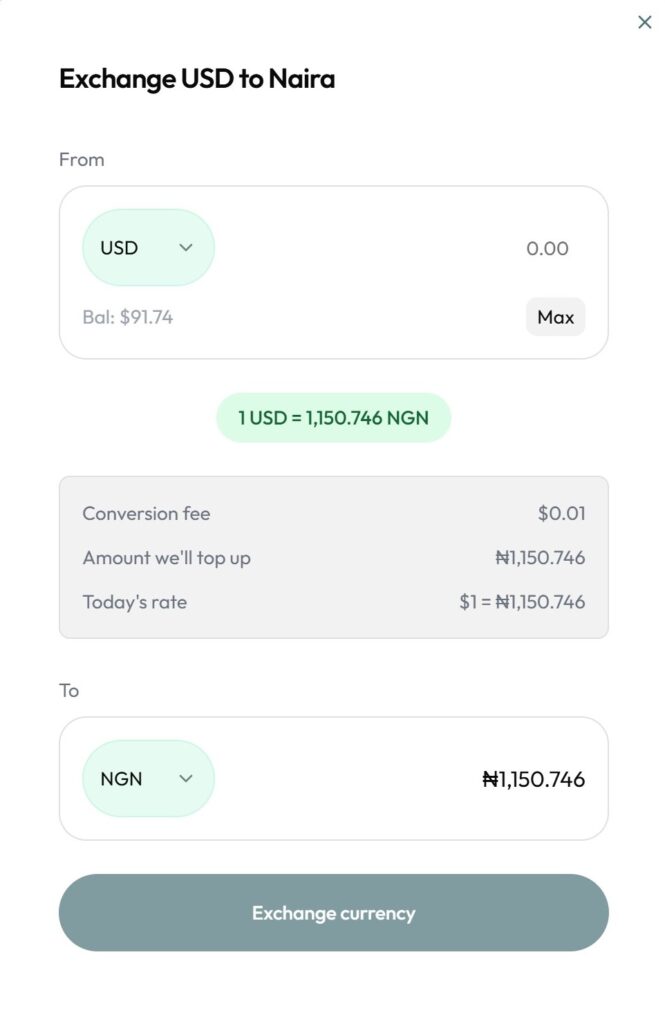
After funding your USD wallet, click on USD account on your dashboard and select convert. Choose the currency you want to convert your USD to (In this case Naira). In the “From” section, select USD. Click on Exchange currency.
Step Six: Withdraw to your Bank Account.
Go to “Send money” on your dashboard, fill in your bank details and just like that you have your crypto in your Nigerian bank account!
Why Novacrust Makes a Difference Novacrust removes the usual stress of converting crypto to Naira. You no longer have to worry about complicated exchanges, hidden fees, or long delays. The platform is secure, fast, and designed to make global transactions easy.
Start Converting Crypto Today Sign up on Novacrust, fund your wallet, and convert your crypto to Naira in just a few clicks. Fast, secure, and hassle-free; that’s how converting crypto should feel.
Victor Ajide didn’t stumble into web design by accident. What started during the COVID lockdown as curiosity and experimentation has grown into a full-fledged career building scalable websites and digital products for startups and businesses.
Today, Victor runs a web studio in Nigeria, mentors upcoming designers, and helps founders turn ideas into products that don’t just look good but work. In this Growth Series interview, he shares how consistency changed his life, the lessons freelancing taught him early, and why his younger self would be proud of how far he’s come.
Hi Victor, welcome to our Growth Series. Can you tell us about yourself and your journey into web design and Webflow?
My name is Ajide Victor. I’m a web designer, developer, and product builder. I run a web studio in Nigeria where we work with startup founders and businesses to turn ideas into scalable websites and digital products that don’t just look good but actually work.
My journey into tech started during the COVID lockdown when schools were shut down and we were all at home. While exploring online, I discovered web design, and a friend who was already a developer introduced me to Webflow. I took my time to learn the tool, shared my learning process publicly, and gradually began building real products.
What I enjoy most is taking ideas from zero and turning them into usable products. Along the way, I’ve also mentored people and guided others who are just starting out.
What was your first paid project, and what did it teach you?
My first paid gig wasn’t web design it was graphic design. I used a mobile app called PixelLab to design flyers and mockups for small businesses. I earned between ₦500 to ₦3,000 per job.
At that time, many people my age were involved in internet fraud, so realizing I could earn honest money from a digital skill even if it was small meant a lot to me. It showed me that skills could pay and that growth was possible.
Was there a moment you realized this could be a full-time career?
It wasn’t sudden. I didn’t even know about freelance platforms at first. What changed everything was understanding the power of visibility.
I started posting consistently on Facebook sharing my work, teaching what I was learning, and documenting my progress. I showed up daily and weekly. Over time, people began to understand what I did, and clients started reaching out. That consistency made me realize this could become something serious.
Did you recognize your potential before seeing it as a career path?
Not initially. I was still a student then and graduated in July 2025. Design was just a side hustle to survive.
That changed when I worked on a Webflow project that pushed me beyond my comfort zone. It required problem-solving, attention to detail, and confidence in my decisions. Completing that project made me realize I could handle complexity and that this skill could take me far.
Can you share a major challenge and how you turned it into growth?
One major challenge was communicating with international clients, especially because of my accent. I used to be afraid of speaking on calls because some people judged me before hearing what I had to offer.
Instead of letting that stop me, I worked on improving my communication. I started speaking more at events, slowed down my speech, and let my work speak for itself. Over time, the fear faded, and my confidence grew. That experience taught me resilience and adaptability.
How do you stay motivated during slow periods or with difficult clients?
I don’t wait for motivation I focus on preparation. During slow periods, I improve my skills, review past work, identify gaps, and learn new things.
I also optimize my portfolio, refine my Upwork profile, experiment with ideas, and stay visible online. Slow periods are part of freelancing, and I use them as opportunities to level up.
How do you balance creativity with client expectations?
It starts with clarity. Before designing anything, I make sure I fully understand the client’s goals. Creativity is a tool for solving problems not just making things look good.
Every design decision I make is tied back to business goals and performance. Clear communication and regular updates help keep everything aligned.
Do you follow a structured workflow or work intuitively?
I follow a structured workflow. Structure gives creativity direction and ensures smooth delivery.
I start by understanding requirements, reviewing the brief, and breaking the project into milestones. I communicate consistently so there are no surprises. This approach helps me deliver quality work every time.
How do you position yourself to attract high-paying clients?
I focus on value, not volume. I’m intentional about the clients I work with and clearly state my pricing.
I showcase recent, relevant work, explain my process publicly, and maintain a strong presence on X (Twitter). My portfolio, pricing, and online presence are aligned with the level of clients I want to attract.
Do you share your process publicly to teach or inspire others?
Yes. I share my work openly. When I was active on Upwork, I helped people optimize their profiles, reviewed accounts, and even sponsored connects for some.
I also share educational content, host X Spaces, and organize learning sessions for people interested in Webflow and no-code development.
Have you mentored others? Can you share a moment where your help made a difference?
Yes. One case I remember clearly was someone who had been applying for jobs for a long time without success. Instead of only advising him, I brought him in to work with me, gave him real tasks, and paid him.
That experience helped him gain confidence, build experience, and move forward in his career.
How important is community to growth?
I haven’t built a personal community yet, but I’ve actively participated in many. I’ve contributed by helping others, sharing resources, and answering questions.
In some communities, I was eventually made an admin because of my involvement. Community accelerates growth, exposes you to opportunities, and keeps you accountable.
How do you balance learning, work, and mentorship?
Time management is key. I schedule mentorship sessions between 9pm and 10pm after my workday ends.
During the day, I focus strictly on client work. At night, I mentor, respond to messages, and attend to requests. Clear boundaries help me stay productive.
What’s a hard truth about freelancing beginners should know?
Not every proposal gets a response. Many clients don’t understand the work happening behind the scenes.
Freelancing includes rejection, slow periods, and misunderstandings. It’s part of the journey.
Have you faced challenges with international payments?
Yes. Many platforms like PayPal and Wise are limited or unsupported in Nigeria. This is a major challenge I’ve personally faced when working with international clients.
What advice would you give your younger self?
Start early and ask for help not money, but guidance.
I reached out to people to learn about Upwork, proposals, and profile optimization. Those conversations saved me months of confusion. Don’t try to figure everything out alone.
What mistake shaped your growth the most?
For a long time, I believed I didn’t need better tools. I kept using an old HP laptop because it could “manage” the work.
Eventually, I invested in better equipment, a proper workspace, and a refined workflow. My speed, quality, and confidence improved. Investing in yourself matters.
How do you define success today?
Success isn’t just money. When I started, I was simply using Webflow. Today, I’m Webflow certified. That progress means a lot to me.
Growth and consistency matter more than numbers.
Would your past self be proud of you?
Absolutely.
If you weren’t in web design, what would you be doing?
Before tech, I was into music. I played drums at parties, concerts, and events. If not web design, I’d probably still be pursuing music.
What’s one truth young creatives in Nigeria need to hear?
Consistency beats talent. If you don’t show up, people won’t know how good you are. Talent without visibility is almost the same as no talent.
How do you handle rejection?
I treat rejection as feedback. I reach out, ask for the criteria used to select the successful candidate, and improve on those areas so I don’t repeat the same mistake.
Can you share your first earnings versus now?
My first earnings were ₦500 – ₦3,000 per graphic design gig.
Today, I earn between $3,000 and $5,000 monthly, depending on projects. There’s no fixed amount, but the growth has been consistent.
Victor’s journey reminds us that growth doesn’t always come from big breaks it comes from showing up consistently, learning in public, and being willing to start small. From earning a few thousand naira designing on his phone to building to a Webflow Partner and mentoring others, his story proves that visibility, preparation, and resilience can open global doors. If you’re navigating freelancing, web design, or no-code development, Victor’s path is a powerful reminder that steady effort compounds over time.