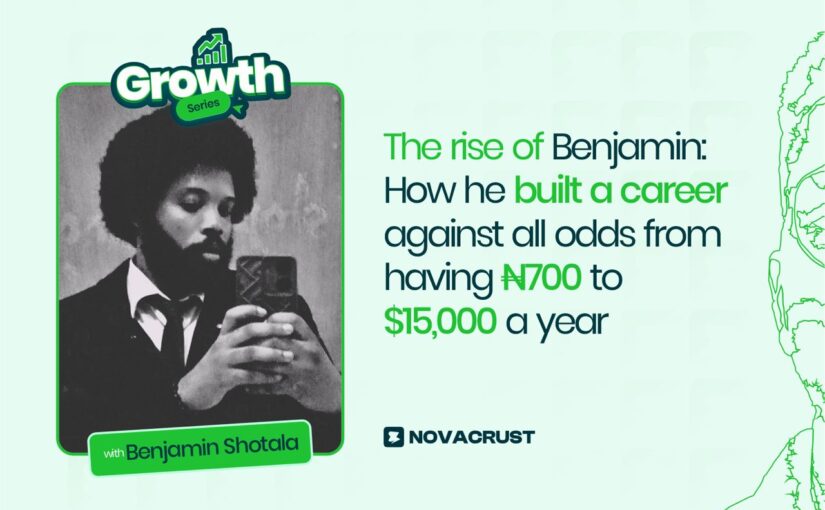
Benjamin Shotala has lived the struggle many young Africans face today. In this interview, he breaks down his journey, the hard truths no one tells you about landing a job, and how he’s helping others rise again
Alright, let’s dive in. Ben, can you please tell me about yourself? Who is Benjamin Shotala?
My name is Benjamin Olamide Shotala. I’m a marketing specialist, specifically a lifecycle marketing specialist and I’m also the founder of two startups that I’m currently building. I manage a community of passionate tech enthusiasts and people who are just beginning their journey in tech.
That’s pretty much about me.
You mentioned you’re a founder of two startups. Can you expand a bit on them?
Sure. One of the startups is a platform for hiring talents still in the building phase. The second one is centered around productivity. I can’t share much yet, but it’s focused on helping people lock in better and work more efficiently.
You run a community called Broke Ones Will Rise Again. What inspired you to start that community?
I realized many tech enthusiasts weren’t getting visibility. A lot of people were in my DMs saying they couldn’t get jobs. I’ve been there, and I understood how frustrating it can be. Since I had a bit of a platform, I felt I could use it to help others gain visibility. By posting and spotlighting them, someone searching for their skill might reach out. So the community was created to support and uplift each other.
What was the breaking point where people started seeing you as a mentor and reaching out for guidance?
People reached out because I shared the things I did to land my own job and connect with others. They felt they were doing something wrong, and I was openly sharing strategies that didn’t require spending a lot of money.
In many cases, all it takes is visibility. Just last week, someone I posted got contacted by someone in the US who wanted to hire them. Helping people genuinely makes me happy.
What’s the process like? Do people just message you, or do they have to pay?
It depends. You can start by joining my Wednesday Spaces. I’ve been hosting them weekly for a year now. It’s usually a five-hour space where people rant, share their struggles, and we dissect what’s going wrong.
We talk about landing remote roles, positioning yourself better internationally, and navigating the challenges of freelancing from Nigeria or Africa.
So what is one hard truth about job searching that people don’t talk about?, it always seems so easy online.
The hard truth is: nobody cares if you’re jobless.
You’ll apply to a lot of jobs, and you’ll get rejected from many of them. Expectations get crushed when we assume it’ll be quick. There will be many “no’s.”
That’s the reality.
What would you advise someone who receives 90% “no’s” and feels discouraged especially young graduates?
Receiving 90% rejection is personal, it’s also a sign to switch strategies.
There are conventional and unconventional ways to get a job. If the conventional isn’t working, use the unconventional. Don’t apply blindly. Have a feedback loop.
Stop relying on Easy Apply. Find people who need your skill the most, those who are actively hiring. People who really need it always stand out.
You should be able to land at least one opportunity if you’re doing it right.
On a scale of 1–10, what’s your success rate when you help others?
I don’t teach people to land immediate jobs. Landing the job is on them.
University taught us skills but not job placement. Same thing here, I train the mindset, the strategy, and the positioning. But implementation is the student’s responsibility.
I’ve had people doubt the strategies until they finally try them. One lady in my community got a dollar-paying job on Upwork without using Connects because she applied the methods I taught.
Success depends entirely on the person.
If you apply for 10 jobs and quit, you’re not ready. You should be applying for 500+ a month if you want the dream job. That’s the truth.
You shared a story about coming from the trenches and flipping your life around. Can you tell that story again?
Sure. I come from a very poor background. Life was extremely tough. I graduated with a second-class lower and often questioned whether I’d make it.
But I had resilience. I knew that if I showed up consistently, something would change.
Last year, I had less than ₦700 to my name. I was completely broke. But I kept putting myself out there, sharpening my skills, and staying focused.
One morning, everything changed because of the effort I had been putting in. I made an incredible amount of money working from home.
I still live in the trenches, I hear the chickens every day but I show up for myself because nobody is coming to save me.
That mindset flipped my story.
How were you able to move from having less than ₦700 to earning over $15,000 in a year while living in Nigeria?
Positioning, consistency, and strategy.
I could’ve made more, but some opportunities didn’t align. Next year will be bigger.
It all depends on how you present yourself and the value you put out.
What advice would you give to people who have tried everything and are ready to give up?
First, stalk your idols. Many of them lie.
Study them deeply, search their LinkedIn, their Upwork, keywords they use, their strategies. Don’t let anyone sell you empty dreams. I moved from 0 to 100 without a mentor because I was tired of poverty. Build relationships, communicate well, and be kind. People underestimate kindness.
Also learn to sell yourself. Selling is different from marketing.
Marketing is making noise. Selling is using psychology, understanding why people buy, why someone chooses you, how your value converts into results.
Read books on sales. They will change your life.
Whether you’re a job seeker, new graduate, or tech enthusiast, Ben’s advice encourages you to stay consistent, stay curious, and never stop refining your craft.
Because in his words, nobody is coming to save you, but you can always save yourself.