When Hustle Meets Resilience: How Hillary Odogwu Went from ₦500 Writing Gigs to $6900 monthly 

Hi Hillary, welcome. If you had to define yourself in a few words, who is Hillary Odogwu?

My name is Hillary Odogwu. I’m a marketer and ads coach. I started my journey with dropshipping long before ads and coaching became part of my life.

What was your first money-making gig, and how did it shape you?

The first money gig I ever did was writing, and the pay was ₦500. I didn’t feel bad about it, but it taught me something important that I needed to do better for myself.

How did you transition from dropshipping to selling knowledge and then into ads?

While I was doing dropshipping, I used to compile training materials and PDF guides for people who wanted to learn how to become successful dropshippers. At the same time, I was selling shoes sourced from my wholesaler.

At some point, I realized I was passionate about selling information. I’ve always been expressive and open online, so selling what I knew felt natural. I kept thinking about how much knowledge I had in my head and how pointless it was not to monetize it.

The first product I sold was an Amazon KDP course. From there, I moved into affiliate marketing. Eventually, I discovered my passion for Instagram ads. Once I figured out what worked, I started teaching others the exact strategies and that’s how everything began.

What is the biggest myth people believe about digital marketing?

The biggest myth is that people think they can enter digital marketing and make money overnight. Marketing requires time, energy, and money. You have to learn many skills, and it’s not a get-rich-quick scheme the way it’s often portrayed online.

Anyone who thinks they can start today and make ₦500k next week is being delusional. It doesn’t work that way.

Your online presence is bold and sometimes controversial. How do you balance that with teaching and coaching?

I honestly just go with the flow. If I feel like making a controversial post, I do it. If I want to grow my account, I know exactly what to do.

But I don’t depend on social media for income I run a lot of ads. So people buy from me regardless. I don’t plan my posts or follow a strict content strategy. I just express whatever I feel like expressing at any moment.

Have you experienced difficulties receiving international payments?

Not really. There are many Nigerian startup apps that help with collecting USD payments. I’ve had enough options, so I haven’t faced any major issues.

You’ve mentioned learning some hard financial lessons. Can you share one that shaped you?

I don’t like to call them mistakes I call them lessons.

One major lesson was learning to avoid extremes: too much instant gratification and too much delayed gratification. Early last year, I felt I had worked hard for a long time and deserved to spend my money freely. I was earning decently, but spending immediately on gadgets and luxuries drained my finances.

Now that I earn more, I understand how to manage resources better. I only spend on things that multiply my income. You have to find a balance where you manage, save, and invest wisely.

What is the most important trait for success in marketing?

Resilience.

Some days sales are good. Some days they’re bad. Some days you won’t make a single sale. Things that worked for months can suddenly stop working.

You need resilience to keep going when everything feels uncertain. Without it, you’ll give up easily or jump from one thing to another.

What keeps you grounded when things get overwhelming?

I don’t care about public opinion. My principles are based on the standards I set for myself.

What drives me is value giving people knowledge, showing them what’s possible, and providing tools that actually make their lives better. I’m value-driven, not validation-driven.

What advice would you give your younger self?

Don’t be afraid to ask. And don’t be ashamed of receiving good things.

Growing up, I was scared to ask for money because adults around me always complained about finances. That mindset affected my marketing because I was afraid to ask people to pay for my products.

Eventually, I learned that people don’t pay just to buy they pay because an offer is attached. That realization gave me the confidence to charge my worth.

Where do you see yourself in the next few years?

I honestly don’t know, I go with the flow. But I always set goals.

By 19, I made my first million.
By 20,I left my parents house.
By 21, I had other goals I wrote down and achieved.

I don’t stop achieving things. That’s just how I am.

What are you currently building?

I’m building an agency called Andro media. The goal is to revolutionize how physical business owners sell online helping them sell out, hit targets, and scale.

We plan to support at least 70 business owners in our first month, between January and February. I also want to build startups, buy startups, and eventually launch my own brand possibly skincare or perfume.

After investing and setting everything up, I want the freedom to live life on my own terms.

Would you consider relocating if the opportunity arises?

Only if it’s the United States and only if it offers significantly more than what I earn now, plus a comfortable lifestyle, maybe a penthouse in New York.

If it’s not the US, the only other country I’d consider is the UK. Right now, I don’t see a reason to leave unless Nigeria becomes much worse.

Whether you’re a budding entrepreneur, digital marketer, or creative looking to monetize your skills, Hillary’s story reminds you to stay resilient, stay bold, and always keep learning. In her words; success doesn’t come overnight, but consistent effort and knowing your worth will take you further than you ever imagined.

The rise of Benjamin Shotala: How he built a career against all odds from having only 700 naira to $15,000 a year

Benjamin Shotala has lived the struggle many young Africans face today. In this interview, he breaks down his journey, the hard truths no one tells you about landing a job, and how he’s helping others rise again

Alright, let’s dive in. Ben, can you please tell me about yourself? Who is Benjamin Shotala?

My name is Benjamin Olamide Shotala. I’m a marketing specialist, specifically a lifecycle marketing specialist and I’m also the founder of two startups that I’m currently building. I manage a community of passionate tech enthusiasts and people who are just beginning their journey in tech.
That’s pretty much about me.

You mentioned you’re a founder of two startups. Can you expand a bit on them?

Sure. One of the startups is a platform for hiring talents still in the building phase. The second one is centered around productivity. I can’t share much yet, but it’s focused on helping people lock in better and work more efficiently.

You run a community called Broke Ones Will Rise Again. What inspired you to start that community?

I realized many tech enthusiasts weren’t getting visibility. A lot of people were in my DMs saying they couldn’t get jobs. I’ve been there, and I understood how frustrating it can be. Since I had a bit of a platform, I felt I could use it to help others gain visibility. By posting and spotlighting them, someone searching for their skill might reach out. So the community was created to support and uplift each other.

What was the breaking point where people started seeing you as a mentor and reaching out for guidance?

People reached out because I shared the things I did to land my own job and connect with others. They felt they were doing something wrong, and I was openly sharing strategies that didn’t require spending a lot of money.
In many cases, all it takes is visibility. Just last week, someone I posted got contacted by someone in the US who wanted to hire them. Helping people genuinely makes me happy.

What’s the process like? Do people just message you, or do they have to pay?

It depends. You can start by joining my Wednesday Spaces. I’ve been hosting them weekly for a year now. It’s usually a five-hour space where people rant, share their struggles, and we dissect what’s going wrong.
We talk about landing remote roles, positioning yourself better internationally, and navigating the challenges of freelancing from Nigeria or Africa.

So what is one hard truth about job searching that people don’t talk about?, it always seems so easy online.

The hard truth is: nobody cares if you’re jobless.
You’ll apply to a lot of jobs, and you’ll get rejected from many of them. Expectations get crushed when we assume it’ll be quick. There will be many “no’s.”
That’s the reality.

What would you advise someone who receives 90% “no’s” and feels discouraged especially young graduates?

Receiving 90% rejection is personal, it’s also a sign to switch strategies.
There are conventional and unconventional ways to get a job. If the conventional isn’t working, use the unconventional. Don’t apply blindly. Have a feedback loop.
Stop relying on Easy Apply. Find people who need your skill the most, those who are actively hiring. People who really need it always stand out.
You should be able to land at least one opportunity if you’re doing it right.

On a scale of 1–10, what’s your success rate when you help others?

I don’t teach people to land immediate jobs. Landing the job is on them.
University taught us skills but not job placement. Same thing here, I train the mindset, the strategy, and the positioning. But implementation is the student’s responsibility.
I’ve had people doubt the strategies until they finally try them. One lady in my community got a dollar-paying job on Upwork without using Connects because she applied the methods I taught.
Success depends entirely on the person.
If you apply for 10 jobs and quit, you’re not ready. You should be applying for 500+ a month if you want the dream job. That’s the truth.

You shared a story about coming from the trenches and flipping your life around. Can you tell that story again?

Sure. I come from a very poor background. Life was extremely tough. I graduated with a second-class lower and often questioned whether I’d make it.
But I had resilience. I knew that if I showed up consistently, something would change.
Last year, I had less than ₦700 to my name. I was completely broke. But I kept putting myself out there, sharpening my skills, and staying focused.
One morning, everything changed because of the effort I had been putting in. I made an incredible amount of money working from home.
I still live in the trenches, I hear the chickens every day but I show up for myself because nobody is coming to save me.
That mindset flipped my story.

How were you able to move from having less than ₦700 to earning over $15,000 in a year while living in Nigeria?

Positioning, consistency, and strategy.
I could’ve made more, but some opportunities didn’t align. Next year will be bigger.
It all depends on how you present yourself and the value you put out.

What advice would you give to people who have tried everything and are ready to give up?

First, stalk your idols. Many of them lie.
Study them deeply, search their LinkedIn, their Upwork, keywords they use, their strategies. Don’t let anyone sell you empty dreams. I moved from 0 to 100 without a mentor because I was tired of poverty. Build relationships, communicate well, and be kind. People underestimate kindness.

Also learn to sell yourself. Selling is different from marketing.
Marketing is making noise. Selling is using psychology, understanding why people buy, why someone chooses you, how your value converts into results.
Read books on sales. They will change your life.

Whether you’re a job seeker, new graduate, or tech enthusiast, Ben’s advice encourages you to stay consistent, stay curious, and never stop refining your craft.
Because in his words, nobody is coming to save you, but you can always save yourself.

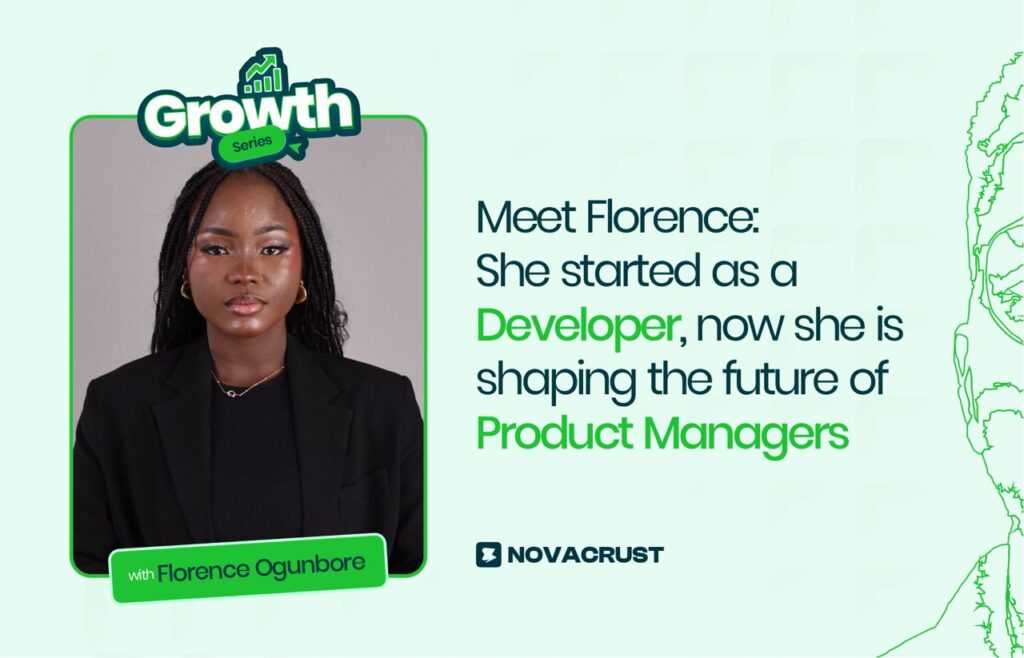
Meet Florence Ogunbore: She started as a developer, now she is shaping the future of Product Managers

Florence didn’t set out to become a Product Manager, she simply followed her curiosity, her love for building, and her drive to solve real problems. What started as a front-end development journey gradually unfolded into a passion for product thinking, community building, and guiding others entering tech.

In this interview, she shares how she transitioned into PM, built Product Buddies, earned an industry nomination, and why the version of her from three years ago would be proud today.

Hi Florence, Welcome to our Growth Series. Can you please tell us about yourself. who is Florence Ogunbore?

My name is Florence Oguunbore. I’m a Product Manager by day and a Web Developer whenever I get the chance. I actually started my tech journey as a web developer, learning front-end. Along the way, I came across product management, although at the time, I didn’t know that was what I was doing.

While working as a developer in a software agency, I found myself taking on responsibilities like coordinating tasks, managing people, and handling product decisions. It wasn’t until later that I realized those responsibilities fell under product management. I’ve now been a Product Manager for over three years.

You mentioned you started earlier but didn’t know it was product management at the time. Can you clarify your timeline?

Yes, I started coding in 2018 and worked fully as a developer. In 2021, while working at a software agency, I was put in charge of an internal product. I was acting almost like the CTO managing people, assigning tasks, keeping an eye on deliverables, even though I didn’t know it was called product management then.

I remember telling a friend that I didn’t want to only build things; I wanted to be part of the process before the building started. Even as a developer, I always attended client meetings to understand what we were building.

Later in 2021, I stepped away from coding and focused solely on managing that in-house project. That was when I consciously began learning product management. From December 2021 to January 2022, I started taking PM courses. By early 2022, I moved fully into product management, and by the end of the year I got my first PM role.

You also mentioned you still work as a web developer when you get the chance. Why “when you get the chance”?

Because product management is extremely time demanding. You have meetings from morning to afternoon, working closely with teams in real time.

Web development, on the other hand, gives me flexibility I can jump into it any time my schedule is free. But PM work is mostly daytime and structured.

Tell us more about Product Buddies. What is it about, and what have you achieved so far?

Product Buddies started as a support group. A popular product management OG created a PM challenge where participants picked a product and did a presentation. We created a channel for that challenge, and afterward we asked ourselves: Do we really need to disband this? Why not build something out of it?

That’s how Product Buddies was birthed. It started as a community for entry-level PMs and later grew to include mid-level and senior PMs. Today, we have over 1,000 members. We also have a Twitter community. We keep the group friendly, not overly serious, but still very supportive.

You were nominated for the Product that Counts Awards this year. How did that feel?

Honestly, I can never get used to how people see me. A friend asked for my information, and I was confused at first. Then she told me she wanted to nominate me for something.

The people who have won before are OGs in the industry, so it felt surreal. I’ve only been doing this for about three years, so the nomination felt big. I didn’t even know how to process it.

What are some cool things about product management that you’d tell someone interested in breaking into the field?

Two things:
1. You’ll learn a lot. PM exposes you to new knowledge, communities, and people.
2. You get to help people. There’s nothing like seeing users interact with a product you worked on, it’s very rewarding.

Would Florence from three years ago be proud of who you are now?

The 2022 version of me would be proud of me like mad! I’ve achieved so much, learned so much, and I’m genuinely enjoying this journey.

For someone who wants to go into PM or web design, what’s your advice? Should they get a job first and learn on the go, or learn first?

I’d say start with a beginner course. Learn the basics, the foundation is important and unavoidable. Use free resources too. First learn it, then decide if it’s really what you want.

After that, start putting yourself out there. Show your process, practice publicly, and apply for opportunities even if it’s an internship role.

Florence’s story is a reminder that career journeys don’t always follow a straight line, sometimes they unfold as we grow, explore, and step into new challenges. From writing code to managing products and building thriving communities, her path shows the power of curiosity, consistency, and learning in public. Whether you’re transitioning into PM, exploring web development, or still figuring out where you belong in tech, her story is proof that starting small, staying open, and showing your process can take you farther than you imagine.

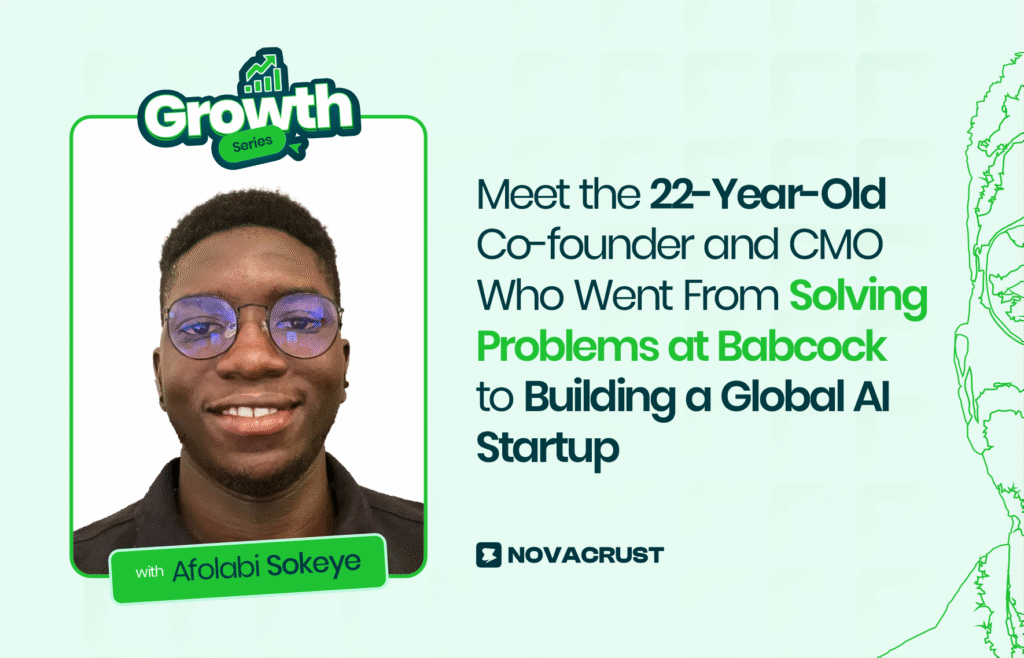
Building With Purpose: The Story of Afolabi Sokeye, who Turned Ideas Into Impact.

“You don’t need a perfect product to start,” he says. “Test ideas, refine, and keep learning. Every step teaches you something.”

Thank you for joining us on our series. We’re really excited to hear your story and learn about your journey. To start, who is Afolabi?

This is one question I get asked a lot. Afolabi is a product and group expert who has been building for over three years. I’m also a community leader for both young and old, an authentic person who loves to help society at large.

You mentioned you’ve been building for over three years. What was that journey like before you became a product manager?

Before I got into product management, I was already building platforms and working in operations. In 2023, I decided to dedicate myself fully to this career. I started in university with a group of friends who loved solving problems. From 2019 to 2022, we were building startups at Babcock and developing ideas that could make life easier for people.

What motivated you to start building?

From when I was young, I’ve always been drawn to people who solve problems. That inspired me to do the same, to build things that help others.

Tell us more about your company. Is Tabs Editor your main product?

The company is called WetroCloud, and Tabs Editor is our flagship product. It’s a tool that helps users analyse and write documents with AI. We launched it around September 2024, and it’s already helping students, researchers, and professionals work more efficiently.

What challenges did you face building it?

Every startup faces challenges, especially when you’re young and trying to enter new markets. Getting users, generating revenue, and building trust aren’t easy. But once we saw Tabs Editor solve our own problems, we knew it could help thousands more. That was our turning point.

What advice would you give young Nigerians who want to start something but feel limited by resources?

Start small. You don’t need everything to be perfect. You can test your ideas with mini-apps or demos. Focus on solving real problems and learning as you go. Failure isn’t the end. it’s how you discover what works.

That’s powerful. Anything you’d like to say to young creators reading this?

Keep moving forward. Every attempt, every small success, and every setback teaches you something valuable. Life is about persistence. If you’re still trying, you’re already on the right path.

About Afolabi Sokeye

Afolabi Sokeye is a Nigerian product and growth expert, builder, and community leader with a passion for creating meaningful solutions through technology. He is the co-founder and CMO of WetroCloud, the company behind Tabs Editor, a productivity tool that helps users analyze and extract information seamlessly.

Over the past few years, Afolabi has been recognized for his problem-solving mindset and authentic approach to leadership, earning features in platforms such as Tech Cabal, Accrue etc.

Beyond his technical expertise, he remains deeply committed to mentoring the next generation of innovators and fostering a culture of resilience, creativity, and purpose in Africa’s tech ecosystem.