Novacrust Joins the Circle Alliance Program

Novacrust joins circle Alliance Program

We are excited to announce that Novacrust has officially joined the Circle Alliance Program, a prestigious global network of innovative organizations reshaping the future of digital finance and cross-border payments.

The Circle Alliance Program brings together industry pioneers and technology leaders committed to advancing the adoption of USDC and building accessible, transparent digital financial infrastructure worldwide. As part of this ecosystem, Novacrust will collaborate with fellow innovators, explore new possibilities for stablecoin-powered payments, and contribute to creating a more inclusive financial system for Africa and beyond.

What is the Circle Alliance Program?

The Circle Alliance Program is Circle’s initiative to unite forward-thinking companies across fintech, blockchain, and digital finance sectors. Members of this alliance work together to expand financial inclusion, enhance cross-border payment systems, and unlock the full potential of USDC and Web3 services.

Being part of this network means Novacrust will:

  • Collaborate with Global Innovators: Connect with industry leaders and technology partners building the next generation of financial infrastructure
  • Access Expert Resources: Engage directly with Circle’s Product, Engineering, Ventures, Policy, and Developer teams through dedicated support and members-only events
  • Drive Real-World Impact: Explore new use cases for USDC integration that solve actual payment challenges facing individuals and businesses across Africa
  • Enhance Visibility: Gain recognition through the Circle Alliance Directory alongside prominent players in fintech, enterprise, and DeFi sectors
  • Shape the Future: Contribute insights and feedback that influence the development of Circle’s products and the broader digital finance ecosystem

Why This Matters for Novacrust

At Novacrust, our mission has always been to enable individuals and businesses across Africa to get paid, spend, and make payments reliably and instantly. Joining the Circle Alliance Program strengthens our ability to deliver on this promise by connecting us with the infrastructure, expertise, and network necessary to scale our impact.

This partnership aligns perfectly with our core offerings:

Enhanced Cross-Border Payments

With Circle’s robust USDC infrastructure, we can further optimize our cross-border payment services, ensuring money reaches local accounts, mobile money wallets, and global accounts within minutes not days.

Stablecoin Integration

USDC support across multiple blockchains including Base, Ethereum, Polygon PoS, OP Mainnet, and Celo enables us to provide our customers with more options for receiving, spending, and converting digital assets seamlessly.

Global Account Services

Our USD, EUR, and GBP accounts benefit from Circle’s transparent and compliant ecosystem, allowing customers to fund their accounts flexibly and transact with confidence.

Virtual Card Solutions

Integrating USDC with our virtual card services means customers can fund cards in stablecoins and spend globally with lower currency conversion costs and faster settlement times.

What’s Next

Joining the Circle Alliance Program marks a significant milestone in Novacrust’s journey to revolutionize payments across Africa. This partnership opens doors to:

  • Product Innovation: Collaborate on new features and services that leverage USDC’s stability and Circle’s technology
  • Expanded Reach: Access to Circle’s global network and potential co-marketing opportunities to amplify our impact
  • Regulatory Excellence: Benefit from Circle’s compliance expertise as we navigate the evolving digital asset regulatory landscape
  • Community Engagement: Connect with other Alliance members to share insights, best practices, and explore partnership opportunities

We’re committed to leveraging this partnership to enhance our platform, reduce transaction costs for our customers, and bring the benefits of digital finance to more individuals and businesses across Africa and beyond.

About Novacrust

Novacrust is an all-in-one platform that empowers individuals and businesses across Africa with:

  • Cross-Border Payments: Send money to local accounts, mobile money, and global accounts within 5 minutes
  • Global Accounts: USD, EUR, and GBP accounts with flexible funding options
  • Off-Ramp Services: Receive payments from U.S. banks, Payoneer, Stripe, PayPal, and other major platforms
  • Crypto Support: Receive, spend, and convert crypto to cash seamlessly
  • Virtual Cards: Fund in local currency or stablecoins and spend globally
  • OTC Services: Quick off-ramping from Zelle, PayPal, CashApp, and Revolut
  • Savings Solutions: Earn and preserve value through diverse fiat and DeFi channels

Learn more about the Circle Alliance Program: Circle Alliance Program

Visit our Circle Alliance Directory listing: Novacrust on Circle Partners

Connect with us: novacrust.com

Stay tuned for more updates as we continue building the future of cross-border payments and financial inclusion across Africa.
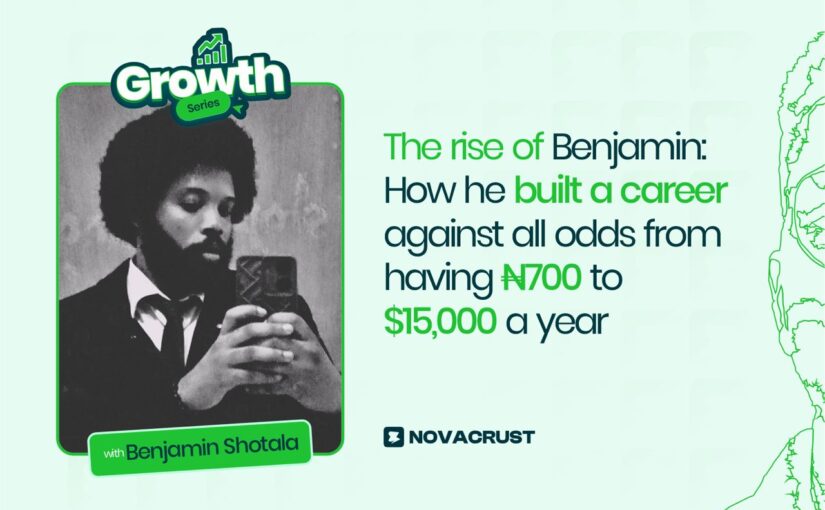
The rise of Benjamin Shotala: How he built a career against all odds from having only 700 naira to $15,000 a year

Benjamin Shotala has lived the struggle many young Africans face today. In this interview, he breaks down his journey, the hard truths no one tells you about landing a job, and how he’s helping others rise again

Alright, let’s dive in. Ben, can you please tell me about yourself? Who is Benjamin Shotala?

My name is Benjamin Olamide Shotala. I’m a marketing specialist, specifically a lifecycle marketing specialist and I’m also the founder of two startups that I’m currently building. I manage a community of passionate tech enthusiasts and people who are just beginning their journey in tech.
That’s pretty much about me.

You mentioned you’re a founder of two startups. Can you expand a bit on them?

Sure. One of the startups is a platform for hiring talents still in the building phase. The second one is centered around productivity. I can’t share much yet, but it’s focused on helping people lock in better and work more efficiently.

You run a community called Broke Ones Will Rise Again. What inspired you to start that community?

I realized many tech enthusiasts weren’t getting visibility. A lot of people were in my DMs saying they couldn’t get jobs. I’ve been there, and I understood how frustrating it can be. Since I had a bit of a platform, I felt I could use it to help others gain visibility. By posting and spotlighting them, someone searching for their skill might reach out. So the community was created to support and uplift each other.

What was the breaking point where people started seeing you as a mentor and reaching out for guidance?

People reached out because I shared the things I did to land my own job and connect with others. They felt they were doing something wrong, and I was openly sharing strategies that didn’t require spending a lot of money.
In many cases, all it takes is visibility. Just last week, someone I posted got contacted by someone in the US who wanted to hire them. Helping people genuinely makes me happy.

What’s the process like? Do people just message you, or do they have to pay?

It depends. You can start by joining my Wednesday Spaces. I’ve been hosting them weekly for a year now. It’s usually a five-hour space where people rant, share their struggles, and we dissect what’s going wrong.
We talk about landing remote roles, positioning yourself better internationally, and navigating the challenges of freelancing from Nigeria or Africa.

So what is one hard truth about job searching that people don’t talk about?, it always seems so easy online.

The hard truth is: nobody cares if you’re jobless.
You’ll apply to a lot of jobs, and you’ll get rejected from many of them. Expectations get crushed when we assume it’ll be quick. There will be many “no’s.”
That’s the reality.

What would you advise someone who receives 90% “no’s” and feels discouraged especially young graduates?

Receiving 90% rejection is personal, it’s also a sign to switch strategies.
There are conventional and unconventional ways to get a job. If the conventional isn’t working, use the unconventional. Don’t apply blindly. Have a feedback loop.
Stop relying on Easy Apply. Find people who need your skill the most, those who are actively hiring. People who really need it always stand out.
You should be able to land at least one opportunity if you’re doing it right.

On a scale of 1–10, what’s your success rate when you help others?

I don’t teach people to land immediate jobs. Landing the job is on them.
University taught us skills but not job placement. Same thing here, I train the mindset, the strategy, and the positioning. But implementation is the student’s responsibility.
I’ve had people doubt the strategies until they finally try them. One lady in my community got a dollar-paying job on Upwork without using Connects because she applied the methods I taught.
Success depends entirely on the person.
If you apply for 10 jobs and quit, you’re not ready. You should be applying for 500+ a month if you want the dream job. That’s the truth.

You shared a story about coming from the trenches and flipping your life around. Can you tell that story again?

Sure. I come from a very poor background. Life was extremely tough. I graduated with a second-class lower and often questioned whether I’d make it.
But I had resilience. I knew that if I showed up consistently, something would change.
Last year, I had less than ₦700 to my name. I was completely broke. But I kept putting myself out there, sharpening my skills, and staying focused.
One morning, everything changed because of the effort I had been putting in. I made an incredible amount of money working from home.
I still live in the trenches, I hear the chickens every day but I show up for myself because nobody is coming to save me.
That mindset flipped my story.

How were you able to move from having less than ₦700 to earning over $15,000 in a year while living in Nigeria?

Positioning, consistency, and strategy.
I could’ve made more, but some opportunities didn’t align. Next year will be bigger.
It all depends on how you present yourself and the value you put out.

What advice would you give to people who have tried everything and are ready to give up?

First, stalk your idols. Many of them lie.
Study them deeply, search their LinkedIn, their Upwork, keywords they use, their strategies. Don’t let anyone sell you empty dreams. I moved from 0 to 100 without a mentor because I was tired of poverty. Build relationships, communicate well, and be kind. People underestimate kindness.

Also learn to sell yourself. Selling is different from marketing.
Marketing is making noise. Selling is using psychology, understanding why people buy, why someone chooses you, how your value converts into results.
Read books on sales. They will change your life.

Whether you’re a job seeker, new graduate, or tech enthusiast, Ben’s advice encourages you to stay consistent, stay curious, and never stop refining your craft.
Because in his words, nobody is coming to save you, but you can always save yourself.

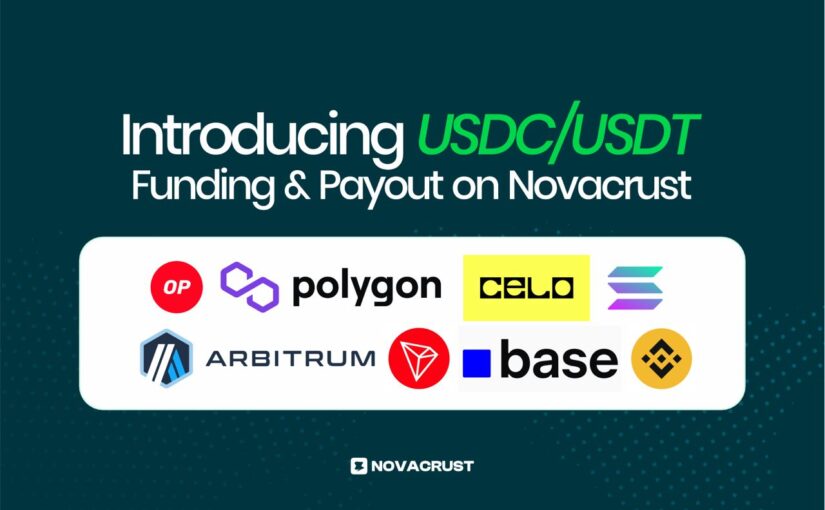
Introducing USDC/USDT Funding & Payout on Novacrust

Stablecoins power some of the most important features you use on Novacrust, such as USD Accounts, Virtual Cards, international payouts, and seamless conversions. Today, we’re excited to take that even further.

We’re officially rolling out full support for USDC and USDT, giving you a faster, more stable, and more flexible way to fund and use your Novacrust account. Whether you’re making routine transactions or managing high-value payments, stablecoins make the entire process smoother and more reliable.

What You Can Now Do

  1. Fund your USD Account with USDC/USDT: Instantly top up using stablecoins across multiple chains, including Solana, Celo, Optimism, Polygon, BNB Smart Chain, Tron, and more.
  2. Payout in Stablecoins: Withdraw or receive payments in USDC or USDT with speed and predictability.
  3. Save in Stablecoins: Hold value in USD-denominated assets without worrying about local currency fluctuations.
  4. Convert to Cash & Send to Local Accounts: Easily convert stablecoins to local currency and send to bank accounts or mobile money in supported countries.

To help you get started, here’s a quick guide on how to access and use USDC and USDT on Novacrust:

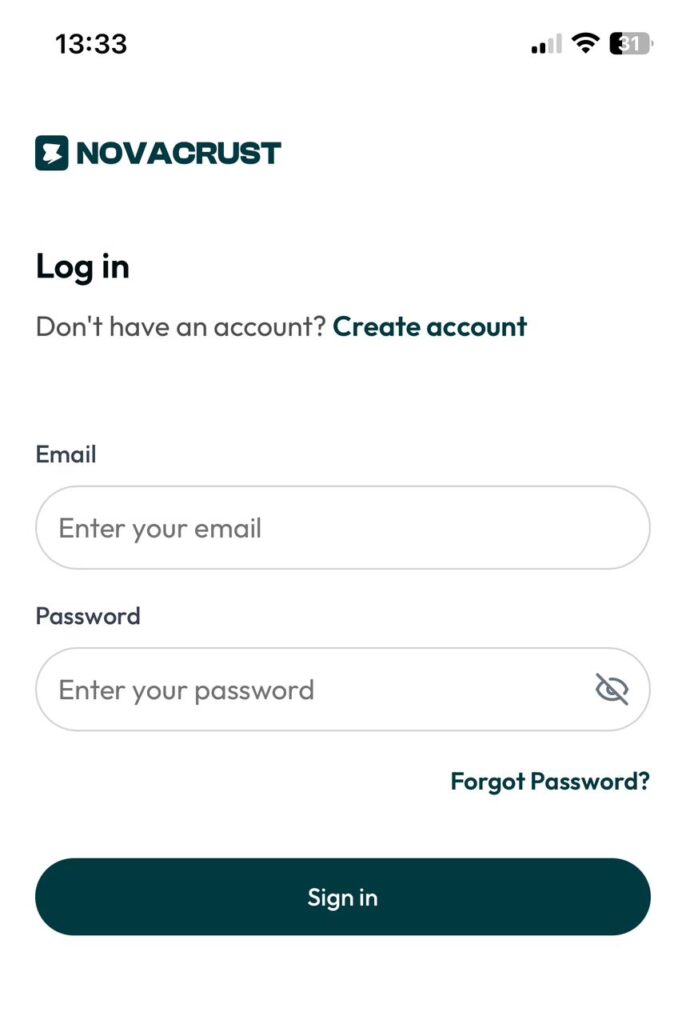
Step 1: Sign into your novacrust.com account.


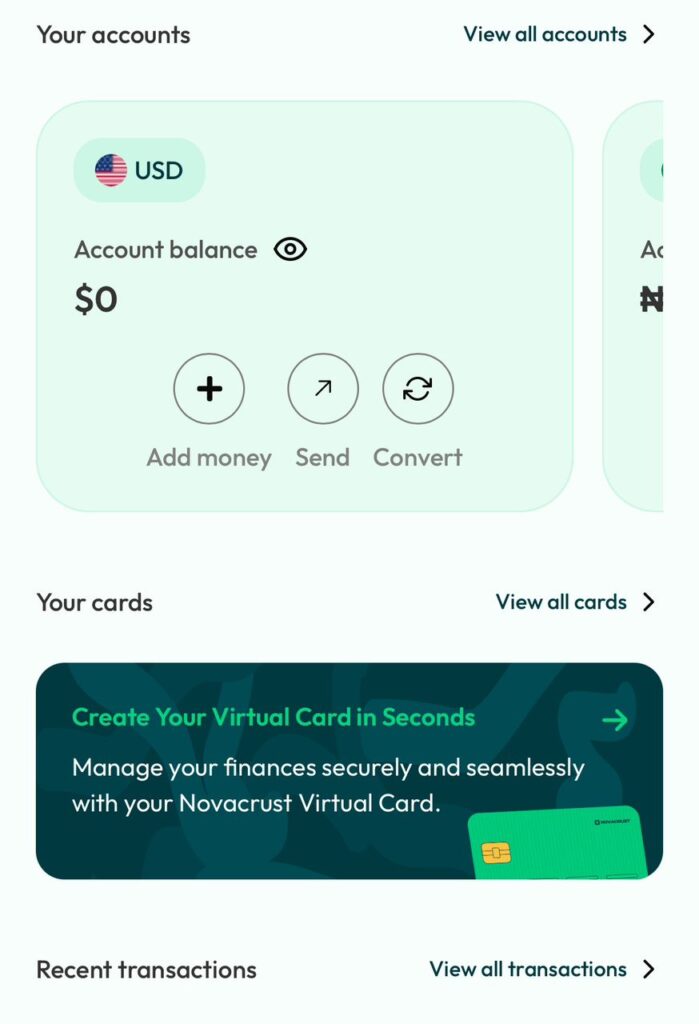
2. Go to your dashboard and click on Add Money.


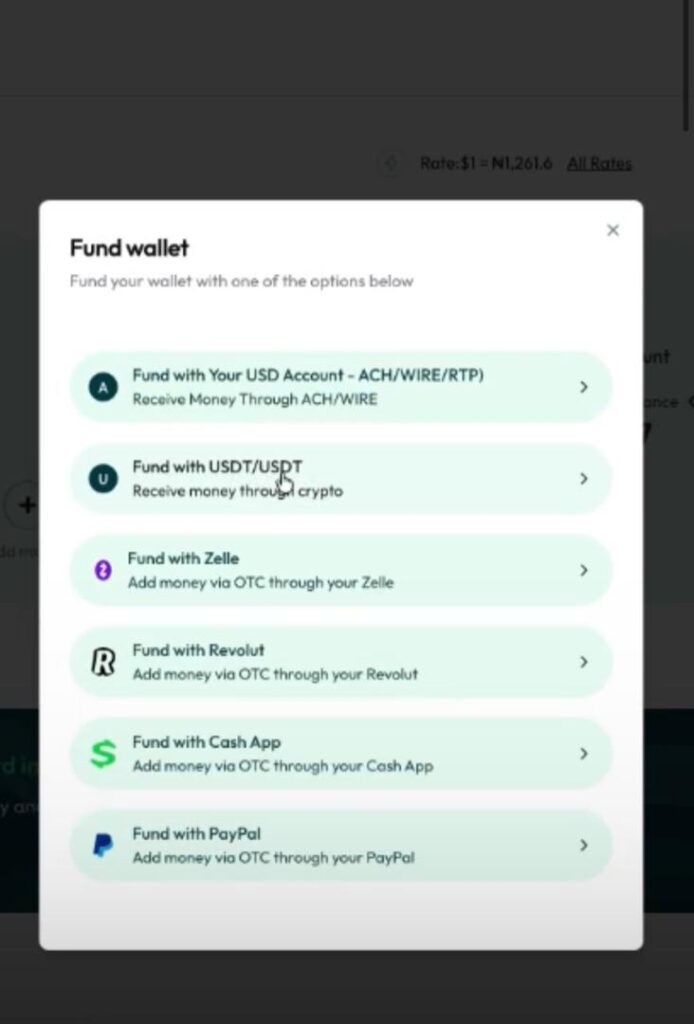
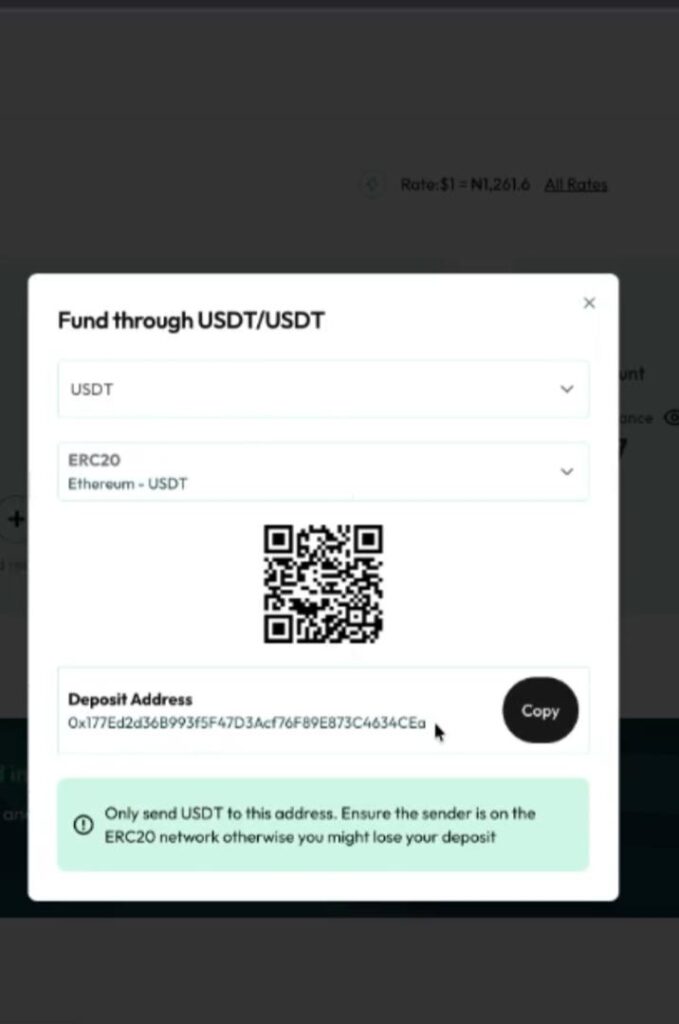
3. You’ll see various funding options, click on Fund through USDC/USDT.


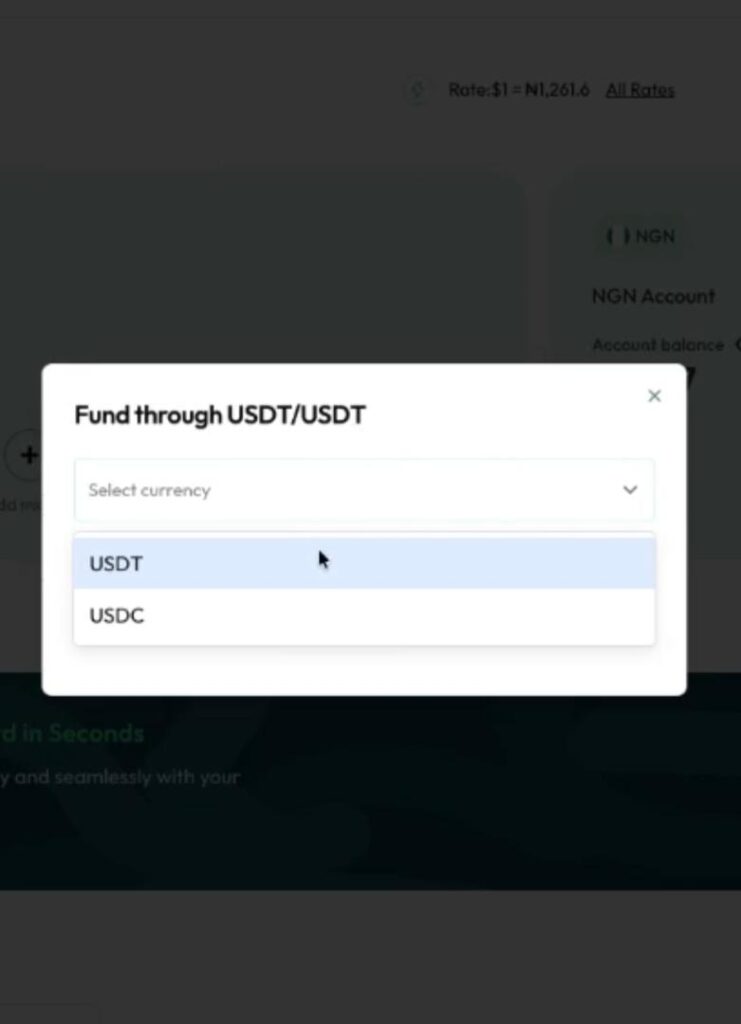
4. Select your preferred currency and network.


5. A QR code will appear along with your wallet address. Complete your payment, and your account will be funded!

Finally, as a Freelancer, creator, and entrepreneur, funding your Novacrust account with USDC or USDT is now seamless, secure, and fast.

Start transacting with stablecoins today on Novacrust! Sign up Now.

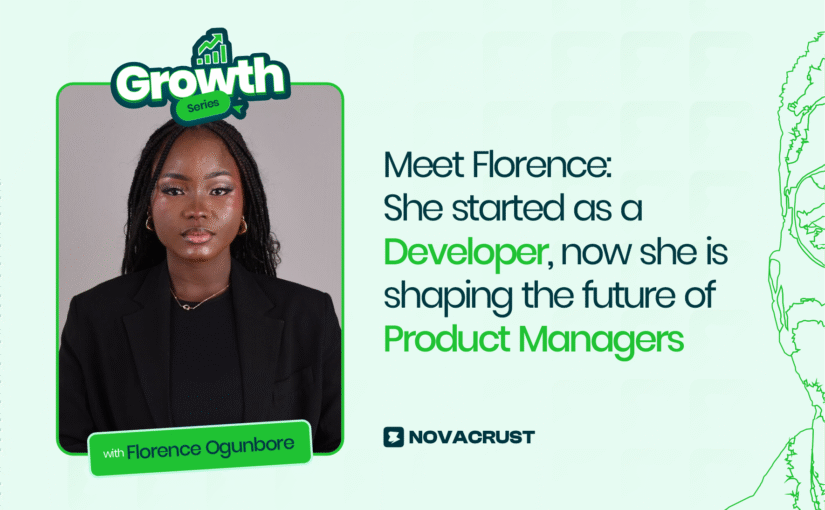
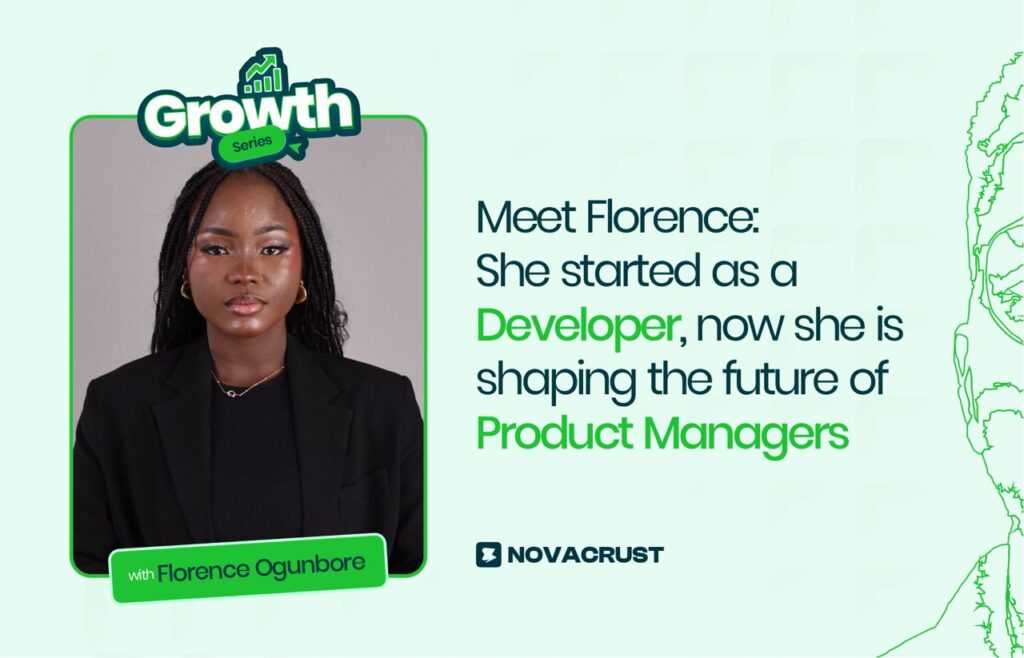
Meet Florence Ogunbore: She started as a developer, now she is shaping the future of Product Managers

Florence didn’t set out to become a Product Manager, she simply followed her curiosity, her love for building, and her drive to solve real problems. What started as a front-end development journey gradually unfolded into a passion for product thinking, community building, and guiding others entering tech.

In this interview, she shares how she transitioned into PM, built Product Buddies, earned an industry nomination, and why the version of her from three years ago would be proud today.

Hi Florence, Welcome to our Growth Series. Can you please tell us about yourself. who is Florence Ogunbore?

My name is Florence Oguunbore. I’m a Product Manager by day and a Web Developer whenever I get the chance. I actually started my tech journey as a web developer, learning front-end. Along the way, I came across product management, although at the time, I didn’t know that was what I was doing.

While working as a developer in a software agency, I found myself taking on responsibilities like coordinating tasks, managing people, and handling product decisions. It wasn’t until later that I realized those responsibilities fell under product management. I’ve now been a Product Manager for over three years.

You mentioned you started earlier but didn’t know it was product management at the time. Can you clarify your timeline?

Yes, I started coding in 2018 and worked fully as a developer. In 2021, while working at a software agency, I was put in charge of an internal product. I was acting almost like the CTO managing people, assigning tasks, keeping an eye on deliverables, even though I didn’t know it was called product management then.

I remember telling a friend that I didn’t want to only build things; I wanted to be part of the process before the building started. Even as a developer, I always attended client meetings to understand what we were building.

Later in 2021, I stepped away from coding and focused solely on managing that in-house project. That was when I consciously began learning product management. From December 2021 to January 2022, I started taking PM courses. By early 2022, I moved fully into product management, and by the end of the year I got my first PM role.

You also mentioned you still work as a web developer when you get the chance. Why “when you get the chance”?

Because product management is extremely time demanding. You have meetings from morning to afternoon, working closely with teams in real time.

Web development, on the other hand, gives me flexibility I can jump into it any time my schedule is free. But PM work is mostly daytime and structured.

Tell us more about Product Buddies. What is it about, and what have you achieved so far?

Product Buddies started as a support group. A popular product management OG created a PM challenge where participants picked a product and did a presentation. We created a channel for that challenge, and afterward we asked ourselves: Do we really need to disband this? Why not build something out of it?

That’s how Product Buddies was birthed. It started as a community for entry-level PMs and later grew to include mid-level and senior PMs. Today, we have over 1,000 members. We also have a Twitter community. We keep the group friendly, not overly serious, but still very supportive.

You were nominated for the Product that Counts Awards this year. How did that feel?

Honestly, I can never get used to how people see me. A friend asked for my information, and I was confused at first. Then she told me she wanted to nominate me for something.

The people who have won before are OGs in the industry, so it felt surreal. I’ve only been doing this for about three years, so the nomination felt big. I didn’t even know how to process it.

What are some cool things about product management that you’d tell someone interested in breaking into the field?

Two things:
1. You’ll learn a lot. PM exposes you to new knowledge, communities, and people.
2. You get to help people. There’s nothing like seeing users interact with a product you worked on, it’s very rewarding.

Would Florence from three years ago be proud of who you are now?

The 2022 version of me would be proud of me like mad! I’ve achieved so much, learned so much, and I’m genuinely enjoying this journey.

For someone who wants to go into PM or web design, what’s your advice? Should they get a job first and learn on the go, or learn first?

I’d say start with a beginner course. Learn the basics, the foundation is important and unavoidable. Use free resources too. First learn it, then decide if it’s really what you want.

After that, start putting yourself out there. Show your process, practice publicly, and apply for opportunities even if it’s an internship role.

Florence’s story is a reminder that career journeys don’t always follow a straight line, sometimes they unfold as we grow, explore, and step into new challenges. From writing code to managing products and building thriving communities, her path shows the power of curiosity, consistency, and learning in public. Whether you’re transitioning into PM, exploring web development, or still figuring out where you belong in tech, her story is proof that starting small, staying open, and showing your process can take you farther than you imagine.