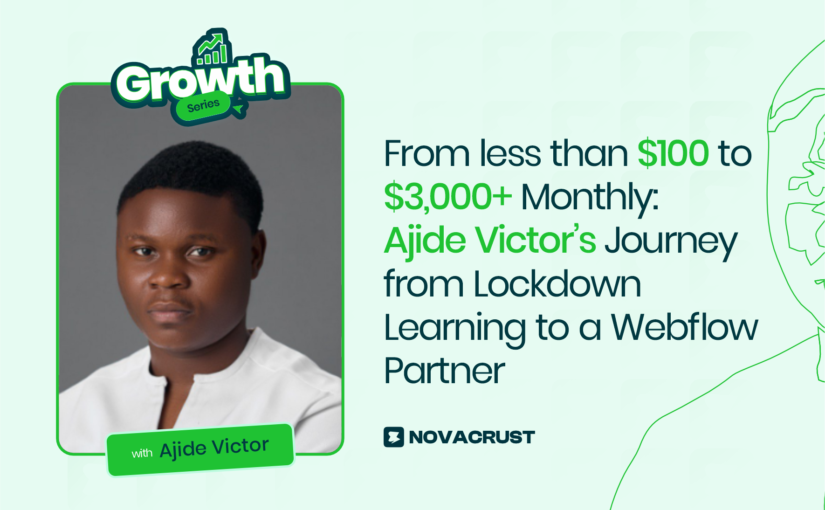
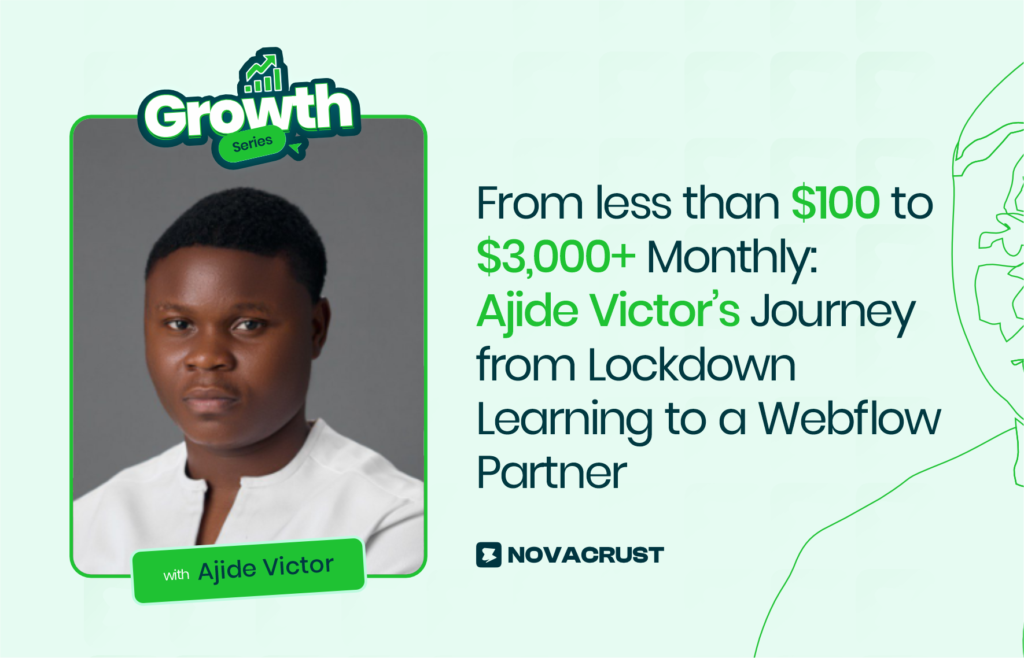
From less than $100 to $3,000+ Monthly: Ajide Victor’s Journey from Lockdown Learning to a Webflow Partner.

Victor Ajide didn’t stumble into web design by accident. What started during the COVID lockdown as curiosity and experimentation has grown into a full-fledged career building scalable websites and digital products for startups and businesses.

Today, Victor runs a web studio in Nigeria, mentors upcoming designers, and helps founders turn ideas into products that don’t just look good but work. In this Growth Series interview, he shares how consistency changed his life, the lessons freelancing taught him early, and why his younger self would be proud of how far he’s come.

Hi Victor, welcome to our Growth Series. Can you tell us about yourself and your journey into web design and Webflow?

My name is Ajide Victor. I’m a web designer, developer, and product builder. I run a web studio in Nigeria where we work with startup founders and businesses to turn ideas into scalable websites and digital products that don’t just look good but actually work.

My journey into tech started during the COVID lockdown when schools were shut down and we were all at home. While exploring online, I discovered web design, and a friend who was already a developer introduced me to Webflow. I took my time to learn the tool, shared my learning process publicly, and gradually began building real products.

What I enjoy most is taking ideas from zero and turning them into usable products. Along the way, I’ve also mentored people and guided others who are just starting out.

What was your first paid project, and what did it teach you?

My first paid gig wasn’t web design it was graphic design. I used a mobile app called PixelLab to design flyers and mockups for small businesses. I earned between ₦500 to ₦3,000 per job.

At that time, many people my age were involved in internet fraud, so realizing I could earn honest money from a digital skill even if it was small meant a lot to me. It showed me that skills could pay and that growth was possible.

Was there a moment you realized this could be a full-time career?

It wasn’t sudden. I didn’t even know about freelance platforms at first. What changed everything was understanding the power of visibility.

I started posting consistently on Facebook sharing my work, teaching what I was learning, and documenting my progress. I showed up daily and weekly. Over time, people began to understand what I did, and clients started reaching out. That consistency made me realize this could become something serious.

Did you recognize your potential before seeing it as a career path?

Not initially. I was still a student then and graduated in July 2025. Design was just a side hustle to survive.

That changed when I worked on a Webflow project that pushed me beyond my comfort zone. It required problem-solving, attention to detail, and confidence in my decisions. Completing that project made me realize I could handle complexity and that this skill could take me far.

Can you share a major challenge and how you turned it into growth?

One major challenge was communicating with international clients, especially because of my accent. I used to be afraid of speaking on calls because some people judged me before hearing what I had to offer.

Instead of letting that stop me, I worked on improving my communication. I started speaking more at events, slowed down my speech, and let my work speak for itself. Over time, the fear faded, and my confidence grew. That experience taught me resilience and adaptability.

How do you stay motivated during slow periods or with difficult clients?

I don’t wait for motivation I focus on preparation. During slow periods, I improve my skills, review past work, identify gaps, and learn new things.

I also optimize my portfolio, refine my Upwork profile, experiment with ideas, and stay visible online. Slow periods are part of freelancing, and I use them as opportunities to level up.

How do you balance creativity with client expectations?

It starts with clarity. Before designing anything, I make sure I fully understand the client’s goals. Creativity is a tool for solving problems not just making things look good.

Every design decision I make is tied back to business goals and performance. Clear communication and regular updates help keep everything aligned.

Do you follow a structured workflow or work intuitively?

I follow a structured workflow. Structure gives creativity direction and ensures smooth delivery.

I start by understanding requirements, reviewing the brief, and breaking the project into milestones. I communicate consistently so there are no surprises. This approach helps me deliver quality work every time.

How do you position yourself to attract high-paying clients?

I focus on value, not volume. I’m intentional about the clients I work with and clearly state my pricing.

I showcase recent, relevant work, explain my process publicly, and maintain a strong presence on X (Twitter). My portfolio, pricing, and online presence are aligned with the level of clients I want to attract.

Do you share your process publicly to teach or inspire others?

Yes. I share my work openly. When I was active on Upwork, I helped people optimize their profiles, reviewed accounts, and even sponsored connects for some.

I also share educational content, host X Spaces, and organize learning sessions for people interested in Webflow and no-code development.

Have you mentored others? Can you share a moment where your help made a difference?

Yes. One case I remember clearly was someone who had been applying for jobs for a long time without success. Instead of only advising him, I brought him in to work with me, gave him real tasks, and paid him.

That experience helped him gain confidence, build experience, and move forward in his career.

How important is community to growth?

I haven’t built a personal community yet, but I’ve actively participated in many. I’ve contributed by helping others, sharing resources, and answering questions.

In some communities, I was eventually made an admin because of my involvement. Community accelerates growth, exposes you to opportunities, and keeps you accountable.

How do you balance learning, work, and mentorship?

Time management is key. I schedule mentorship sessions between 9pm and 10pm after my workday ends.

During the day, I focus strictly on client work. At night, I mentor, respond to messages, and attend to requests. Clear boundaries help me stay productive.

What’s a hard truth about freelancing beginners should know?

Not every proposal gets a response. Many clients don’t understand the work happening behind the scenes.

Freelancing includes rejection, slow periods, and misunderstandings. It’s part of the journey.

Have you faced challenges with international payments?

Yes. Many platforms like PayPal and Wise are limited or unsupported in Nigeria. This is a major challenge I’ve personally faced when working with international clients.

What advice would you give your younger self?

Start early and ask for help not money, but guidance.

I reached out to people to learn about Upwork, proposals, and profile optimization. Those conversations saved me months of confusion. Don’t try to figure everything out alone.

What mistake shaped your growth the most?

For a long time, I believed I didn’t need better tools. I kept using an old HP laptop because it could “manage” the work.

Eventually, I invested in better equipment, a proper workspace, and a refined workflow. My speed, quality, and confidence improved. Investing in yourself matters.

How do you define success today?

Success isn’t just money. When I started, I was simply using Webflow. Today, I’m Webflow certified. That progress means a lot to me.

Growth and consistency matter more than numbers.

Would your past self be proud of you?

Absolutely.

If you weren’t in web design, what would you be doing?

Before tech, I was into music. I played drums at parties, concerts, and events. If not web design, I’d probably still be pursuing music.

What’s one truth young creatives in Nigeria need to hear?

Consistency beats talent. If you don’t show up, people won’t know how good you are. Talent without visibility is almost the same as no talent.

How do you handle rejection?

I treat rejection as feedback. I reach out, ask for the criteria used to select the successful candidate, and improve on those areas so I don’t repeat the same mistake.

Can you share your first earnings versus now?

My first earnings were ₦500 – ₦3,000 per graphic design gig.

Today, I earn between $3,000 and $5,000 monthly, depending on projects. There’s no fixed amount, but the growth has been consistent.

Victor’s journey reminds us that growth doesn’t always come from big breaks it comes from showing up consistently, learning in public, and being willing to start small. From earning a few thousand naira designing on his phone to building to a Webflow Partner and mentoring others, his story proves that visibility, preparation, and resilience can open global doors. If you’re navigating freelancing, web design, or no-code development, Victor’s path is a powerful reminder that steady effort compounds over time.
How Tech-Savvy Are YOU?

Join Our Weekly Quiz Evey Friday and Stand a Chance to Win $10

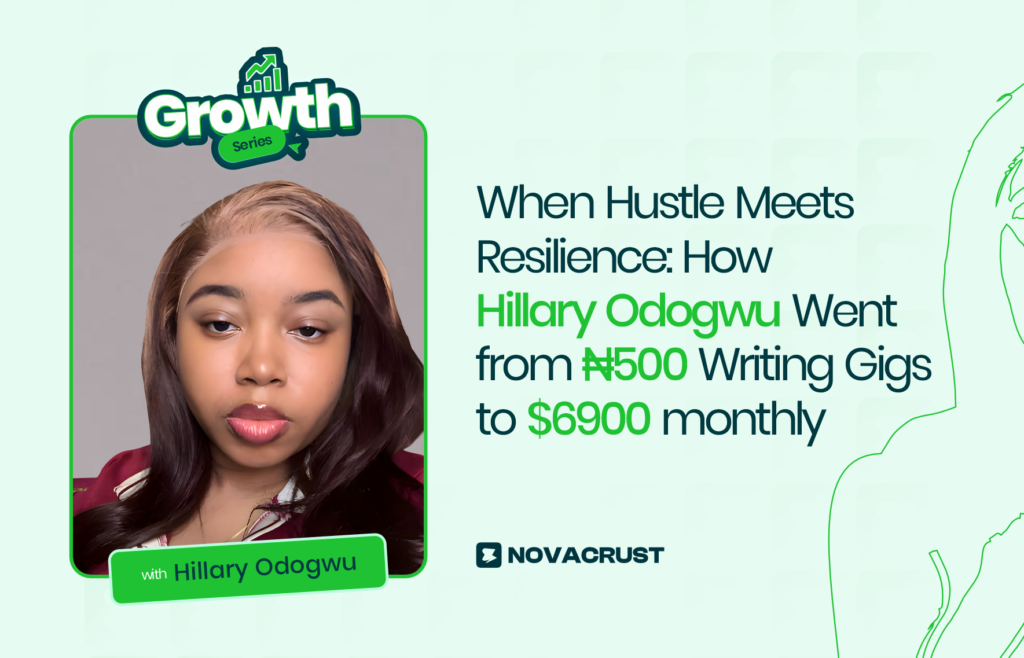
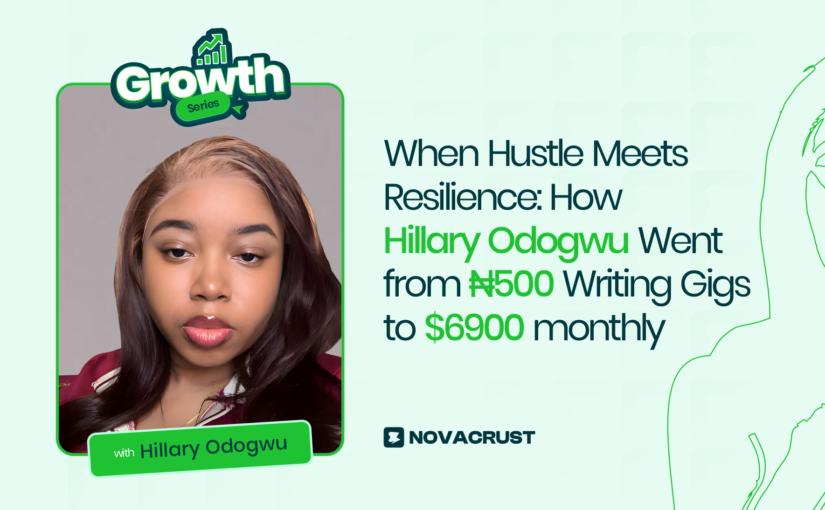
When Hustle Meets Resilience: How Hillary Odogwu Went from ₦500 Writing Gigs to $6900 monthly 

Hi Hillary, welcome. If you had to define yourself in a few words, who is Hillary Odogwu?

My name is Hillary Odogwu. I’m a marketer and ads coach. I started my journey with dropshipping long before ads and coaching became part of my life.

What was your first money-making gig, and how did it shape you?

The first money gig I ever did was writing, and the pay was ₦500. I didn’t feel bad about it, but it taught me something important that I needed to do better for myself.

How did you transition from dropshipping to selling knowledge and then into ads?

While I was doing dropshipping, I used to compile training materials and PDF guides for people who wanted to learn how to become successful dropshippers. At the same time, I was selling shoes sourced from my wholesaler.

At some point, I realized I was passionate about selling information. I’ve always been expressive and open online, so selling what I knew felt natural. I kept thinking about how much knowledge I had in my head and how pointless it was not to monetize it.

The first product I sold was an Amazon KDP course. From there, I moved into affiliate marketing. Eventually, I discovered my passion for Instagram ads. Once I figured out what worked, I started teaching others the exact strategies and that’s how everything began.

What is the biggest myth people believe about digital marketing?

The biggest myth is that people think they can enter digital marketing and make money overnight. Marketing requires time, energy, and money. You have to learn many skills, and it’s not a get-rich-quick scheme the way it’s often portrayed online.

Anyone who thinks they can start today and make ₦500k next week is being delusional. It doesn’t work that way.

Your online presence is bold and sometimes controversial. How do you balance that with teaching and coaching?

I honestly just go with the flow. If I feel like making a controversial post, I do it. If I want to grow my account, I know exactly what to do.

But I don’t depend on social media for income I run a lot of ads. So people buy from me regardless. I don’t plan my posts or follow a strict content strategy. I just express whatever I feel like expressing at any moment.

Have you experienced difficulties receiving international payments?

Not really. There are many Nigerian startup apps that help with collecting USD payments. I’ve had enough options, so I haven’t faced any major issues.

You’ve mentioned learning some hard financial lessons. Can you share one that shaped you?

I don’t like to call them mistakes I call them lessons.

One major lesson was learning to avoid extremes: too much instant gratification and too much delayed gratification. Early last year, I felt I had worked hard for a long time and deserved to spend my money freely. I was earning decently, but spending immediately on gadgets and luxuries drained my finances.

Now that I earn more, I understand how to manage resources better. I only spend on things that multiply my income. You have to find a balance where you manage, save, and invest wisely.

What is the most important trait for success in marketing?

Resilience.

Some days sales are good. Some days they’re bad. Some days you won’t make a single sale. Things that worked for months can suddenly stop working.

You need resilience to keep going when everything feels uncertain. Without it, you’ll give up easily or jump from one thing to another.

What keeps you grounded when things get overwhelming?

I don’t care about public opinion. My principles are based on the standards I set for myself.

What drives me is value giving people knowledge, showing them what’s possible, and providing tools that actually make their lives better. I’m value-driven, not validation-driven.

What advice would you give your younger self?

Don’t be afraid to ask. And don’t be ashamed of receiving good things.

Growing up, I was scared to ask for money because adults around me always complained about finances. That mindset affected my marketing because I was afraid to ask people to pay for my products.

Eventually, I learned that people don’t pay just to buy they pay because an offer is attached. That realization gave me the confidence to charge my worth.

Where do you see yourself in the next few years?

I honestly don’t know, I go with the flow. But I always set goals.

By 19, I made my first million.
By 20,I left my parents house.
By 21, I had other goals I wrote down and achieved.

I don’t stop achieving things. That’s just how I am.

What are you currently building?

I’m building an agency called Andro media. The goal is to revolutionize how physical business owners sell online helping them sell out, hit targets, and scale.

We plan to support at least 70 business owners in our first month, between January and February. I also want to build startups, buy startups, and eventually launch my own brand possibly skincare or perfume.

After investing and setting everything up, I want the freedom to live life on my own terms.

Would you consider relocating if the opportunity arises?

Only if it’s the United States and only if it offers significantly more than what I earn now, plus a comfortable lifestyle, maybe a penthouse in New York.

If it’s not the US, the only other country I’d consider is the UK. Right now, I don’t see a reason to leave unless Nigeria becomes much worse.

Whether you’re a budding entrepreneur, digital marketer, or creative looking to monetize your skills, Hillary’s story reminds you to stay resilient, stay bold, and always keep learning. In her words; success doesn’t come overnight, but consistent effort and knowing your worth will take you further than you ever imagined.

Novacrust Joins the Circle Alliance Program

Novacrust joins circle Alliance Program

We are excited to announce that Novacrust has officially joined the Circle Alliance Program, a prestigious global network of innovative organizations reshaping the future of digital finance and cross-border payments.

The Circle Alliance Program brings together industry pioneers and technology leaders committed to advancing the adoption of USDC and building accessible, transparent digital financial infrastructure worldwide. As part of this ecosystem, Novacrust will collaborate with fellow innovators, explore new possibilities for stablecoin-powered payments, and contribute to creating a more inclusive financial system for Africa and beyond.

What is the Circle Alliance Program?

The Circle Alliance Program is Circle’s initiative to unite forward-thinking companies across fintech, blockchain, and digital finance sectors. Members of this alliance work together to expand financial inclusion, enhance cross-border payment systems, and unlock the full potential of USDC and Web3 services.

Being part of this network means Novacrust will:

  • Collaborate with Global Innovators: Connect with industry leaders and technology partners building the next generation of financial infrastructure
  • Access Expert Resources: Engage directly with Circle’s Product, Engineering, Ventures, Policy, and Developer teams through dedicated support and members-only events
  • Drive Real-World Impact: Explore new use cases for USDC integration that solve actual payment challenges facing individuals and businesses across Africa
  • Enhance Visibility: Gain recognition through the Circle Alliance Directory alongside prominent players in fintech, enterprise, and DeFi sectors
  • Shape the Future: Contribute insights and feedback that influence the development of Circle’s products and the broader digital finance ecosystem

Why This Matters for Novacrust

At Novacrust, our mission has always been to enable individuals and businesses across Africa to get paid, spend, and make payments reliably and instantly. Joining the Circle Alliance Program strengthens our ability to deliver on this promise by connecting us with the infrastructure, expertise, and network necessary to scale our impact.

This partnership aligns perfectly with our core offerings:

Enhanced Cross-Border Payments

With Circle’s robust USDC infrastructure, we can further optimize our cross-border payment services, ensuring money reaches local accounts, mobile money wallets, and global accounts within minutes not days.

Stablecoin Integration

USDC support across multiple blockchains including Base, Ethereum, Polygon PoS, OP Mainnet, and Celo enables us to provide our customers with more options for receiving, spending, and converting digital assets seamlessly.

Global Account Services

Our USD, EUR, and GBP accounts benefit from Circle’s transparent and compliant ecosystem, allowing customers to fund their accounts flexibly and transact with confidence.

Virtual Card Solutions

Integrating USDC with our virtual card services means customers can fund cards in stablecoins and spend globally with lower currency conversion costs and faster settlement times.

What’s Next

Joining the Circle Alliance Program marks a significant milestone in Novacrust’s journey to revolutionize payments across Africa. This partnership opens doors to:

  • Product Innovation: Collaborate on new features and services that leverage USDC’s stability and Circle’s technology
  • Expanded Reach: Access to Circle’s global network and potential co-marketing opportunities to amplify our impact
  • Regulatory Excellence: Benefit from Circle’s compliance expertise as we navigate the evolving digital asset regulatory landscape
  • Community Engagement: Connect with other Alliance members to share insights, best practices, and explore partnership opportunities

We’re committed to leveraging this partnership to enhance our platform, reduce transaction costs for our customers, and bring the benefits of digital finance to more individuals and businesses across Africa and beyond.

About Novacrust

Novacrust is an all-in-one platform that empowers individuals and businesses across Africa with:

  • Cross-Border Payments: Send money to local accounts, mobile money, and global accounts within 5 minutes
  • Global Accounts: USD, EUR, and GBP accounts with flexible funding options
  • Off-Ramp Services: Receive payments from U.S. banks, Payoneer, Stripe, PayPal, and other major platforms
  • Crypto Support: Receive, spend, and convert crypto to cash seamlessly
  • Virtual Cards: Fund in local currency or stablecoins and spend globally
  • OTC Services: Quick off-ramping from Zelle, PayPal, CashApp, and Revolut
  • Savings Solutions: Earn and preserve value through diverse fiat and DeFi channels

Learn more about the Circle Alliance Program: Circle Alliance Program

Visit our Circle Alliance Directory listing: Novacrust on Circle Partners

Connect with us: novacrust.com

Stay tuned for more updates as we continue building the future of cross-border payments and financial inclusion across Africa.