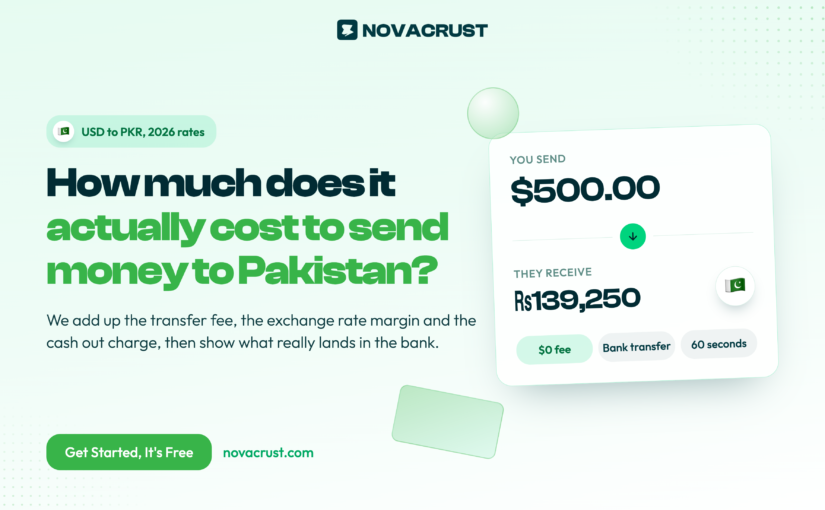
Pakistan pulled in a record $41.6 billion in remittances in the fiscal year that just closed, up 8.6 percent from the year before, according to State Bank of Pakistan data. Saudi Arabia alone sent home $829.6 million in June, with the UAE, UK, and US close behind. That’s a lot of money moving through a system where the fee you’re quoted and the amount that actually lands are almost never the same number.
The United Nations set a global target of under 3 percent as the fair cost of sending remittances. The World Bank’s own tracking shows 28 countries still charge more than that on at least one major corridor. Here’s where a transfer to Pakistan actually loses money, and what it costs to send $100, $500, and $1,000 through the popular options.
Where a transfer to Pakistan quietly loses value
Three things eat into a transfer before your family or your recipient ever sees it:
- A marked-up exchange rate. Most senders never compare the rate they’re offered to the actual market rate. The gap is often bigger than the flat fee on the receipt.
- A flat sending fee on top of that rate. Banks and older wire services tend to charge the highest flat fees, sometimes $15 to $40 on a single transfer.
- Cash pickup markups. Picking up rupees in cash instead of a direct bank or mobile wallet deposit usually costs more, since the provider is pricing in a physical agent network.
We break down the same pattern corridor by corridor in our guide to choosing the best way to send money internationally. The provider quoting the rate closest to the real market number, not the one with the flashiest app, is the one protecting your money.
What it actually costs to send money to Pakistan
| Amount sent | Bank wire (typical) | Cash pickup service | Digital transfer app |
|---|---|---|---|
| $100 | $15 to $25 flat fee, plus rate markup | $5 to $10 fee, weaker rate | $1 to $3 fee, closer to market rate |
| $500 | $25 to $35, plus 3 to 5% rate margin | $8 to $15, plus 4 to 6% rate margin | Low flat fee, 1 to 2% rate margin |
| $1,000 | $30 to $45, plus rate margin | $10 to $20, plus rate margin | Low flat fee, competitive rate |
The pattern holds across every corridor we’ve looked at: a bank wire’s flat fee looks manageable until you add the rate margin hiding behind it, and a small percentage on a large transfer adds up fast. On a $1,000 monthly transfer, a 4 percent all-in margin quietly removes $40 every single month, before any flat fee at all.
Where the money actually comes from
Gulf countries drive most of Pakistan’s remittance inflows. Saudi Arabia and the UAE together sent over $1.6 billion in June alone, with the UK and US making up most of the rest. If you’re sending from any of these corridors, the rate you’re offered should be checked against the market rate every time, not assumed to be fair because it’s from a recognized bank.
A cheaper way to send to Pakistan
A Novacrust account lets you hold US dollars and send to Pakistan, or to 50+ other countries, without stacking a bank, a card, and a separate remittance app on top of each other. You see the exchange rate before you confirm, and the fee is separate and visible, not folded into a padded rate. If you’re weighing wire transfer against a digital option for the first time, our comparison of ACH vs wire vs SWIFT covers how each one actually settles and what it costs.
FAQ
What’s the cheapest way to send money to Pakistan?
Whichever option quotes a rate closest to the real market rate and charges a small, transparent fee separately. Direct bank or mobile wallet deposit is almost always cheaper than cash pickup.
How much does it cost to send $500 to Pakistan?
Through a bank wire, expect $25 to $35 in flat fees plus a 3 to 5 percent rate margin. Through a digital transfer app with a transparent rate, the total cost is usually a fraction of that.
How long does a transfer to Pakistan take?
Bank wires typically take one to three business days. Digital apps built for cross-border transfers, including Novacrust, usually settle in minutes once your funds are confirmed.
Is a digital money transfer app safe for sending money to Pakistan?
A licensed, regulated transfer provider is not inherently less safe than a bank wire. Check that any provider you use is licensed to operate in the corridor you’re sending through before you commit to it.
Why did Pakistan’s remittances hit a record in 2026?
State Bank of Pakistan data points to stronger inflows from Gulf countries, tighter enforcement against informal transfer channels, and consolidation of exchange companies, all of which pushed more remittances through official, trackable routes.
Final thoughts
With $41.6 billion already flowing through official channels and the State Bank projecting even more next year, the fee structure you choose matters more than ever. Compare the real exchange rate before you send, every time, even if it only takes an extra minute.
Sign up to get started on Novacrust here.