Americans are sitting on $23 billion in unused gift cards right now, and only 9% of people holding one ever try to sell it, according to Capital One Shopping’s 2026 research. Type “gift card exchange” into Google and you’d guess the other 91% just don’t know these platforms exist. The real reason is stranger: a lot of people searching that phrase are looking for something most gift card exchanges don’t actually do.
If you’ve searched “gift card exchange” expecting to trade your unwanted Starbucks card directly for an Amazon one, here’s what these platforms actually offer, where a real swap does exist, and the fastest way to turn a card into money you can use today.
What a “gift card exchange” actually is
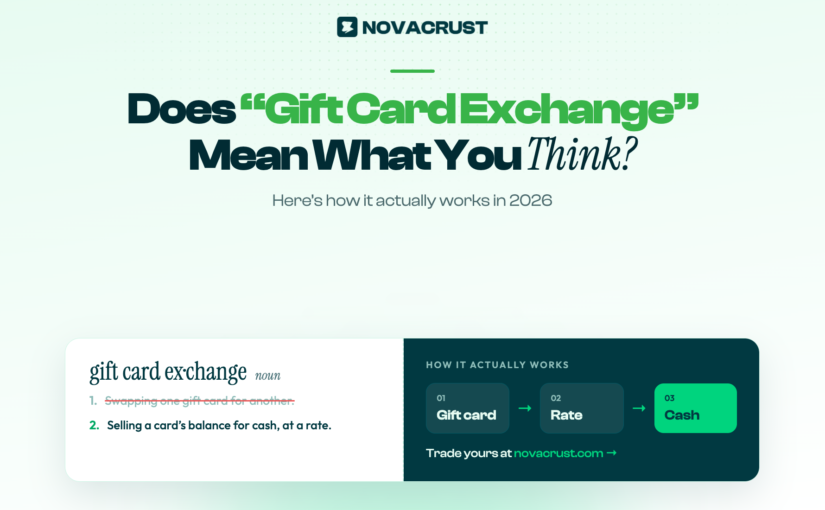
Despite the name, most gift card exchanges aren’t swap meets. CardCash, GCX (formerly Raise), and similar sites work as resale marketplaces: you sell your card, the platform buys it at a discount, and someone else buys it back at a smaller markup. NerdWallet describes the model plainly: you list an unwanted or partially used card for sale, or shop for someone else’s discounted card. Nobody is matching your Starbucks card to a stranger who happens to be holding an Amazon card. You’re selling into a pool, not swapping with a person.
That distinction changes what you should expect to get. A marketplace prices in the risk that your card doesn’t resell, so it pays you less than face value upfront. Real payout rates by brand show how wide that gap can run, from the high 80s down to 60% or lower depending on the card.
Does a real card-for-card swap exist anywhere?
Sort of. A small number of peer-to-peer apps, FlipGift among them, let two people match directly: you list your unwanted card, someone else lists theirs, and the app connects you if there’s a fit. It’s the closest thing to a literal exchange. The catch is liquidity. Finding someone who wants your exact brand and holds the one you want, at the same time, takes patience. Most listings sit for days or longer waiting for a match, which is a bad trade if you need cash or credit now instead of eventually.
What you’re actually choosing between
| Model | How it works | Speed | Example |
|---|---|---|---|
| Resale marketplace | Platform buys your card at a discount, resells it to someone else | 1 to 3 business days after verification | CardCash, GCX |
| Peer-to-peer swap | You wait for another user with a matching card to trade with | Days to weeks, depends on the match | FlipGift |
| Direct buyer | The platform buys your card outright at a published rate, no reselling or matching involved | Minutes | Novacrust |
The first two models both put a stranger, or the wait for one, between you and your money. A direct buyer skips that step entirely. It quotes a rate, verifies the card, and pays out from its own funds instead of waiting to find its own buyer. That’s why selling a gift card for instant cash on a platform built that way usually beats both a marketplace listing and a swap queue on speed, even when the headline percentage looks similar on paper.
Why the “exchange” framing sells the option short
Thinking in terms of “exchange” also hides a third path: you don’t have to convert your card into local currency at all. If you already hold or want crypto, converting a gift card straight into USDT, USDC, or another crypto skips the bank step completely and settles just as fast as a cash payout.
And if you’re on the buying side of one of these marketplaces, the same rules that apply to any secondhand purchase apply here too. Before you pay a stranger for a resold card, run through the checks that catch a scam before your money moves, since a marketplace listing carries the same risk as any other secondhand sale.
FAQ
Can I trade one gift card directly for another?
Rarely, and only through a small number of peer-to-peer apps that have to match you with someone who wants your exact card and holds the one you want. Most platforms that call themselves a “gift card exchange” buy your card outright instead of matching it to a person.
Why don’t gift card exchanges pay full face value?
Because they’re pricing in the risk that the card doesn’t resell, plus fraud checks and processing costs. The bigger and more liquid the brand, Amazon and Apple especially, the smaller that discount tends to be.
Is a gift card exchange safe to use?
It depends on the platform, not the category. Look for one that shows its rate before you commit, verifies both sides of the trade, and never asks you to send a card code before any money moves.
Is Novacrust a gift card exchange?
Not in the marketplace sense. Novacrust buys your card directly at a published rate and pays out in minutes, instead of listing it for someone else to buy.
How fast do gift card exchanges actually pay?
Marketplace models typically take 1 to 3 business days once your card is verified. Peer-to-peer swaps can take days to weeks waiting for a match. A direct buyer like Novacrust pays out in minutes.
Skip the marketplace, skip the wait
You don’t need a matching stranger or a multi-day hold to turn a gift card into money you can use. Sell your gift card on Novacrust for an upfront rate and a payout in minutes, in cash or crypto.
Sign up to get started on Novacrust here.