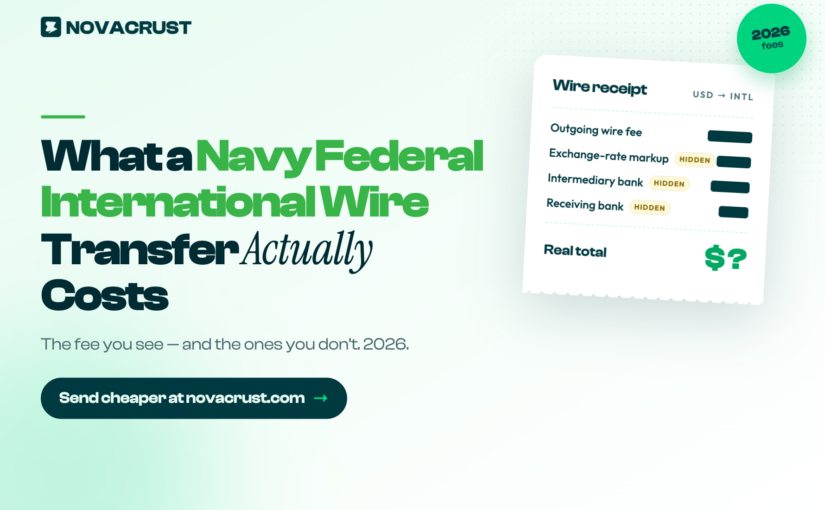
What a Navy Federal International Wire Transfer Actually Costs in 2026

$25. That is what Navy Federal charges you to send an international wire, and the money can still take up to 7 business days to land, sometimes with less showing up on the other end than you sent.

Navy Federal is one of the largest credit unions in the country, and thousands of its members search for the same thing every month: how to actually send a wire abroad, what it costs, and how long it takes. The answers are not hidden, but they are not exactly convenient either. Here is what Navy Federal actually charges, how the process works, and a faster way to move the same money.

What a Navy Federal wire actually costs

According to Navy Federal’s own fee schedule, the breakdown is simple:

  • Domestic outgoing wire: $20
  • International outgoing wire: $25
  • Incoming wire (domestic or international): $0

That $25 only covers what Navy Federal itself charges. It does not cover what happens once your money leaves the credit union. International wires typically pass through one or more correspondent banks before reaching the recipient’s account, and each one can take a small cut along the way. That is a big part of why a wire often arrives short of what you actually sent, and it is true whether you bank with Navy Federal, Chase, or almost anyone else moving money the traditional way.

How long it actually takes

Navy Federal states that domestic wires post within 1 to 2 business days, while international wires take 5 to 7 business days. Incoming wires are processed the same day if received before 6:30 pm ET.

A week is a long time to wait when someone overseas is counting on that money for rent, tuition, or an emergency. If timing matters more than the $25 fee, it is worth comparing wire against the other transfer options before you commit. Novacrust’s breakdown of ACH, wire, and SWIFT walks through when each one actually makes sense.

How to actually send one

Unlike most digital-first banks and fintech apps, Navy Federal does not let you initiate an international wire entirely on your own through online banking. You have four options:

  1. Send a secure message through mobile or online banking
  2. Call 1-888-842-6328 and request it by phone
  3. Visit a branch, and confirm ahead of time that it offers international wire services, since not every branch does
  4. Mail a completed International Transfer Request Form to Navy Federal’s Funds Disbursement Section in Vienna, Virginia

Every route requires you to fill out an International Transfer Request Form with the recipient’s bank details, SWIFT code, and correspondent bank information if the receiving bank needs one. None of it happens with a couple of taps on your phone.

Is there a limit on how much you can wire?

Navy Federal does not publish a fixed dollar limit for wire transfers on its website. In practice, that usually means larger transfers get extra scrutiny rather than an automatic cap: expect additional identity checks or a request to confirm the transfer by phone or in person once the amount gets large. If you are planning to move a significant sum, call Navy Federal directly before you try to send it, so you are not caught off guard mid-transfer.

What about a virtual card number?

Navy Federal does not market a standalone virtual card number the way some digital banks do. Its debit and credit cards work with Apple Pay, Google Pay, and Samsung Pay for tap-to-pay purchases, but there is no separate, disposable card number generated on demand for online checkout. If that is specifically what you are after, a USD Virtual Card built for online spending will get you closer to what you are picturing.

A faster way to move the same money

$25 and up to a week is the cost of using the traditional wire system, and federal rules exist specifically because that system has historically hidden its true price from consumers. The Consumer Financial Protection Bureau’s remittance transfer rule requires many providers sending international transfers to disclose the exact exchange rate and fees before you send, precisely because that information used to be buried or missing entirely.

Novacrust skips the branch visits, the mailed forms, and the multi-day wait. Send money to 50+ countries in seconds, with the rate and fee shown upfront before you confirm anything. If a Navy Federal wire is only part of your routine because it is the option you already know, it is worth comparing it against what else is out there.

FAQ

Does Navy Federal charge to receive an international wire?
No. Navy Federal does not charge a fee to receive a wire, domestic or international. The sending bank or a correspondent bank in between may still take a cut before the money reaches your account.

How long does a Navy Federal international wire take?
Navy Federal states 5 to 7 business days for outgoing international wires, compared to 1 to 2 business days for domestic wires.

Can I send a Navy Federal wire entirely online?
Not fully. You can start the request through a secure message in online or mobile banking, but Navy Federal also requires a completed International Transfer Request Form, and some members choose to call or visit a branch instead.

Is there a maximum amount I can wire from Navy Federal?
Navy Federal has not published a fixed limit. Larger transfers are more likely to trigger extra verification, so call ahead if you are sending a significant amount.

Does Navy Federal offer a virtual card number for online purchases?
No. Navy Federal’s cards support mobile wallets like Apple Pay and Google Pay, but there is no separate on-demand virtual card number the way some digital-first banks offer.

Sign up to get started on Novacrust here.
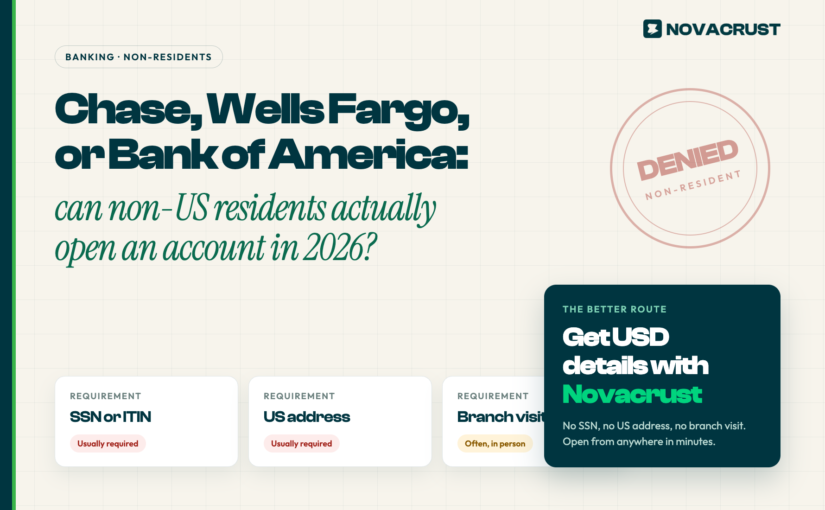
Chase, Wells Fargo, or Bank of America: Can Non-US Residents Actually Open an Account in 2026?

US federal law does not require a Social Security number to open a bank account. Under the Treasury Department’s Customer Identification Program rule, a foreign passport number and its country of issuance are legally enough to verify a non-US person. Walk into a Chase, Wells Fargo, or Bank of America branch with just a passport, though, and the experience usually tells a very different story.

That gap, between what the law technically allows and what each bank actually asks for, is where most non-resident account applications stall. Here is what each of the three biggest US banks really requires in 2026, and a faster route that skips the gap entirely.

What the law actually says

The Customer Identification Program rule, part of the Bank Secrecy Act, sets the federal floor for what a bank must collect before opening an account. For a non-US person, it accepts a taxpayer identification number, a passport number and country of issuance, an alien identification card number, or another government-issued document that shows nationality or residence and carries a photo. An SSN is one option on that list, not the only one.

In practice, individual banks are free to ask for more than the legal minimum, and Chase, Wells Fargo, and Bank of America all do.

Chase: an ITIN can stand in for an SSN, but you still need a US address

Chase accepts an Individual Taxpayer Identification Number as a substitute for an SSN on the application. Beyond that, it asks for official government-issued photo ID, which can be a passport, and proof of address such as a utility bill, a pay stub, or an employer letter dated within the last 60 days. Some Chase branches make exceptions for non-residents with extra documentation, but that varies by location and isn’t something you can count on walking in cold. Chase itself recommends confirming requirements with your specific branch before applying.

Bank of America: a scheduled conversation, not a self-serve form

Bank of America runs a dedicated path for international customers, split between international professionals and international students, but neither is a simple online signup. Both route you to book an appointment or a consultation with a specialist who confirms your eligibility and the documents you’ll need before you open anything. If you were hoping to finish this on your phone in ten minutes, that isn’t the process Bank of America has built for non-residents.

Wells Fargo: SSN or ITIN online, ID alone in a branch

Wells Fargo is the most specific of the three about what it will and won’t accept. To open an Everyday Checking account online, it asks for an SSN or ITIN, a US mailing address, and a mobile phone number. Without a US tax ID number, Wells Fargo’s own account-opening page states that non-US citizens can instead provide a government-issued ID that shows nationality or residence, but that path runs through a branch with two forms of identification, not the online application.

Read the fine print on all three banks and a pattern shows up fast: the identification rules have real flexibility, but the US address and the branch visit usually don’t.

The real wall isn’t the ID rule. It’s the address and the branch.

Every bank above technically allows a passport in place of an SSN somewhere in its process. None of them make that path a simple online form for someone who has never lived in the US. You need a US mailing address to receive statements and a debit card, and in most cases you need to show up in person, whether that’s a branch teller or a scheduled call with a specialist.

For freelancers, remote workers, and anyone getting paid in dollars from outside the US, that combination rules out the option entirely, not because the law says no, but because the paperwork does.

A USD Account that skips the address and the branch visit

A Novacrust USD Account gives you a real US account and routing number without a Social Security number, an ITIN, a US address, or a branch appointment. You open it from your phone, and it works the same way clients on Upwork, Fiverr, or a direct contract already expect: they send dollars to a US account number, and it lands in yours. For the fuller picture of how the traditional system treats non-residents and where Novacrust fits in, our guide to the US banking system for non-residents covers the rest of it.

If you’re a freelancer specifically weighing this against a traditional bank, a USD Account built for freelancers walks through how payouts from clients actually land, and opening one takes minutes, not a scheduled appointment.

FAQ

Do non-US residents legally need a Social Security number to open a US bank account?

No. Federal identification rules accept a foreign passport number and country of issuance as a valid alternative. Individual banks can still ask for more, and most do.

Can I open a Chase account without an SSN?

Chase accepts an ITIN as a substitute for an SSN on the application, but you’ll still need government photo ID and proof of a US address, and requirements can vary by branch.

Does Bank of America let non-residents open an account online?

Not as a simple self-serve form. Bank of America routes international professionals and international students through a scheduled appointment or consultation with a specialist first.

What does Wells Fargo accept if I don’t have an SSN or ITIN?

Wells Fargo’s online application requires an SSN or ITIN. Without one, its own guidance points non-US citizens to a branch visit with a government-issued ID showing nationality or residence, plus a second form of ID.

Is there a faster way to get a US account number without going through a traditional bank?

Yes. A Novacrust USD Account gives you a real US account and routing number from your phone, with no SSN, ITIN, US address, or branch visit required.

Sign up to get started on Novacrust here.
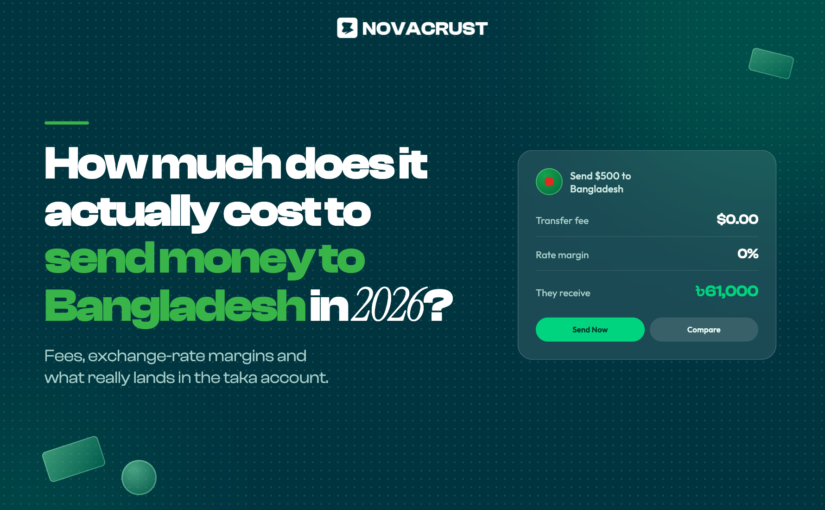
How Much Does It Actually Cost to Send Money to Bangladesh in 2026?

Bangladesh pulled in a record $35.56 billion in remittances in the fiscal year that just closed, up roughly 17.2 percent from $30.33 billion the year before, according to Bangladesh Bank data. The UAE, the US, the UK, and Saudi Arabia are the biggest sources, and most of that money is wired, walleted, or wired again before a single taka reaches a family’s hands. Every one of those steps has a price tag, and it is rarely the one advertised on the homepage.

The World Bank tracks exactly what senders pay on this corridor, and the numbers are not close. Here is what it actually costs to send $100, $500, and $1,000 to Bangladesh in 2026, where the fee hides, and the one government incentive that can put money back in your recipient’s pocket.

Where a transfer to Bangladesh quietly loses value

Three things chip away at the amount your family actually receives:

  • A marked-up exchange rate. This is where most providers make their real money. A transfer advertised as “no fee” can still cost more than one with a small, honest fee if the rate is padded underneath it.
  • A flat sending fee. Banks and card-funded transfers tend to charge the most here, sometimes stacked on top of the rate markup, not instead of it.
  • Cash pickup or agent markups. Picking up taka in cash instead of a direct bank or mobile wallet deposit usually costs more, since the provider is pricing in a physical agent network.

We walk through this same pattern across every corridor Novacrust supports in our guide to choosing the best way to send money internationally. The rule holds here too: judge a provider by what lands in Bangladesh, not by what it claims to charge.

What it actually costs to send money to Bangladesh

The World Bank’s Remittance Prices Worldwide database puts the average total cost of sending $200 from the United States to Bangladesh at 7.61 percent. The cheapest option it tracked, a bank-account-to-bank-account transfer, came in at 5.17 percent. The most expensive, a credit-card-funded transfer, ran 12.41 percent for the same amount and a slower delivery window.

Amount sentCheapest method tracked (5.17%)Corridor average (7.61%)Priciest method tracked (12.41%)
$100$5.17$7.61$12.41
$500$25.85$38.05$62.05
$1,000$51.70$76.10$124.10

Send $500 a month at the corridor average instead of the cheapest tracked method, and that gap alone runs over $145 a year. None of that ever reaches Bangladesh. It just funds whichever provider you picked.

The 2.5 percent incentive most senders miss

Bangladesh’s government pays a 2.5 percent cash incentive on remittances sent through formal, legally recognized banking and mobile financial service channels, and it confirmed the incentive continues in 2026. That money is credited on top of the exchange rate your recipient gets, but only when the transfer moves through a licensed provider, not an informal courier or an unregistered exchange. Sending $500 through a formal channel can mean an extra $12.50 landing in your recipient’s account for doing nothing differently except picking a legitimate provider.

It is the same principle we cover in our breakdown of what it costs to send money to Pakistan: the fastest way to lose value on a transfer is routing it through a channel that was never built to be transparent in the first place.

Bank account, bKash, or Nagad: what your recipient should use

Most Bangladeshi recipients now receive money one of two ways: straight into a bank account, or into a mobile financial service wallet like bKash or Nagad. Mobile wallets tend to win on speed and reach, since they do not require a recipient to visit a branch, but confirm your provider actually supports a direct wallet deposit before assuming it does. A transfer that has to route through an intermediary bank before reaching a wallet adds a step, and every extra step is another place a fee can hide.

The same tradeoff shows up whenever a large diaspora sends money home through a mix of banks and mobile wallets. Our guide to sending money to India covers a similar split between bank-linked transfers and app-based delivery, and the math for choosing between them is nearly identical.

A cheaper way to send to Bangladesh

A Novacrust account lets you hold US dollars and send to Bangladesh, or to 50+ other countries, without juggling a bank, a card, and a separate remittance app. You see the exchange rate before you confirm, and any fee is shown separately instead of buried in a padded rate. That matters most on a corridor like this one, where the gap between the cheapest and priciest method tracked by the World Bank is more than double.

FAQ

What’s the cheapest way to send money to Bangladesh?
A direct bank-account-to-bank-account transfer through a formal, licensed channel usually beats cash pickup and card-funded options, and it also qualifies for the government’s 2.5 percent incentive.

Can I send money directly to bKash or Nagad?
Many providers support direct deposits to mobile financial service wallets like bKash and Nagad. Confirm your provider offers a direct deposit rather than a routed transfer, since routed transfers usually take longer and cost more.

What is Bangladesh’s 2.5 percent remittance incentive?
It is a government cash incentive paid on top of the exchange rate for remittances sent through formal banking and mobile financial service channels. Bangladesh’s government confirmed it continues in 2026, and it does not apply to informal or unregistered transfer channels.

How long does a transfer to Bangladesh take?
Bank wires typically take one to three business days. Digital apps built for cross-border transfers, including Novacrust, usually settle in minutes once your funds are confirmed.

Final thoughts

With $35.56 billion already moving through official channels and growing every year, the provider you pick decides how much of that money actually does its job. Compare the real exchange rate before you send, confirm the channel qualifies for the 2.5 percent incentive, and treat a low advertised fee as the start of the question, not the answer.

Sign up to get started on Novacrust here.
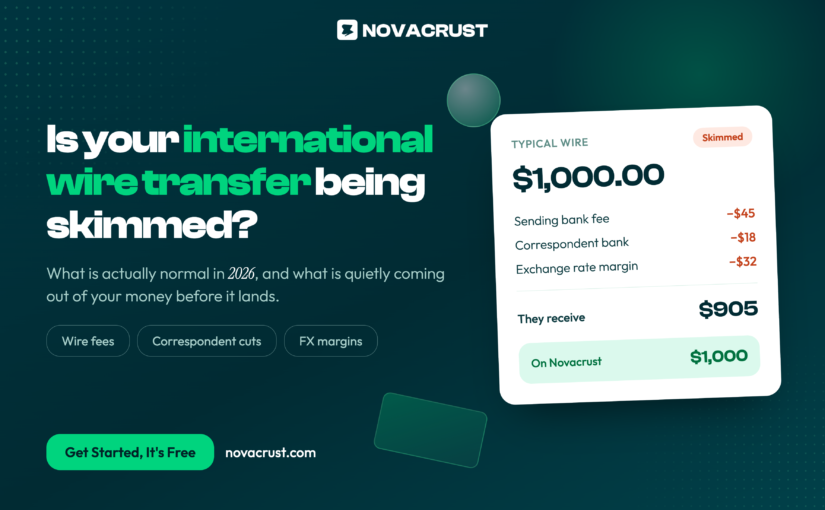
Is Your International Wire Transfer Being Skimmed? What’s Actually Normal in 2026

Send a $10,000 international wire and your recipient might see $9,930 land in their account. That missing $70 didn’t disappear by accident, and it usually isn’t fraud either. It went to banks neither of you chose, sitting quietly in the middle of the route your money took to get there.

If you’ve ever stared at a wire confirmation and wondered why the number doesn’t match what you sent, you’re not imagining things, and you’re not necessarily being scammed. Here’s what’s actually normal with international wires, what genuinely is a red flag, and how to stop losing money to banks you’ll never see on a statement.

Why wires shrink in transit

An international wire rarely travels directly from your bank to your recipient’s bank. It usually passes through one or more intermediary or correspondent banks along the way, banks that exist purely to move money between institutions that don’t have a direct relationship. Each one is entitled to take a “lifting fee,” typically $15 to $50 per bank, before passing the rest along.

Neither the sender nor the recipient picks which correspondent banks a wire routes through. That’s decided by the sending bank’s existing banking relationships, which is exactly why the same $10,000 transfer can lose $30 one month and $90 the next, with no explanation on either statement beyond a smaller final number.

Is this normal, or were you scammed?

A wire arriving a little short of what was sent is normal. It’s the standard cost of the SWIFT network, not a sign anyone did anything wrong. What isn’t normal, and is worth actually investigating, is different:

  • A wire that never arrives at all. A missing wire after several business days needs a trace request from your sending bank, not a shrug.
  • A deduction far larger than a few intermediary fees would explain. If tens of percent of the transfer vanished, that’s a rate or fee problem worth escalating, not routine lifting fees.
  • Being asked to pay a “release fee” directly to unblock funds. Legitimate correspondent bank deductions happen automatically before the money arrives. Nobody legitimate asks the recipient to wire money separately to release a stuck wire.

For the difference between the transfer rails themselves, our guide to ACH vs wire vs SWIFT breaks down which one your sender is actually using and why that decides both the speed and the fee.

How to avoid losing money to correspondent banks

The most reliable fix isn’t negotiating with your bank about fees you can’t see coming. It’s avoiding the international correspondent chain entirely when you can. A US-issued account and routing number lets a US-based client or employer pay you through the domestic ACH or wire network instead of an international SWIFT transfer, which means no correspondent banks sit in the middle taking their own cut.

That’s the gap a Novacrust USD Account closes. You get a real US account and routing number without needing an SSN or a US address, so anyone paying you from inside the US can send it as a domestic transfer instead of an international one. If you haven’t set one up yet, our guide to understanding the US banking system as a non-resident covers exactly what unlocks that access.

FAQ

Why did I receive less money than what was wired to me?
Correspondent banks in the middle of the transfer route each deduct a small “lifting fee,” usually $15 to $50 per bank, before the funds reach you. This is standard for international SWIFT wires and isn’t a sign of fraud on its own.

How many banks can a wire pass through?
It varies by route and depends on the sending bank’s existing relationships. Neither the sender nor the recipient chooses which correspondent banks are involved.

Can I avoid intermediary bank fees entirely?
Yes, by using a domestic transfer rail instead of an international one. A US account and routing number lets US-based senders pay you through ACH or a domestic wire, which doesn’t route through international correspondent banks.

Is it a scam if my wire arrives short?
Usually not, if the shortfall is a small amount consistent with one or two intermediary bank fees. It becomes a real concern if a large percentage is missing, the wire never arrives, or you’re asked to pay separately to “release” it.

What’s the difference between a USD Account and a regular bank account for receiving wires?
A USD Account issued through a platform like Novacrust still gives you a real US account and routing number, but without requiring US residency to open it, which is what lets you receive domestic-rail payments instead of only international ones.

The bottom line

A wire arriving a little short of what was sent is usually just the cost of the correspondent banking system doing its job. The real fix isn’t chasing down fees after the fact. It’s routing payments so those banks never get a chance to take a cut in the first place.

Sign up to get started on Novacrust here.
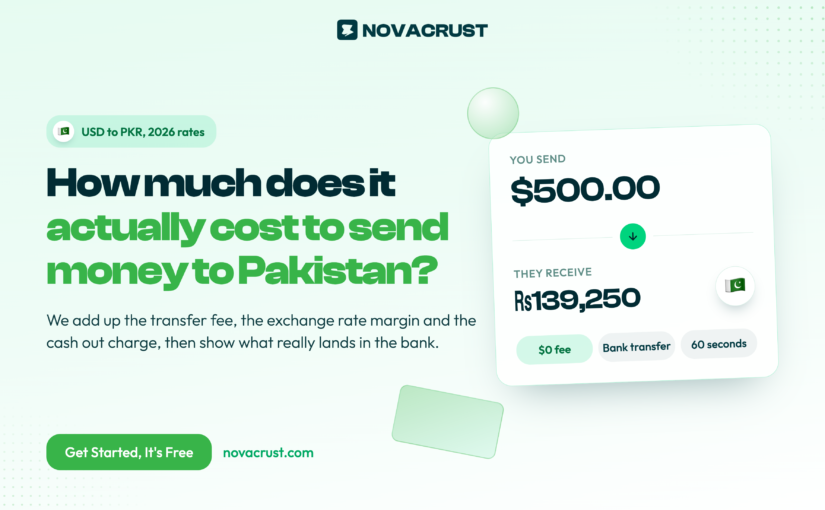
How Much Does It Actually Cost to Send Money to Pakistan in 2026?

Pakistan pulled in a record $41.6 billion in remittances in the fiscal year that just closed, up 8.6 percent from the year before, according to State Bank of Pakistan data. Saudi Arabia alone sent home $829.6 million in June, with the UAE, UK, and US close behind. That’s a lot of money moving through a system where the fee you’re quoted and the amount that actually lands are almost never the same number.

The United Nations set a global target of under 3 percent as the fair cost of sending remittances. The World Bank’s own tracking shows 28 countries still charge more than that on at least one major corridor. Here’s where a transfer to Pakistan actually loses money, and what it costs to send $100, $500, and $1,000 through the popular options.

Where a transfer to Pakistan quietly loses value

Three things eat into a transfer before your family or your recipient ever sees it:

  • A marked-up exchange rate. Most senders never compare the rate they’re offered to the actual market rate. The gap is often bigger than the flat fee on the receipt.
  • A flat sending fee on top of that rate. Banks and older wire services tend to charge the highest flat fees, sometimes $15 to $40 on a single transfer.
  • Cash pickup markups. Picking up rupees in cash instead of a direct bank or mobile wallet deposit usually costs more, since the provider is pricing in a physical agent network.

We break down the same pattern corridor by corridor in our guide to choosing the best way to send money internationally. The provider quoting the rate closest to the real market number, not the one with the flashiest app, is the one protecting your money.

What it actually costs to send money to Pakistan

Amount sentBank wire (typical)Cash pickup serviceDigital transfer app
$100$15 to $25 flat fee, plus rate markup$5 to $10 fee, weaker rate$1 to $3 fee, closer to market rate
$500$25 to $35, plus 3 to 5% rate margin$8 to $15, plus 4 to 6% rate marginLow flat fee, 1 to 2% rate margin
$1,000$30 to $45, plus rate margin$10 to $20, plus rate marginLow flat fee, competitive rate

The pattern holds across every corridor we’ve looked at: a bank wire’s flat fee looks manageable until you add the rate margin hiding behind it, and a small percentage on a large transfer adds up fast. On a $1,000 monthly transfer, a 4 percent all-in margin quietly removes $40 every single month, before any flat fee at all.

Where the money actually comes from

Gulf countries drive most of Pakistan’s remittance inflows. Saudi Arabia and the UAE together sent over $1.6 billion in June alone, with the UK and US making up most of the rest. If you’re sending from any of these corridors, the rate you’re offered should be checked against the market rate every time, not assumed to be fair because it’s from a recognized bank.

A cheaper way to send to Pakistan

A Novacrust account lets you hold US dollars and send to Pakistan, or to 50+ other countries, without stacking a bank, a card, and a separate remittance app on top of each other. You see the exchange rate before you confirm, and the fee is separate and visible, not folded into a padded rate. If you’re weighing wire transfer against a digital option for the first time, our comparison of ACH vs wire vs SWIFT covers how each one actually settles and what it costs.

FAQ

What’s the cheapest way to send money to Pakistan?
Whichever option quotes a rate closest to the real market rate and charges a small, transparent fee separately. Direct bank or mobile wallet deposit is almost always cheaper than cash pickup.

How much does it cost to send $500 to Pakistan?
Through a bank wire, expect $25 to $35 in flat fees plus a 3 to 5 percent rate margin. Through a digital transfer app with a transparent rate, the total cost is usually a fraction of that.

How long does a transfer to Pakistan take?
Bank wires typically take one to three business days. Digital apps built for cross-border transfers, including Novacrust, usually settle in minutes once your funds are confirmed.

Is a digital money transfer app safe for sending money to Pakistan?
A licensed, regulated transfer provider is not inherently less safe than a bank wire. Check that any provider you use is licensed to operate in the corridor you’re sending through before you commit to it.

Why did Pakistan’s remittances hit a record in 2026?
State Bank of Pakistan data points to stronger inflows from Gulf countries, tighter enforcement against informal transfer channels, and consolidation of exchange companies, all of which pushed more remittances through official, trackable routes.

Final thoughts

With $41.6 billion already flowing through official channels and the State Bank projecting even more next year, the fee structure you choose matters more than ever. Compare the real exchange rate before you send, every time, even if it only takes an extra minute.

Sign up to get started on Novacrust here.
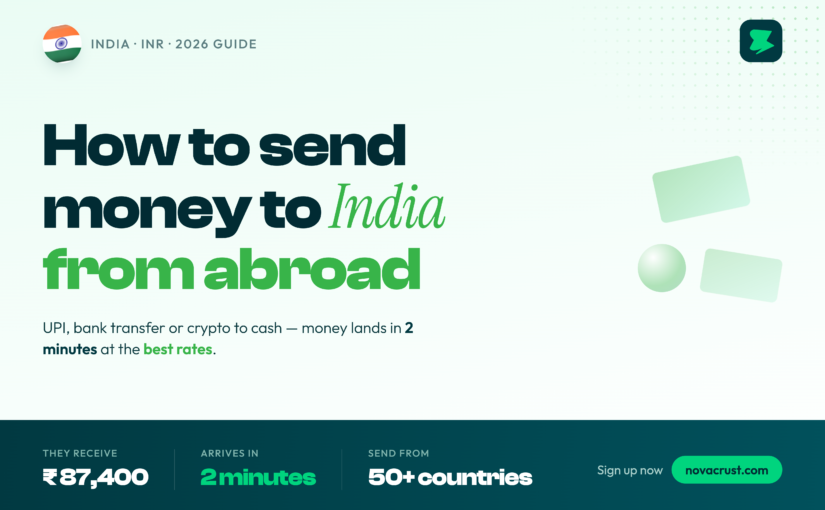
How to Send Money to India From Abroad (2026 Guide)

India received $135.4 billion in remittances in FY25, more than any other country on earth, according to the Economic Survey 2025-26. If you are one of the millions of people abroad sending part of that money home, the method you pick decides how much of it actually reaches your family after fees and a marked-up exchange rate take their cut.

This guide walks through every real way to send money to India in 2026: bank transfers, dedicated remittance apps, UPI-linked options, and the newer route more senders are switching to, converting through a USD Account or crypto. We will cover what each option actually costs, how fast it lands, and which account your recipient should use to receive it.

Why the method you choose matters more in 2026

The rupee has swung hard this year. USD/INR touched an all-time high of 96.84 on May 20, 2026, its weakest point ever against the dollar, before recovering to around 94.35 by late June as the RBI stepped in and oil prices fell. A swing of that size means the same $500 can land as a meaningfully different amount in rupees depending on which week, and which provider, you send through.

Most providers do not make their margin on a visible fee. They make it on the exchange rate itself, which is why two services can both advertise “free transfers” and still hand your recipient noticeably different amounts.

Six ways to send money to India, ranked by what actually matters

1. Bank wire transfer

Sending directly from your bank works, but it is usually the slowest and most expensive route. Expect 2 to 5 business days, a flat fee of $25 to $50, and an exchange rate set by the bank rather than the market. Correspondent bank fees along the way can quietly eat another chunk before the money even reaches an Indian bank.

2. Dedicated remittance apps

Wise, Western Union, and similar apps built specifically for cross-border transfers usually beat banks on both speed and rate. Delivery to an Indian bank account often lands within a few hours, and fees are shown upfront. The tradeoff is that most of these apps only move money one way: they do not double as a place to hold dollars, buy crypto, or spend internationally.

3. UPI-linked international transfer

India’s Unified Payments Interface now accepts inbound transfers from a growing list of countries, letting senders push money straight into a recipient’s UPI-linked bank account. It is fast once set up, but availability still depends on your sending country and bank, so check before counting on it for your corridor.

4. Peer-to-peer transfers through crypto

Sending USDT or USDC and letting the recipient convert to rupees has become one of the fastest routes available, often settling in under a minute once the transaction confirms on-chain. The rate you get depends heavily on which app handles the rupee conversion on the other end, so compare that rate the same way you would compare a bank’s.

5. A USD Account with built-in conversion

This is where things get more efficient for senders who get paid in dollars themselves. Opening a USD Account lets you hold dollars, receive them from clients or employers, and convert to rupees the moment you need to send, all without a US address or Social Security number. It removes the extra step of routing through a third-party wallet just to get dollars moving.

6. Novacrust: send, convert, and hold in one app

Novacrust combines the last two options. Fund your account from a bank transfer, an existing crypto wallet, or a client payment, then send directly to an Indian bank account in seconds. If you already have crypto sitting idle, convert it directly instead of cashing out through a separate exchange first. The same balance also funds a USD Virtual Card, so money that arrives for one purpose does not have to sit locked into it.

NRE or NRO: which account should your recipient use?

Unlike most corridors, sending to India means picking the right account type on the receiving end, not just the right app. An NRE (Non-Resident External) account holds foreign earnings, is fully repatriable, and its interest is tax-free in India. An NRO (Non-Resident Ordinary) account is meant for income earned inside India, such as rent or a pension, and comes with more restrictions on moving funds back out. If your recipient is an NRI and the money you are sending is foreign income being sent home, an NRE account is almost always the right destination. A regular resident Indian bank account works fine for family support that stays in the country.

How to send money to India with Novacrust, step by step

  1. Create your account. Sign up with your email and verify your identity. No US address or SSN required.
  2. Fund your balance. Deposit via bank transfer, card, or crypto (USDT, USDC, BTC, ETH, SOL, and more).
  3. Choose your recipient. Send to an Indian bank account.
  4. Confirm the rate. You see the exact rupee amount your recipient gets before you send, not an estimate.
  5. Send. Most transfers to Indian banks land within minutes.

For a wider comparison of transfer speed and cost across all the corridors Novacrust supports, not just India, see our full guide to sending money internationally, or look at how the same comparison plays out for Nigeria if you are sending to more than one country.

What actually eats into your transfer

  • The exchange rate margin. This is where most providers quietly make their money. A “free” transfer with a 4% worse rate costs more than a $10 fee at the market rate.
  • Delivery speed. Slower methods are not always cheaper. Some bank wires cost more than instant options because of correspondent bank fees along the way.
  • Minimum and maximum limits. Some remittance apps cap how much you can send per transaction, which matters for tuition, rent, or medical costs.
  • Account type on the receiving end. Sending foreign income into the wrong account type can complicate moving it back out later, so confirm NRE versus NRO before the first transfer.

If you are getting paid in dollars in the first place

A large share of the people sending money to India are freelancers, remote employees, and contractors already earning in dollars. If that is you, the cheaper fix often starts upstream of the transfer itself. You can open a USD Account built for freelancers so clients pay you directly in dollars, or set it up to get paid by Upwork, Fiverr, or Gumroad clients without losing 3 to 8% to a forwarding service before the money even reaches you. From there, sending to India is just the last step, not the whole problem.

FAQ

What is the cheapest way to send money to India?

Apps that combine a transparent exchange rate with low or no flat fees, including Novacrust, typically beat both bank wires and traditional remittance counters. Always compare the total rupee amount your recipient will receive, not just the advertised fee.

How long does it take for money to reach an Indian bank account?

With Novacrust and similar digital-first providers, most transfers land within minutes. Bank-to-bank wires can take 2 to 5 business days depending on the sending and receiving banks.

Should money sent to family go into an NRE or NRO account?

If your recipient is an NRI receiving foreign income from you, an NRE account is usually the better fit since it is fully repatriable and tax-free on interest. Money staying with a resident Indian relative can simply go into their regular bank account.

Is it safe to send money to India using crypto?

It can be, provided you use a licensed platform and confirm the rupee conversion rate before the recipient cashes out. The risk sits mostly in unregulated peer-to-peer trades, not in crypto as a transfer method itself.

Why do exchange rates for sending money to India vary so much between apps?

Since the rupee floats and has moved sharply in 2026, providers set their own margin on top of the interbank rate. That margin, not the flat fee, is usually the biggest difference between services that look similar on the surface.

Sign up to get started on Novacrust here.
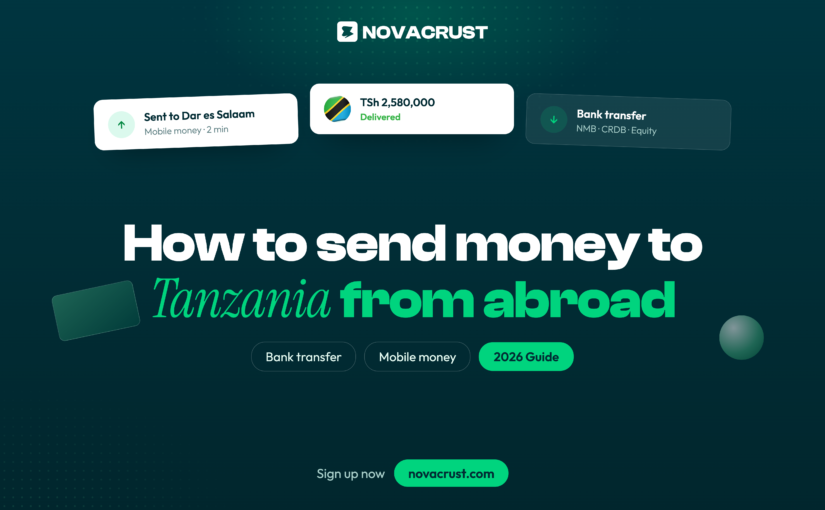
How to Send Money to Tanzania From Abroad (2026 Guide)

On August 1, 2025, the Bank of Tanzania made a change that reshaped every incoming transfer: all international money transfers must now route through TIPS, the Tanzania Instant Payment System, with a flat fee of TZS 1,000 (about $0.40) per transaction. Tanzania received an estimated $750 million in diaspora remittances in 2024, according to World Bank data, and the new rule is aimed at moving more of that money through a single, trackable, interoperable rail instead of scattered, slower channels.

For everyday senders, that is good news on speed. It does not automatically mean a better price. This guide covers what changed, what a transfer to Tanzania actually costs, and how the popular options compare.

This is why so many people keep searching:

  • how to send money to Tanzania from abroad
  • best way to send money to Tanzania from the US or UK
  • cheapest app to send money to M-Pesa Tanzania
  • send money to a Tanzanian bank account

What changed for Tanzania in 2025

Before TIPS became mandatory, an incoming transfer could land through several different systems depending on which bank or mobile network was on each end, which meant inconsistent speed and inconsistent fees. Routing every transfer through TIPS makes mobile wallets, banks, and other licensed providers interoperable on one instant-settlement rail, and it caps the routing fee at a flat TZS 1,000 rather than letting it scale with the transfer amount. Cross-border mobile money inflows already rose 33 percent year over year following the shift, according to the Bank of Tanzania’s National Payment Systems reporting.

What TIPS does not do is cap the exchange rate margin a transfer provider builds into your quote. That part is still entirely up to the app or bank you choose, which is where most of the real cost still hides.

Where a transfer to Tanzania quietly loses value

According to World Bank Remittance Prices Worldwide data, the average cost of sending money from the UK to Tanzania sits around 4.88 percent once fees and exchange rate margins are combined, well above the roughly 2 percent seen on some other African corridors. Three things usually explain the gap:

  • An exchange rate marked up below the real market rate, with the margin folded into “the rate” instead of shown as a separate fee
  • A flat sending fee stacked on top of that already marked up rate
  • Cash pickup charges that a direct deposit to a mobile wallet or bank account avoids entirely

We cover the same underlying math in our guide to choosing the best way to send money internationally: whoever quotes the number closest to the real market rate, not the app with the flashiest onboarding, is the one protecting your money.

Mobile money in Tanzania is more split than you might expect

Unlike Kenya, where M-Pesa dominates almost completely, Tanzania’s mobile money market is genuinely competitive: Vodacom’s M-Pesa holds around 41 percent of the market, Tigo Pesa around 24 percent, Airtel Money around 21 percent, and Halotel around 10 percent, based on recent network data. Since TIPS now connects these wallets and the banking system on one interoperable rail, which specific wallet your recipient uses matters far less than it used to. A transfer sent to any of them should settle quickly, as long as the sending provider actually routes through TIPS.

How the popular options compare

Most people sending money to Tanzania end up choosing between a bank wire, Western Union, WorldRemit, LemFi, or a Novacrust account. All of them can land money in a Tanzanian bank account or mobile wallet. What differs is the rate, the fee, and how many days it takes to clear.

OptionTypical speedWhere it loses money
Bank wire1 to 3 business daysHigh flat fee plus a weaker exchange rate
Western UnionMinutes to hours (cash pickup)Cash pickup fees stack on top of the rate
WorldRemitMinutes to mobile walletRate and fee vary by amount and funding method
LemFiMinutesCompetitive, but rate varies by corridor and volume
NovacrustMinutesCompetitive rate with no cash pickup markup

Example: sending $500 to Tanzania

At the real market exchange rate, $500 converts to a specific shilling amount. A transfer priced with a 4 to 5 percent all-in margin, in line with the World Bank’s UK-to-Tanzania average, quietly removes $20 to $25 of that before it lands, even with TIPS keeping the routing fee itself small. Sent every month, that gap adds up to real money over a year.

The fix is not finding the fastest-looking app. It is comparing the actual exchange rate you are quoted against the real market rate before you send, every time.

Why freelancers and diaspora senders use Novacrust

A Novacrust account lets you hold US dollars and send to Tanzania, or to 50+ other countries, without stitching together a separate bank, card, and remittance app. You can:

  • Receive USD directly from international clients, Upwork, Fiverr, or a US employer
  • Convert to Tanzanian shillings at a competitive rate, in the same account
  • Send to a Tanzanian bank account or mobile wallet in minutes

If you do not have a US dollar account set up yet, our guide to opening a USD Account online in minutes covers what you need before your first transfer, no US address required.

Other ways dollars reach Tanzania

A bank or mobile money transfer is not the only route. Two more worth knowing:

  • Gift cards. If you are paid in US gift cards, or received one as a gift, selling gift cards for cash converts that value without a wire transfer at all.
  • Stablecoins. A growing number of East African freelancers and traders convert USDT or USDC directly instead of routing through a traditional bank. Our roundup of the best apps to buy and sell USDT and USDC in Africa covers the options people actually use.

FAQ: sending money to Tanzania in 2025

What’s the cheapest way to send money to Tanzania?

The cheapest option is whichever one quotes an exchange rate closest to the real market rate and charges a clear, separate fee instead of hiding its margin inside the rate. TIPS keeps the routing fee itself small, so the exchange rate is where the real savings or losses happen.

Do all transfers to Tanzania now go through TIPS?

Since August 1, 2025, the Bank of Tanzania requires international transfers to route through TIPS, which connects banks and mobile wallets like M-Pesa, Tigo Pesa, and Airtel Money on one instant-settlement system. In practice, that means faster, more consistent delivery regardless of which wallet or bank your recipient uses.

How long does a transfer to Tanzania take?

Bank wires typically take one to three business days. Apps built for cross-border transfers, including Novacrust, usually settle to a Tanzanian bank account or mobile wallet in minutes now that TIPS handles routing.

Which mobile money wallet should my recipient use in Tanzania?

Whichever one they already have. M-Pesa, Tigo Pesa, Airtel Money, and Halotel are all connected through TIPS, so the wallet choice matters far less than confirming the sending provider actually supports direct mobile wallet delivery.

Is it safe to send money to Tanzania through an app instead of a bank?

A licensed, regulated transfer app is not inherently less safe than a bank wire. Check that any provider you use is licensed for the corridor you are sending through before you rely on it regularly.

Final thoughts

TIPS made transfers to Tanzania faster and more consistent, but it did not touch the exchange rate, and that is still where most of your money is won or lost. With $750 million a year already flowing to Tanzania through official channels and cross-border mobile money inflows rising fast, comparing the real rate before you send is worth the extra minute every time.

Sign up to get started on Novacrust here.
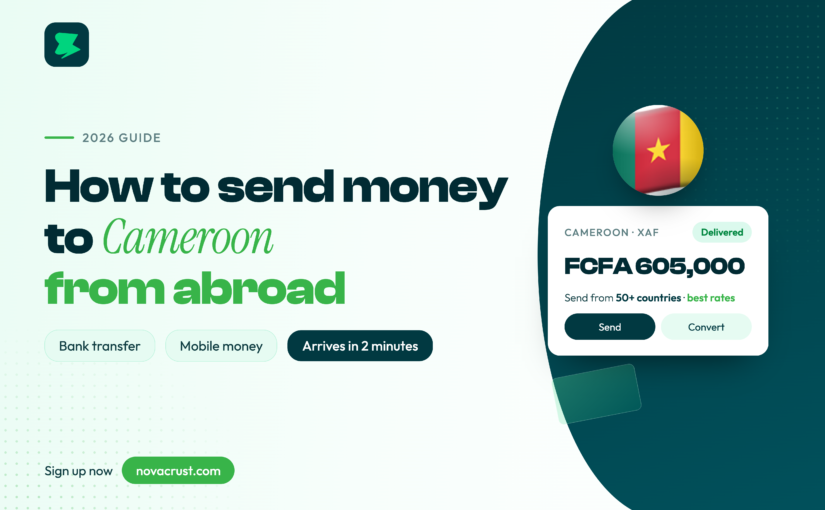
How to Send Money to Cameroon From Abroad (2026 Guide)

Cameroonians abroad sent $603 million home in 2024, more than 362 billion CFA francs, according to World Bank data cited by Business in Cameroon. That is up from $525 million in 2022, and it works out to roughly 1.1 percent of the country’s GDP arriving through remittances in a single year.

Most of that money is not landing in a bank branch. It is landing on a phone. This guide covers what a transfer to Cameroon actually costs, how the popular options compare, and how to get dollars, euros, or pounds converted and delivered without losing value along the way.

This is why so many people keep searching:

  • how to send money to Cameroon from abroad
  • best way to send money to Cameroon from the US or France
  • cheapest app to send money to Orange Money or MTN Mobile Money
  • send money to a Cameroonian bank account

What a transfer to Cameroon really costs

According to the World Bank Remittance Prices Worldwide data for the France to Cameroon corridor, the best documented route given France’s large Cameroonian diaspora, the average total cost sits around 3.08 percent as of the latest quarterly report. That average hides a wide spread: cheaper providers price a transfer under 2 percent, while some traditional operators charge above 5 percent for the same amount landing in the same place.

Three things usually explain that gap:

  • An exchange rate marked up below the real market rate, with the margin folded into “the rate” instead of shown as a separate fee
  • A flat sending fee stacked on top of that already marked up rate
  • Cash pickup charges that a direct deposit to Orange Money, MTN Mobile Money, or a bank account avoids entirely

We cover the same underlying math in our guide to choosing the best way to send money internationally: the provider quoting the number closest to the real market rate, not the one with the flashiest app, is the one protecting your money.

Mobile money is how most transfers actually land

Orange Money holds roughly 70 percent of Cameroon’s mobile money market, running millions of transactions a day, with MTN Mobile Money covering most of the rest, according to Business in Cameroon. Across the wider CEMAC region, mobile money now accounts for the large majority of transaction volume compared to wire transfers and cash withdrawals. In practice, that means a transfer sent straight to an Orange Money or MTN Mobile Money number usually reaches a recipient faster, and with fewer extra fees, than one routed through cash pickup.

How the popular options compare

Most people sending money to Cameroon end up choosing between a bank wire, Western Union, Remitly, LemFi, or a Novacrust account. All of them can get money to a Cameroonian bank account or mobile money wallet. What differs is the rate, the fee, and how many days it takes to clear.

OptionTypical speedWhere it loses money
Bank wire1 to 3 business daysHigh flat fee plus a weaker exchange rate
Western UnionMinutes to hours (cash pickup)Cash pickup fees stack on top of the rate
RemitlyMinutes to a dayRate and fee vary by payout speed selected
LemFiMinutesCompetitive, but rate varies by corridor and volume
NovacrustMinutesCompetitive rate with no cash pickup markup

Example: sending $500 to Cameroon

At the real market exchange rate, $500 converts to a specific CFA franc amount. A transfer priced with a 4 to 5 percent all-in margin, in line with the costlier end of the France-to-Cameroon corridor, quietly removes $20 to $25 of that before it lands. A separate flat fee on top pushes the total loss higher still, and sending every month turns a small percentage into real money over a year.

The fix is not chasing the app with the best marketing. It is comparing the actual exchange rate you are quoted against the real market rate before you send, every time.

Why freelancers and diaspora senders use Novacrust

A Novacrust account lets you hold US dollars and send to Cameroon, or to 50+ other countries, without stitching together a separate bank, card, and remittance app. You can:

  • Receive USD directly from international clients, Upwork, Fiverr, or a US employer
  • Convert to CFA francs at a competitive rate, in the same account
  • Send to a Cameroonian bank account, Orange Money, or MTN Mobile Money in minutes

If you do not have a US dollar account set up yet, our guide to opening a USD Account online in minutes covers what you need before your first transfer, no US address required.

Other ways dollars reach Cameroon

A bank or mobile money transfer is not the only route. Two more worth knowing:

  • Gift cards. If you are paid in US gift cards, or received one as a gift, selling gift cards for cash converts that value without a wire transfer at all.
  • Stablecoins. A growing number of freelancers and traders across Central and West Africa convert USDT or USDC directly instead of routing through a traditional bank. Our roundup of the best apps to buy and sell USDT and USDC in Africa covers the options people actually use.

FAQ: sending money to Cameroon

What’s the cheapest way to send money to Cameroon?

The cheapest option is whichever one quotes an exchange rate closest to the real market rate and charges a clear, separate fee instead of hiding its margin inside the rate. Direct-to-mobile-money or bank deposit is almost always cheaper than cash pickup.

Can I send money straight to Orange Money or MTN Mobile Money from abroad?

Yes. Most modern transfer apps, including Novacrust, support sending directly to a mobile money number rather than requiring a bank account first, which matters in Cameroon since mobile money now handles the large majority of everyday transaction volume.

How long does a transfer to Cameroon take?

Bank wires typically take one to three business days. Apps built for cross-border transfers, including Novacrust, usually settle to a Cameroonian bank account or mobile money wallet in minutes.

Why do remittance costs to Cameroon vary so much between providers?

The World Bank’s own corridor data shows a wide spread because providers price the exchange rate margin differently, and many do not disclose it as a separate line item. Two apps can advertise low fees and still leave very different amounts on the other end once the rate is factored in.

Is it safe to send money to Cameroon through an app instead of a bank?

A licensed, regulated transfer app is not inherently less safe than a bank wire. Check that any provider you use is licensed for the corridor you are sending through before you rely on it regularly.

Final thoughts

With over $600 million a year now flowing to Cameroon through official remittance channels and most of it landing on a mobile money wallet rather than in a bank branch, the exchange rate you are quoted, not the name on the app, decides how many CFA francs actually reach the person you are sending to. Compare the real rate before you send, every time.

Sign up to get started on Novacrust here.
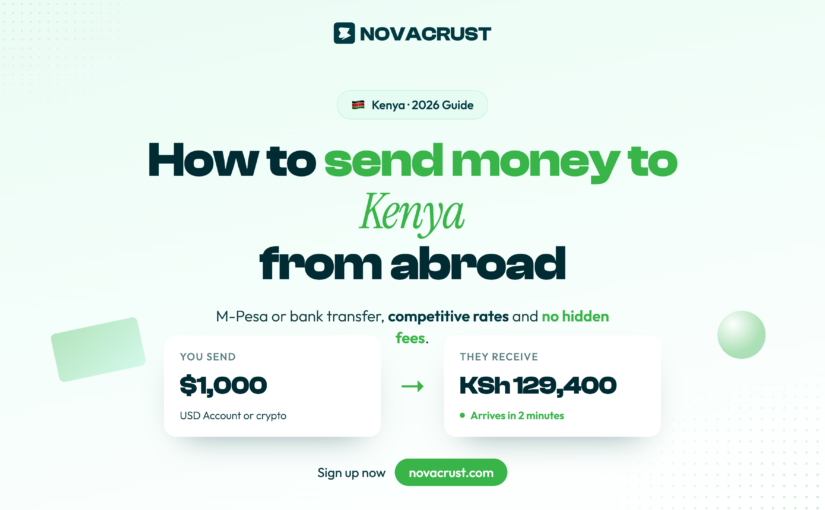
How to Send Money to Kenya From Abroad (2026 Guide)

Kenyan households received Sh931.8 billion in remittances between June 2024 and May 2025, according to a joint survey by the Kenya National Bureau of Statistics, the Central Bank of Kenya, and FSD Kenya. The United States alone accounted for 43.5 percent of that total, and more than 92 percent now arrives through formal channels like banks and mobile money instead of informal cash routes.

That’s a lot of money moving through official channels, but it doesn’t mean every transfer is priced fairly. This guide covers how much a transfer to Kenya should actually cost, how the popular options compare, and where you’re most likely to lose value without noticing.

This is why so many people keep searching:

  • how to send money to Kenya from abroad
  • best way to send money to Kenya from the US
  • cheapest app to send money to M-Pesa
  • send money to a Kenyan bank account

What a transfer to Kenya really costs

According to World Bank Remittance Prices Worldwide data, the average cost of sending money from the US to Kenya sits around 4.26 percent once fees and exchange rate margins are combined. That’s more than double the 1.96 percent average on the UK-to-Nigeria corridor, which tells you the “average” cost swings a lot depending on which provider you pick, not just which country you’re sending from.

Four things usually drive that number higher than it needs to be:

  • An exchange rate marked up well below the real market rate, with the margin hidden inside “the rate” rather than shown as a fee
  • A separate flat fee stacked on top of that already-marked-up rate
  • Cash pickup charges that direct-to-M-Pesa or bank transfers avoid entirely
  • Multi-day delays that expose your transfer to shilling volatility before it lands

We cover the same underlying math in our guide to choosing the best way to send money internationally, including why mobile money delivery through M-Pesa is usually the fastest way for a transfer to actually reach someone in Kenya.

How the popular options compare

Most senders end up choosing between a bank wire, Western Union, WorldRemit, LemFi, or a Novacrust account. All of them can land money in a Kenyan bank account or on M-Pesa. The difference is the rate, the fee, and whether cash pickup is even an option worth taking.

OptionTypical speedWhere it loses money
Bank wire1 to 3 business daysHigh flat fee plus a weaker exchange rate
Western UnionMinutes to hours (cash pickup)Cash pickup fees stack on top of the rate
WorldRemitMinutes to M-PesaRate and fee vary by amount and funding method
LemFiMinutesCompetitive, but rate varies by corridor and volume
NovacrustMinutesCompetitive rate with no cash pickup markup

Example: sending $500 to Kenya

At the real market exchange rate, $500 converts to a specific shilling amount. A transfer priced with a 4 to 6 percent all-in margin, in line with the World Bank’s US-to-Kenya average, quietly removes $20 to $30 of that before it lands, and a flat fee on top can push the total loss higher still. Sent monthly, that gap adds up fast.

The fix isn’t finding the fastest-looking app. It’s comparing the actual exchange rate you’re quoted against the real market rate before you send, every time.

Why freelancers and diaspora senders use Novacrust

A Novacrust account lets you hold US dollars and send to Kenya, or to 50+ other countries, without stitching together a separate bank, card, and remittance app. You can:

  • Receive USD directly from international clients, Upwork, Fiverr, or a US employer
  • Convert to Kenyan shillings at a competitive rate, in the same account
  • Send to a Kenyan bank account or M-Pesa in minutes

If most of your income already comes from international clients, our guide to the best payment setup for Upwork and Fiverr work in Africa covers how to get paid in the first place, and our walkthrough of opening a USD Account online in minutes covers what you need before your first transfer.

Other ways dollars reach Kenya

A bank or mobile money transfer isn’t the only route. Two more worth knowing:

  • Gift cards. If you’re paid in US gift cards, or received one as a gift, selling gift cards for cash converts that value without a wire transfer at all.
  • Stablecoins. A growing number of Kenyan freelancers and traders convert USDT or USDC directly instead of routing through a traditional bank. Our roundup of the best apps to buy and sell USDT and USDC in Africa covers the options Kenyans actually use.

FAQ: sending money to Kenya

What’s the cheapest way to send money to Kenya?

The cheapest option is whichever one quotes an exchange rate closest to the real market rate and charges a clear, separate fee instead of hiding its margin inside the rate. Direct-to-M-Pesa or bank deposit is almost always cheaper than cash pickup.

Can I send money straight to M-Pesa from abroad?

Yes. Most modern transfer apps, including Novacrust, support sending directly to an M-Pesa number rather than requiring a bank account first.

How long does a transfer to Kenya take?

Bank wires typically take one to three business days. Apps built for cross-border transfers, including Novacrust, usually settle to a Kenyan bank account or M-Pesa in minutes.

Why do remittance costs to Kenya vary so much between providers?

The World Bank’s own data shows a wide spread because providers price the exchange rate margin differently, and many don’t disclose it as a separate line item. Two apps can advertise “free transfers” and still leave you with very different amounts on the other end.

Is it safe to send money to Kenya through an app instead of a bank?

A licensed, regulated transfer app is not inherently less safe than a bank wire. Check that any provider you use is licensed for the corridor you’re sending through before you rely on it regularly.

Final thoughts

Kenya’s diaspora remittances have never flowed through more formal, trackable channels than they do now, but formal doesn’t automatically mean cheap. The exchange rate you’re quoted, not the name on the app, decides how many shillings actually reach the person you’re sending to. Compare the real rate before you send, every time.

Sign up to get started on Novacrust here.
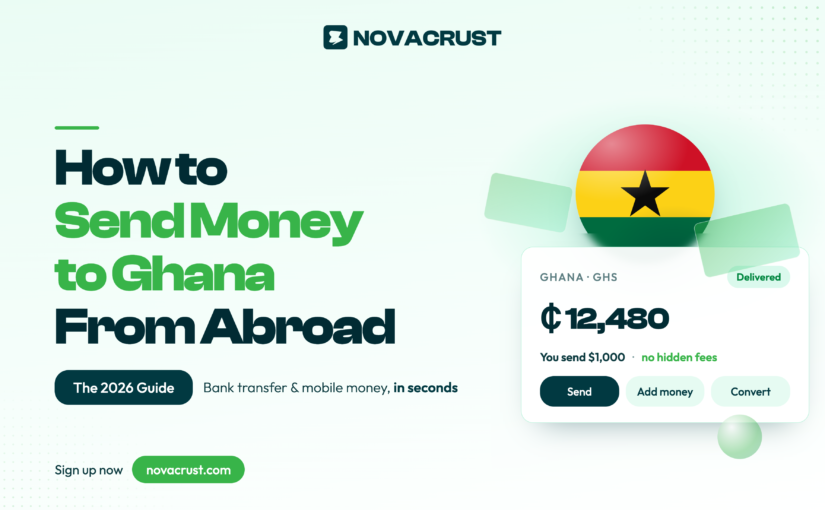
How to Send Money to Ghana From Abroad (2026 Guide)

Ghana’s diaspora sent home nearly $7.8 billion in 2025, up from $4.6 billion the year before. That is the first time remittance inflows have overtaken foreign direct investment in the country, according to Bank of Ghana Governor Dr. Johnson Asiama, and it now works out to roughly 6 percent of GDP. The United States remains Ghana’s single biggest source of that money.

At the same time, the rules for how that money reaches Ghana just changed. If you send money to Ghana regularly, or you are doing it for the first time, here is what shifted in January 2026, where transfers quietly lose value, and how the popular options actually compare.

This is why so many people keep searching:

  • how to send money to Ghana from abroad
  • best app to send money to Ghana
  • send money to Ghana from the US or UK
  • cheapest way to send money to a Ghanaian bank account

What changed for Ghana in 2026

On January 5, 2026, the Bank of Ghana published new guidelines for International Money Transfer Operators (IMTOs), giving existing operators a three-month window to fall in line. The headline change: every inward remittance must now settle in Ghana cedis through a designated account at a licensed universal bank, converted the same day using a Bank of Ghana-prescribed exchange rate. IMTOs are limited strictly to person-to-person inbound transfers. They cannot pay a remittance into a business or corporate account, and they are barred from lending, forex trading, or anything outside moving money to an individual recipient.

For everyday senders, the practical effect is close to what changed in Nigeria earlier this year: recipients are paid out in cedis, at a rate set through a regulated channel, rather than through whatever informal route a provider used before. That makes the exchange rate you are quoted, not the brand on the app, the single biggest factor in how much your recipient actually walks away with.

Where a transfer to Ghana quietly loses value

According to World Bank Remittance Prices Worldwide data, the average total cost of sending money from the US to Ghana sat at 4.37 percent in the third quarter of 2025. That average hides a wide spread depending on how the money is paid out: bank account transfers ranged from a small built-in discount up to 1.87 percent, mobile wallet delivery ran roughly 0.46 to 0.92 percent, and cash pickup climbed as high as 11.87 percent. Picking the wrong payout method can cost you ten times more than picking the right one.

Four things usually explain that gap:

  • A marked-up exchange rate presented as “the rate,” with no separate fee shown
  • A flat sending fee stacked on top of that already-marked-up rate
  • Cash pickup fees, which are almost always the most expensive way to receive
  • Delays of a day or more, during which the cedi can move against you

We cover the same pattern in more depth in our guide to choosing the best way to send money internationally: the provider protecting your money is whoever quotes closest to the real market rate, not the one with the flashiest app.

How the popular options compare

Most people sending money to Ghana end up choosing between a bank wire, Western Union, LemFi, Grey, or a Novacrust account. They all get cedis into a Ghanaian bank account or mobile money wallet eventually. What differs is the rate, the fee, and how long it takes.

Option Typical speed Where it loses money
Bank wire 1 to 3 business days High flat fee plus a weaker exchange rate
Western Union Minutes to hours (cash pickup) Cash pickup fees stack on top of the rate
LemFi Minutes Competitive, but rate varies by corridor and volume
Grey Minutes Closer to market rate, though not built around Ghanaian mobile money as a first step
Novacrust Minutes Competitive rate with no cash pickup markup

Example: sending $500 to a Ghanaian bank account or mobile money wallet

At the World Bank’s 4.37 percent average cost for the US to Ghana corridor, a $500 transfer would lose roughly $22 to fees and rate margin by the time it lands, if you land on an average-priced option. Choose a bank-to-bank or mobile wallet route priced closer to the low end of that range, and the same $500 loses closer to $2 to $5. Choose cash pickup at the high end, and you could lose $50 or more. Same $500, same recipient, a difference that compounds fast if you are sending every month.

Why freelancers and the diaspora use Novacrust for Ghana

A Novacrust account lets you hold US dollars and send to Ghana, or to 50+ other countries, without stacking a separate bank, card, and remittance app on top of each other. You can:

  • Receive USD directly from international clients, Upwork, Fiverr, or a US employer
  • Convert to cedis at a competitive rate, in the same account, rather than guessing which app quotes fairly today
  • Send to a Ghanaian bank account or mobile money wallet, including MTN Mobile Money, Telecel Cash, and AirtelTigo Money, in minutes

If you want to see exactly how the cedi’s slide against the dollar affects what you keep after conversion, our breakdown of which app actually gives the best USD to GHS payout walks through the math corridor by corridor.

Is your transfer provider actually registered under the new rules?

The same guidelines that changed how transfers settle also tightened who is allowed to operate as an IMTO in Ghana at all: home-country licensing, background checks on ownership, and a formal registration with the Bank of Ghana are now required, not optional. A provider that was fine to use in 2025 is not automatically fine in 2026 just because the app still opens. Before you trust any app or wallet with a transfer, it’s worth spending ten minutes on how to verify a provider is properly licensed in Ghana, the same check that would have flagged Zeepay’s problems months before its licence was pulled.

Other ways dollars reach Ghana

A bank transfer or mobile money payout is not the only route. Two more worth knowing:

  • Gift cards. If you are holding a US gift card instead of cash, whether from a client, a refund, or a gift, trading a gift card balance for cedis in Ghana turns that value into money you can spend without ever touching a bank wire.
  • Stablecoins. Some senders convert USDT or USDC straight to local currency, skipping the traditional banking rail entirely. The mechanics work the same way as our guide on converting crypto to naira, just landing in cedis instead.

The same fee-and-rate math shows up almost identically once you look at neighboring corridors. Our guides to sending money to Nigeria and transferring to Ethiopia cover the regional pattern in more detail, if you are sending to more than one country.

FAQ: sending money to Ghana in 2026

Do transfers to Ghana now have to be paid out in cedis?

Yes. Under the Bank of Ghana’s January 2026 guidelines, licensed IMTOs must settle inward remittances in Ghana cedis through a designated account at a partner bank, converted the same day at a prescribed rate. Recipients no longer receive foreign currency cash through these channels.

What’s the cheapest way to send money to Ghana?

Direct bank or mobile money delivery is almost always cheaper than cash pickup. World Bank data puts US-to-Ghana bank and mobile wallet transfers under 2 percent on average, versus cash pickup options that can run past 10 percent.

How long does a transfer to a Ghanaian bank or mobile money wallet take?

Bank wires typically take one to three business days. App-based transfers, including Novacrust, usually settle within minutes once the sender’s funds are confirmed.

Is it safe to send money to Ghana through an app instead of a bank?

A properly registered IMTO settling through a licensed partner bank under Bank of Ghana oversight is not inherently less safe than a bank wire. Check that any provider you use is currently registered for the corridor you’re sending through, since registration status can change.

Can I still hold dollars before converting to cedis?

Yes. Holding your balance in USD and converting only when you’re ready to send is a common way to avoid converting on a bad rate day. The new settlement rule affects how the recipient is paid out, not whether you can hold dollars beforehand.

Final thoughts

Ghana’s new settlement rule makes the same thing clearer that Nigeria’s did months earlier: the exchange rate you’re quoted decides how much of your money actually reaches home, not the name on the app. With remittances already outpacing foreign direct investment and climbing past $7.8 billion a year, comparing the real rate before you send is worth the extra minute, every time.

Sign up to get started on Novacrust here.