In January 2025, a U.S. gift card marketplace called MyGiftCardSupply left more than 600,000 photos of customers’ driver’s licenses, passports, and selfie verification shots sitting on an unsecured cloud server with no password. Around 200,000 people had their identity documents exposed to anyone who found the link.
That’s the story behind a search you’ve probably typed yourself: “sell gift cards instantly no verification.” It’s one of the most common gift card searches out there, and it makes sense. Nobody wants to hand over a photo of their driver’s license to cash out a $50 Amazon balance. But the MyGiftCardSupply breach points to the real problem, and it isn’t verification itself. It’s platforms that collect your ID and then don’t protect it.
Why gift card platforms ask for ID in the first place
Gift cards move fast, are hard to trace once spent, and can be bought with stolen credit cards. That combination makes them attractive to fraud rings, which is why prepaid instruments and gift cards are treated as a genuine money laundering risk by regulators, not just a retail convenience. Platforms that buy gift cards from the public are expected to run basic checks, the same category of “know your customer” (KYC) rules that banks and crypto exchanges follow, to confirm a seller is a real person and the card wasn’t obtained fraudulently.
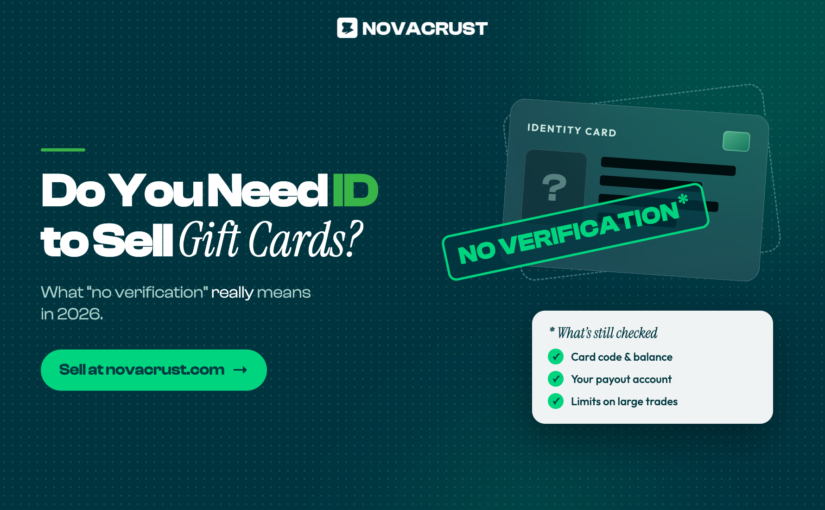
So when a site asks for your name, email, or a light identity check before paying you, that’s usually compliance, not busywork. The people you should worry about are the ones going the other way: sites promising zero verification on any card, any amount, no questions asked. That’s often a sign they’re not doing basic fraud screening at all, which cuts both ways. It’s bad for the marketplace, and it’s bad for you if your card turns out to have come from a batch of stolen numbers and gets clawed back after you’ve already been paid.
How to tell a safe, low-friction platform from a risky one
You don’t have to choose between “hand over your passport” and “no verification at all.” A well-run platform keeps friction low while still meeting basic requirements. Look for:
- Verification that scales with the amount. A $25 card shouldn’t need the same checks as a $500 one. If every transaction demands full ID regardless of size, that’s excessive.
- A clear statement on data handling. Reputable platforms say how long they keep identity documents and that they’re encrypted at rest, not just “we take privacy seriously.”
- Fast payout after approval. Legitimate verification should still get you paid in minutes, not days.
- A real track record. Check how long the platform has operated and whether it has a visible support channel, not just a contact form.
These are the same signals worth checking before you buy a gift card too, not just before you sell one. The scam patterns overlap more than people expect.
What this means if you’re trying to cash out fast
If your goal is speed, the fix isn’t finding a platform with zero checks. It’s finding one where verification is quick and proportionate, so you’re not stuck uploading documents for a small card. Some sellers skip cash entirely and convert straight to crypto instead, which can move faster once you’re verified since there’s no separate bank transfer step to wait on.
Either way, the underlying trade you’re making is the same: a small amount of verification in exchange for a platform that will actually pay you and won’t leave your ID sitting on an open server somewhere.
FAQ
Do all gift card resale platforms require ID?
Most legitimate ones ask for at least a name and email, and some request a light identity check for larger amounts. A platform that never asks for anything, on any card size, is more likely cutting corners on fraud checks than protecting your privacy.
Is it risky to use a platform that asks for zero verification?
It can be. Platforms with no checks at all tend to attract stolen or fraudulently obtained cards, and payments can get reversed once the fraud is discovered, sometimes after you’ve already spent the money.
What should a platform NOT be asking for?
Be cautious of any site asking for your card’s PIN in advance, a copy of your bank statement, or payment before you’ve received anything. Those go beyond standard identity verification and match patterns the FTC’s gift card scam guidance warns about.
How long should a platform keep my ID after verifying me?
There’s no universal rule, but platforms that are upfront about retention windows and encryption are a better sign than ones that don’t mention data handling at all.
Is selling a gift card for crypto instead of cash faster?
Often yes, once you’re verified, since there’s no separate bank transfer to wait on. Here’s how selling gift cards for crypto works on Novacrust if you want your balance as USDT instead of cash.
Sell your gift card on Novacrust’s gift card page and you’ll see verification that’s fast and scaled to the card, not a wall of paperwork. If you’re buying rather than selling, the same red flags show up on the buying side, and if cash is what you’re after, our full breakdown of selling gift cards for instant cash covers the process end to end.
Sign up to get started on Novacrust here.