Which App Gives the Best USD to GHS (Cedi) Exchange Rate?

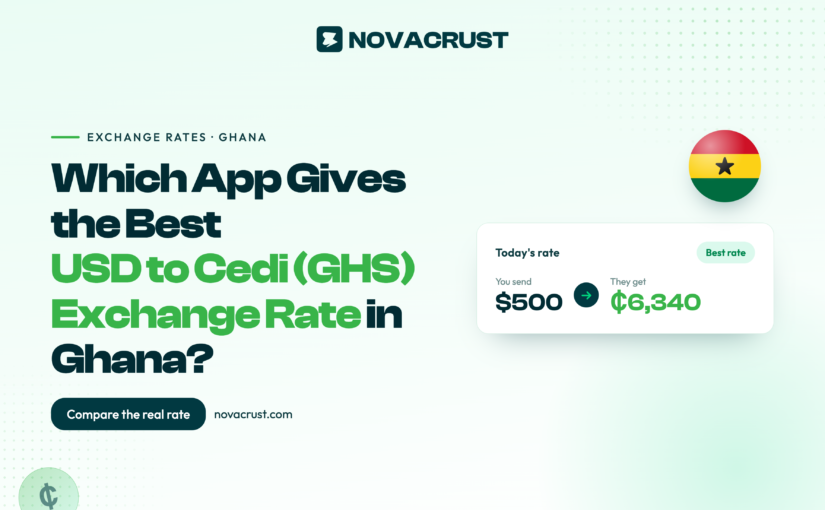
On 30 December 2025, the Bank of Ghana’s official interbank rate put the dollar at GHS 10.45. Check a live market rate today and the cedi is trading closer to GHS 11.75 to the dollar, over 12 percent weaker in about seven months. That gap is before any bank or app adds its own margin on top.

This is why so many people in Ghana and the diaspora keep searching:

  • usd to ghs rate today
  • dollar to cedi rate today
  • best app to convert usd to cedis
  • wise vs grey ghana rate

The real problem is not finding the day’s rate. It is how many cedis you actually keep after conversion, once fees and margins get added on top of the number you saw online.

This guide breaks down why your bank rate never matches the rate you googled, how the popular apps handle USD to GHS conversion, and what actually protects your money.

Why the rate you see online is not the rate you get

Ghana runs on two different reference rates, and mixing them up is where most people lose money.

  • The official interbank rate. Published daily by the Bank of Ghana, this is the benchmark rate banks trade at with each other. It is not the rate you get at a bank counter or on a card.
  • The live market mid rate. Sites like XE track this in real time. It moves faster than the interbank rate and is closer to what money changers and street rates reflect.

Every bank, card network, and remittance app then adds its own margin on top of one of these two numbers. That margin, not the headline rate, is what decides how many cedis land in your account.

Where you lose money on USD to GHS conversion

The losses usually come from the same four places:

  • A hidden margin baked into the “exchange rate” instead of a separate fee
  • Multiple conversion steps between USD, a middle currency, and cedis
  • Mobile money or bank withdrawal charges on top of the conversion
  • Delays that force you to convert at whatever rate applies days later

We broke down this exact problem for the naira side of the market, and the pattern in Ghana is identical: freelancers focus on getting paid in dollars and pay almost no attention to what happens the moment those dollars become cedis.

How popular apps handle USD to GHS conversion

Most people receiving dollars in Ghana end up choosing between a handful of options: Wise, Payoneer, Grey, or a Novacrust USD Account. Each converts USD to GHS, but the cedis you walk away with can differ by a meaningful amount because of how each one prices the conversion.

PlatformEffective rate you getCedis received
WiseSlightly below marketLower payout
PayoneerIncludes a wider marginLower payout
GreyCloser to marketBetter payout
NovacrustCompetitive rateHigher payout

Example: converting $1,000 to cedis

Assume the market rate is GHS 11.75 to the dollar. On paper, $1,000 should become GHS 11,750. In practice, a 2 to 4 percent margin, which is common across banks and several apps, quietly takes GHS 235 to 470 off that number before it ever reaches your account.

That is the entire game. It is not about who lets you receive dollars the fastest. It is about who takes the smallest cut turning those dollars into cedis.

Why freelancers and remote workers in Ghana use Novacrust

A Novacrust USD Account removes the extra hops between getting paid and holding cedis you can actually spend.

With it, you can:

  • Receive USD directly from clients, Upwork, Fiverr, or platforms that pay in dollars
  • Convert to cedis at a competitive rate inside the same account
  • Withdraw to your Ghanaian bank or mobile money wallet in minutes

If most of your income already comes from international clients, this guide to the best payment setup for Upwork and Fiverr work in Africa covers how to get paid in the first place, before conversion even comes into it.

Other ways Ghanaians turn dollars into cedis

Currency conversion is not the only way dollars reach Ghana. Two common ones worth knowing about:

  • Gift cards. If you receive US gift cards as payment, a tip, or a refund, selling gift cards for cash in Ghana converts that value to cedis without needing a US bank account at all.
  • Direct transfers. For money sent from family or clients abroad rather than earned as a freelancer, our guide to sending money internationally covers bank transfer and mobile money delivery across Ghana and the rest of the region.

FAQ: USD to GHS exchange rate

What is the actual USD to GHS rate today?

The Bank of Ghana publishes an official interbank rate daily. Live market trackers like XE update faster and tend to sit closer to what you will actually be quoted. Neither one is the rate you receive after a platform adds its margin.

Why does my bank’s rate differ from what I see online?

Banks price in a spread on top of the interbank rate to cover their own risk and margin. That spread is rarely shown as a separate line item, so it looks like the “rate” itself is different, when really a fee is baked in.

Is Grey or Wise better for converting USD to GHS?

Both are usable options and generally beat a traditional bank. Grey tends to price closer to the market rate than Wise for cedi conversions, but neither is built specifically around receiving USD and cashing out to Ghanaian mobile money in one step the way a USD Account is.

Should I convert to cedis immediately or hold dollars?

Given how much the cedi has moved against the dollar over the past year, holding part of your income in USD and converting only what you need for the month is a common way freelancers protect their earnings from further depreciation.

Do mobile money withdrawals cost extra on top of conversion?

It depends on the platform. Some charge a separate withdrawal fee on top of the conversion margin, which is another silent way your payout shrinks. Always check both numbers, not just the rate.

Final thoughts

Getting paid in dollars is only half the job. What you keep after conversion is what actually lands in your pocket, and with the cedi moving as much as it has, that difference compounds fast.

Choosing a USD Account built for this, instead of stacking two or three apps between your client and your cedis, is how you stop losing money you never noticed leaving.

Sign up to get started on Novacrust here.
The Best Apps to Buy and Sell USDT and USDC in Africa (2026)

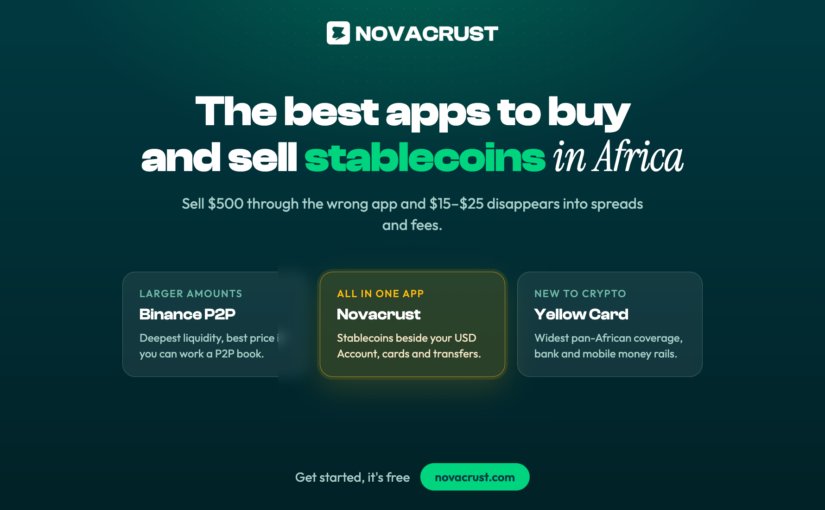
Sell $500 of USDT through the wrong app, and you can lose $15 to $25 of it before the money even reaches your bank account. Not because the coin moved, but because of a widespread withdrawal fee, or a slow payout that forces you to accept a worse rate. Buying and selling stablecoins in Africa isn’t hard anymore. Picking the app that doesn’t quietly eat your money is the actual problem.

Here’s a straight comparison of the apps people across Nigeria, Kenya, Ghana, and beyond actually use for USDT and USDC, and what each one is genuinely good at a

Six rules for not losing money on your next crypto trade

  1. Check the spread, not just the “fee.” Many apps advertise 0% fees but bake their margin into the buy/sell rate. Compare the actual NGN, KES, or GHS amount you’d get, not the headline fee.
  2. Confirm your payout method is actually supported. Bank transfer, mobile money (M-Pesa, Airtel Money), and card funding aren’t universal across every app in every country.
  3. Check withdrawal speed before you need it. An app that takes a day to release your cash is a different product than one that pays out in minutes, even if the rate looks identical.
  4. Look for local licensing or clear regulatory standing. This matters more in Nigeria and Kenya than it used to, and it’s the difference between an app you can trust with rent money and one you use for small amounts only.
  5. Don’t ignore P2P if you’re trading larger amounts. Platforms with deep P2P liquidity (Binance, Bybit, Bitget) often beat dedicated apps on price once you’re moving a few hundred dollars or more.
  6. Test with a small trade first. Rates, speed, and support quality on paper don’t always match reality. A $20 test trade tells you more than any comparison table.

The apps, compared

Yellow Card

Pan-African coverage across more countries than most competitors, with strong local payment rails: bank transfer and mobile money in many markets. A solid default if you’re new to crypto and want one app that works whether you’re in Lagos or Nairobi.

Quidax and Busha

Both built specifically for the Nigerian market, with NGN rails and local support. Good if Nigeria is your only market and you want a straightforward buy/sell flow without needing P2P.

BitAfrika

Covers Ghana and Nigeria with a simple buy/sell/send flow across a wide range of coins, not just USDT and USDC. Worth a look if you want one app for stablecoins and other assets like BTC or ETH.

Binance P2P, Bybit, and Bitget

The deepest liquidity of any option here, with active P2P markets in Kenya, Ghana, and South Africa. Best for people comfortable navigating a P2P interface and trading larger amounts where price matters more than simplicity.

Novacrust

Buy, sell, and deposit USDT, USDC, BTC, ETH, and SOL directly on Novacrust, in the same app you’d use for a USD Account, gift cards, or sending money to 50+ countries. If you’re already moving money internationally, converting stablecoins in the same place you hold and spend it removes a step other apps can’t.

Which one should you actually use?

SituationBest fit
New to crypto, want simplicityYellow Card
Nigeria-only, straightforward buy/sellQuidax or Busha
Want stablecoins alongside other crypto and everyday finance in one appNovacrust
Trading larger amounts, comfortable with P2PBinance, Bybit, or Bitget
Ghana or Nigeria, want broad coin supportBitAfrika

FAQ

What’s the cheapest way to sell USDT in Africa?

It depends on the amount. For small trades, a dedicated app like Yellow Card or Novacrust with a tight spread usually beats P2P once you account for time and hassle. For larger amounts, deep P2P liquidity on Binance, Bybit, or Bitget often wins on price.

Is it safe to buy and sell USDT or USDC through these apps?

Stick to apps with clear regulatory standing in your country, visible company information, and a track record of fast payouts. Test any new app with a small trade before moving larger amounts through it.

Can I buy USDT or USDC with mobile money?

Yes, on most of the apps above, including Novacrust. Availability of mobile money as a funding method varies by country, so check before you commit to one app.

Do I need a separate wallet, or can I hold USDT in the app itself?

Most of these apps, Novacrust included, let you hold your stablecoins directly in-app rather than requiring a separate wallet. Useful if you want to convert, spend, or send without moving funds around first.

Buy and sell USDT, USDC, and more on Novacrust

Get Started. It’s Free. Then convert your crypto to cash, hold it, or spend it in the same app you already use for your USD Account and money transfers.

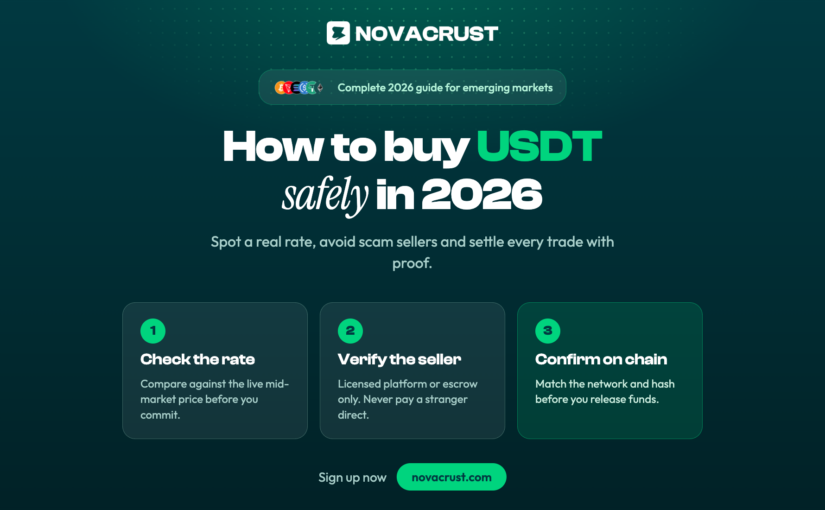
How to Buy USDT Safely in 2026: A Complete Guide for Emerging Markets

Search “buy USDT in Malawi” or “how to buy USDT in Maldives” and most of the first page isn’t a licensed exchange. It’s Telegram groups, Facebook posts, and P2P forums where you send money to a stranger first and hope the USDT shows up after. That gap between demand and safe supply is exactly why so many people in Cameroon, Zambia, Nepal, Botswana, and dozens of other markets still buy USDT the hard way.

USDT (Tether) is the most widely used stablecoin in the world, pegged 1:1 to the US dollar. That peg is the whole appeal: your money holds its value in dollars without you needing a US bank account. But “widely used” doesn’t mean “widely available through safe channels” everywhere. This guide covers how USDT actually gets bought and sold, where the real risk sits, and how to buy it in minutes instead of hours.

Why buying USDT is harder than it should be

In markets with limited USD liquidity, mainstream banks, weak local exchange infrastructure, or currency controls, three things usually happen:

  • Local exchanges either don’t exist or don’t support your country
  • Peer-to-peer (P2P) trading fills the gap, which means you’re trusting a stranger, not a platform
  • Rates vary wildly between sellers, and the “cheap” price sometimes hides a scam

None of that is a reason to avoid USDT. It’s a reason to be specific about how you buy it.

How the common USDT scams actually work

Most P2P USDT scams follow the same pattern: a seller offers a rate slightly better than everyone else’s, asks for payment via bank transfer or mobile money first, and then either sends less USDT than agreed, sends it to the wrong network, or disappears entirely. Group admins in Telegram or Facebook communities rarely offer any real recourse once that happens; you’re left with a screenshot and no way to reverse the transfer. This is the exact gap a licensed platform closes: your payment and the USDT release happen inside one system, not across two separate, unconnected steps.

Novacrust vs. P2P groups and other exchanges

Binance P2P, Busha, and Breet.io all let you buy USDT, and each works differently. Binance P2P connects you with individual traders directly, so you’re still trusting a stranger, just inside an app instead of a Telegram group. Busha and Breet.io operate as licensed exchanges in select markets, which is safer than open P2P, but neither pairs USDT buying with a USD Account or virtual card the way Novacrust does. If you want to buy USDT and also hold, spend, or convert dollars from the same wallet, that combination is where Novacrust differs most.

Six rules for buying USDT safely

  1. Use a platform that holds your funds in escrow, not a stranger’s word. If a seller asks you to pay first and “trust the process,” that’s not a platform, that’s a bet.
  2. Check the live rate before you commit. Rates can move within minutes. A platform that locks your rate for a short window protects you from last-second changes.
  3. Confirm the network before you send anything. USDT exists on multiple networks (TRC20, ERC20, and others). Sending to the wrong network address can mean losing your funds permanently.
  4. Avoid sellers who won’t verify their identity. Anonymity on your side is fine. Anonymity on the seller’s side, with no recourse if something goes wrong, isn’t.
  5. Start small the first time. Test any new platform or seller with a small amount before moving your full balance.
  6. Keep your funding trail traceable. Bank transfer or mobile money, not cash handoffs, so you have a record if a dispute comes up.

How to buy USDT on Novacrust

Novacrust lets you buy USDT (along with USDC, BTC, ETH, SOL, and more) directly, with the rate and network shown upfront before you confirm.

  1. Create your account. Sign up in a couple of minutes. No US address or SSN required.
  2. Fund your wallet. Pay via bank transfer, mobile money, or an existing crypto wallet.
  3. Buy USDT at the live rate. The rate you see is the rate you get, with no last-minute markup.
  4. Confirm the network. Novacrust shows you the correct network before you send, so your funds land in the right place the first time.
  5. Hold, spend, or convert. Keep it as USDT, convert to your local currency, or move it into your USD Account.

The whole flow runs on one platform, so there’s no handing money to a stranger and waiting to see what shows up.

Buying USDT in Malawi, Maldives, Cameroon, Zambia, Botswana, and Nepal

Country-specific USDT demand is real, and the friction looks similar everywhere: thin local exchange support, P2P groups filling the gap, and rates that shift depending on who you ask.

  • Malawi and Zambia: Local exchanges are limited, so most buyers rely on P2P sellers found through Telegram or Facebook, often paying via mobile money. A licensed platform removes the guesswork around whether the seller will actually deliver.
  • Maldives: Tourism-driven cash flow means many residents and workers want a stable way to hold dollars without going through a traditional bank. USDT fills that role, but only if the buying process is verified.
  • Cameroon: Mobile money is the dominant payment rail, and USDT buyers here need a platform that accepts it directly rather than routing through a third-party wallet first.
  • Botswana and Nepal: Both have smaller but growing USDT demand, usually from freelancers and remote workers who want to hold part of their income in dollars.

The country changes. The core problem doesn’t: buy from a platform that shows its rate and holds funds securely, not from a stranger’s word.

What buying USDT should actually cost

A fair USDT purchase has two costs: the network fee (small, fixed by the blockchain, not the seller) and the platform’s spread (the difference between the live market rate and what you’re quoted). Watch for sellers who bundle in a third, invisible cost: a marked-up rate disguised as a “discount.” If a rate looks meaningfully better than everyone else’s, ask why before you ask how.

USDT vs. other ways to hold dollars

If your goal is simply holding value in USD, USDT isn’t your only option. A Novacrust USD Account gives you a real US account number in your name, no crypto step required. Some people use both: USDT for speed and portability, a USD Account for a bank-like balance they can receive ACH and wire transfers into. Compare what you actually need before picking one.

FAQ

Is it legal to buy USDT in Malawi, Cameroon, Zambia, Botswana, Nepal, or the Maldives?
Rules vary by country and change over time, so check your local regulations. In most of these markets, buying and holding USDT through a licensed platform is legal; the risk is usually with unregulated P2P sellers, not the asset itself.

How long does it take to buy USDT?
On Novacrust, a purchase completes in minutes once your wallet is funded. P2P trades can take much longer, since you’re waiting on another person to respond and confirm.

Can I buy USDT with mobile money?
Yes, on Novacrust you can fund your wallet with mobile money in supported countries and buy USDT directly from that balance.

Is USDT the same as a US dollar?
No. USDT is a stablecoin designed to track the US dollar’s value 1:1, but it’s a crypto asset, not a bank deposit. It moves like crypto and settles fast, which is the main reason people use it instead of, or alongside, traditional banking.

What’s the minimum amount of USDT I can buy?
This depends on the platform. Novacrust supports small first purchases, so you can test the process before committing a larger amount.

Buy USDT without the guesswork

You shouldn’t have to trust a stranger’s screenshot to hold dollars. Buy USDT on Novacrust with a live rate, a verified network, and funds that move in minutes, not hours.

Get Started. It’s Free.

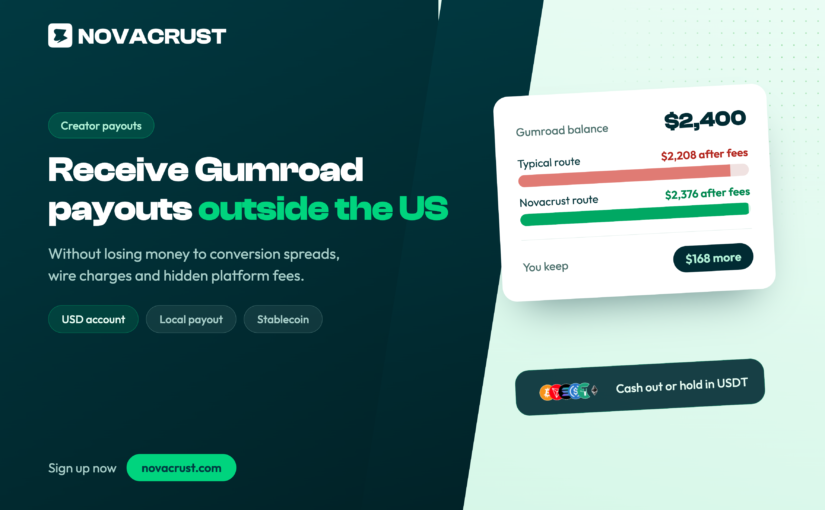
How to Receive Gumroad Payouts Outside the US (Without Losing Money to Fees)

Gumroad does not let you add a payout method if your country is not on its supported list, and that list leaves out most of Africa, plus large parts of Asia and Latin America. Creators in Nigeria, Kenya, Ghana, Pakistan, and dozens of other countries hit the same wall: sales pile up in their Gumroad balance with nowhere to send them.

The usual workaround, routing payouts through a US-based friend’s PayPal or a forwarding service, costs 3 to 8 percent in fees and conversion spread on every payout. On a $500 month, that is $15 to $40 gone before the money even reaches you.

Why Gumroad payouts fail for so many creators

Per Gumroad’s own payout documentation, Gumroad pays out two ways: PayPal, or direct deposit to a US bank account. PayPal is only available in a limited set of countries, and even where it works, PayPal’s own conversion rates run 3 to 4 percent above the mid-market rate. Direct deposit needs a real US bank account with a routing and account number, which is exactly what most creators outside the US do not have.

That second option, direct deposit, is actually the cheaper and faster path. You just need the US account to plug into it.

The fix: a USD Account with a real routing number

A Novacrust USD Account gives you a US account number and routing number you can add directly to Gumroad’s payout settings, the same way a creator living in Ohio would. Gumroad pays out via ACH straight into your account. No PayPal, no forwarding service, no friend holding your money. If you want the mechanics of how ACH payouts actually work, see ACH vs Wire vs SWIFT.

Here is the setup:

  1. Create a Novacrust account and open a USD Account. It takes minutes and needs no US address or Social Security number.
  2. Copy your account and routing number from your Novacrust dashboard.
  3. In Gumroad, go to Settings, then Payments, and add your Novacrust USD Account as a bank payout method.
  4. Set your payout schedule. Gumroad sends funds via ACH, which typically lands in 1 to 3 business days.

Once your dollars land, spend them with a Novacrust USD Virtual Card, convert to naira, cedis, shillings, or another local currency at competitive rates, or send to 50+ countries. You keep the payout in dollars for as long as you want and move it only when you are ready.

It is not just Gumroad

The same routing and account number works for any platform that pays out via US direct deposit or ACH: Upwork, Fiverr, Patreon, Payhip, Podia, and most US-based marketplaces and ad networks. Set it up once on your Novacrust USD Account, and you can add it as a payout method everywhere you get paid. This is the same setup covered in our guide to the US banking system for non-residents, if you want the fuller picture of how a US account number works without a US address.

This is the difference between chasing a payout workaround for every platform and having one dollar account that plugs into all of them.

What this actually saves you

A creator earning $800 a month through Gumroad, routing payouts through PayPal or a forwarding service at a 5 percent blended cost, loses about $40 a month, or $480 a year. Routing the same $800 through a USD Account cuts that to Novacrust’s standard conversion rate, only charged when you actually convert to local currency, and only on the portion you convert.

FAQ

Can I add a Novacrust USD Account to Gumroad if I do not live in the US?
Yes. The USD Account comes with a real US account and routing number that works in Gumroad’s bank payout settings regardless of where you live.

How long does a Gumroad payout take once I switch to direct deposit?
Gumroad sends ACH payouts on your chosen schedule, and funds typically arrive in your Novacrust USD Account within 1 to 3 business days.

Do I need a US address or Social Security number to open a USD Account?
No. Novacrust’s USD Account is built for freelancers and creators outside the US and does not require either.

Can I use the same USD Account for Upwork, Fiverr, or Patreon payouts?
Yes. Any platform that supports US bank direct deposit or ACH can pay out to the same Novacrust USD Account.

What can I do with the dollars once they land?
Hold them in USD, spend them with a Novacrust USD Virtual Card, convert to your local currency at competitive rates, or send to 50+ countries.

Stop losing 5 percent of every Gumroad payout to a workaround. Get Started. It’s Free. Open your Novacrust USD Account in minutes and add it as your payout method today.

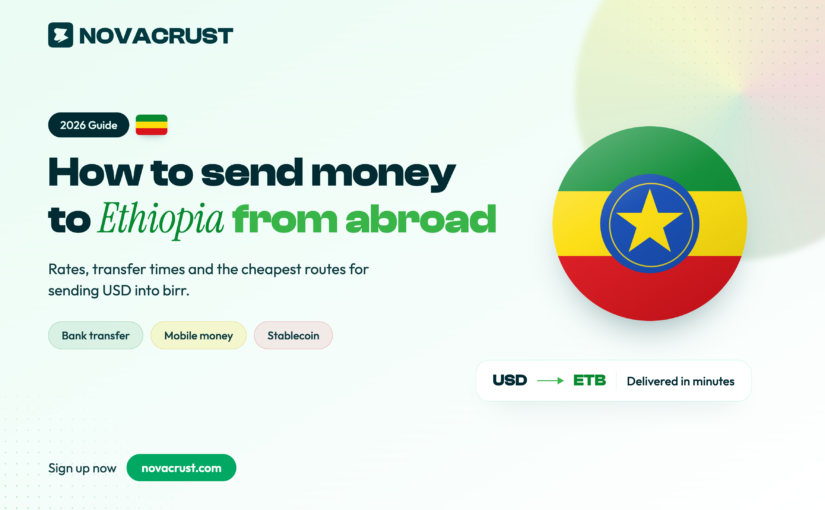
How to Send Money to Ethiopia From Abroad (2026 Guide)

The World Bank’s Remittance Prices Worldwide data puts the average cost of sending money to Sub-Saharan Africa at over 7 percent of the transfer, among the highest remittance fees anywhere in the world. Send $500 to Ethiopia through the wrong channel and $35 or more never reaches your recipient. It disappears into a wire fee, a bad exchange rate, or both.

Ethiopia adds its own wrinkle: birr access is tightly controlled, and not every international transfer service pays out directly to a bank account or Telebirr wallet inside the country. This guide covers what actually determines the cost of sending money to Ethiopia, which payout method gets your recipient paid fastest, and how the process works on Novacrust.

Why Sending Money to Ethiopia Costs More Than It Should

Three things drive up the cost of a transfer to Ethiopia specifically: a marked-up exchange rate instead of the real one, a payout network that routes through a correspondent bank before it reaches Ethiopia, and a fee structure that hides part of its cut inside the rate instead of the receipt.

Traditional bank wires are usually the worst offender. A wire from a US or UK bank to Ethiopia can take 3 to 5 business days and cost $25 to $45 in fees before the exchange rate markup is even factored in. Western Union and similar cash-pickup services move faster, but the rate they quote is rarely the mid-market rate, and that gap is where a chunk of your money goes. For a broader look at how transfer costs stack up across methods, see our guide to the best way to send money internationally.

Five Rules for Sending Money to Ethiopia Without Losing Value

  1. Check the live exchange rate before you send. A transfer that looks cheap on fees alone can still cost more than a competitor with a better birr rate. Compare the total amount your recipient gets, not the fee line item.
  2. Confirm the payout method before you commit. Bank deposit to Commercial Bank of Ethiopia, Awash, or Dashen works for most recipients. Telebirr mobile money is faster for recipients without a bank account nearby.
  3. Avoid services that route through multiple correspondent banks. Every extra bank in the chain adds a day and a fee. A platform that pays out directly moves faster and costs less. This is the same routing problem we cover in ACH vs Wire vs SWIFT.
  4. Send in local currency terms your recipient understands. Confirm the birr amount landing on their end, not just the dollar or pound amount you’re sending.
  5. Keep the confirmation. A transfer reference number and payout confirmation are the only things that help if a transfer is delayed on the Ethiopian side.

How to Send Money to Ethiopia on Novacrust in 4 Steps

Step 1: Sign in and select your destination

Sign in to your novacrust.com account, tap Send Money, and choose Ethiopia from the list of 50+ supported countries.

Step 2: Choose bank deposit or Telebirr

Enter your recipient’s bank details or Telebirr mobile number. Both payout options are supported.

Step 3: Confirm the rate and amount

Novacrust shows you the exact birr amount your recipient gets, at the live rate, before you confirm anything.

Step 4: Send

Once you confirm, the transfer is on its way. Most transfers to Ethiopia land within minutes, not days.

Novacrust vs Other Ways to Send Money to Ethiopia

Bank wire Western Union Novacrust
Speed 3-5 business days Minutes to hours for cash pickup Minutes, straight to bank or Telebirr
Rate visibility Often unclear until it lands Marked-up rate, shown late Live rate shown before you send
Fees $25-$45 plus markup Flat fee plus rate markup Transparent fee, shown upfront
Payout options Bank only Mostly cash pickup Bank deposit or Telebirr

Lemfi is a reasonable option for sending to Ethiopia too, with its own dedicated transfer corridor. What changes the decision is what else you can do with your money afterward. On Novacrust, the same account handles crypto, a USD Account, Gift Cards, and a virtual dollar card, not just this one transfer corridor.

Frequently Asked Questions

How long does it take to send money to Ethiopia?
On Novacrust, most transfers land within minutes. A traditional bank wire can take 3 to 5 business days.

Can I send money to a Telebirr wallet directly?
Yes. Novacrust supports payout directly to Telebirr, alongside bank deposit to major Ethiopian banks.

What’s the cheapest way to send money to Ethiopia?
The cheapest option is the one where the total birr amount landing with your recipient is highest, after fees and exchange rate. Always compare that number directly, not just the advertised fee.

Do I need a Telebirr account or Ethiopian bank account to receive money?
Your recipient needs either a Telebirr wallet or an account at a supported Ethiopian bank. Novacrust pays out to both.

The Bottom Line

Sending money to Ethiopia doesn’t have to cost 7 percent of every transfer or take a week to land. A platform that shows you the real rate upfront and pays out directly to a bank account or Telebirr wallet gets your money there faster, for less.

Send money to Ethiopia on Novacrust. Get Started. It’s Free.

ACH vs Wire vs SWIFT: Which Should You Use to Get Paid From Abroad?

Mary closed her biggest design contract yet, a US client paying four figures a month. She invoiced, the client paid the same day, and she spent the week feeling like a professional who had finally made it. Then she waited. Six days later, the money landed, except it was short by $40 she could not explain, skimmed by a bank she had never agreed to deal with. The work had gone perfectly. The getting paid part was a mess, and nobody had ever taught her the difference between the options her client kept asking about.

That gap is what this guide closes. ACH, wire transfer, and SWIFT are the three ways most international payments move, and the difference between them is real money and real days. Understanding the ACH vs wire transfer question, and where SWIFT fits in, means you can tell a client exactly how to pay you, get your money faster, and stop losing a cut to fees you never needed to pay.

The short answer first

 ACHWire transferSWIFT
Best forRoutine US paymentsLarge or urgent paymentsPayments across borders
Speed1 to 3 business daysSame day to 1 day domestically1 to 5 business days
CostLow or freeHigher fixed feeHigher, often with intermediary fees
ReachWithin the USDomestic and internationalGlobal, bank-to-bank worldwide

If your client is in the US and the payment is routine, ACH is usually cheapest. If the payment is large or urgent, a wire is faster and more certain. If the money is crossing borders, SWIFT is the network doing the work behind the scenes. Now, let us make each one make sense.

What is an ACH payment?

ACH stands for Automated Clearing House. It is the network that moves money between banks inside the United States. If you have ever had a US salary deposited automatically, paid a US bill online, or received a refund into a US account, ACH did the work.

The appeal of ACH is cost. It is cheap, often free, which is why it is the default for recurring and everyday payments in the US. The trade-off is speed and reach. An ACH payment usually takes one to three business days to settle, and it only works within the US banking system. So if a US client is paying you and you hold a US-style account, ACH is the low-cost, no drama option for regular invoices.

How long does ACH take?

Most ACH payments clear in one to three business days. Some processes are same-day if the sender uses faster ACH options, but plan around the standard window. ACH does not move on weekends or US bank holidays, so a payment sent on a Friday may not land until the middle of the following week.

What is a wire transfer?

A wire transfer is a direct, bank-to-bank movement of money. Instead of being batched and processed in groups like ACH, a wire is sent individually and tends to settle much faster, often the same day for domestic transfers.

Wires are the tool of choice when speed and certainty matter, for example, a large project payment, a deposit, or anything where both sides want confirmation that the money has truly moved. The cost is the catch. Wires usually carry a fixed fee on the sending side, and sometimes on the receiving side too. For a small invoice, that fee feels heavy, but for a large or time-sensitive payment, the speed is worth it. To receive a wire transfer, you give the sender your account details and a routing number or equivalent, plus a few extra pieces of information for international wires.

What is SWIFT?

SWIFT is not a payment in the way ACH and a wire are. It is the messaging network banks around the world use to talk to each other and instruct international transfers. When money moves between a bank in one country and a bank in another, a SWIFT message usually coordinates it. This is why an international wire is often called a “SWIFT transfer.”

The strength of SWIFT is global reach. It connects thousands of banks worldwide, which is how a client in one country can pay a freelancer in another at all. The weakness is what happens along the way. An international SWIFT transfer can pass through one or more intermediary banks, and each can take a fee and add a day. This is the mystery slice that goes missing between the invoice amount and what finally lands in your account. It is exactly what cost Mary her forty dollars.

ACH vs wire vs SWIFT: the differences that affect you

Speed, cost, and reach are the three levers. ACH wins on cost but is slow and US only. A wire wins on speed and certainty but costs more per transfer. SWIFT is what makes an international wire transfer possible at all, with the widest reach but the highest chance of intermediary bank fees and delays.

For most freelancers, the practical reality looks like this. A US client paying a routine invoice reaches for ACH because it is cheap and easy on their end. A client sending a large payment, or one who wants it to land fast, uses a wire. And the moment that money travels from one country to another, SWIFT carries it, with the extra cost and time international hops add.

Which should you use when?

A few simple scenarios cover most situations:

  • Your client is in the US, and the invoice is routine. Ask for ACH. It is the cheapest and most reliable for regular work.
  • The payment is large, or you need it quickly and confirmed. Ask for a wire. The fee is worth the speed.
  • You and your client are in different countries. The payment travels over SWIFT, so build in a few extra days and expect possible intermediary fees.
  • You want the smoothest experience over time. Set yourself up to accept both ACH and wire, so a client can pay you the way that suits them rather than the way you are stuck with.

The catch for anyone outside the US

Here is the part most guides skip. ACH and US-style wires assume you have an account that can receive them, with a real account number and routing number in your name. For people living outside the US, that has long been the hard part. You can know everything about how to receive a wire transfer and still have nowhere for the money to land.

This is the gap modern financial platforms close. With a USD account in your own name that supports both ACH and wire transfers, you can hand a US client your details and let them pay you exactly as they would pay anyone local. Novacrust offers this kind of account, so you can receive international payments through familiar rails, hold the dollars you earn, and convert or spend them on your own terms rather than losing value the moment the money arrives. Once you have the right account, the ACH vs wire decision stops being a source of anxiety and becomes a quick, informed choice you make to get paid faster and keep more of what you earned. Mary switched to one after that first short payment, and her next invoice landed whole.

Frequently asked questions

What is the difference between an ACH and a wire transfer?

ACH moves money between US banks in batches, which makes it cheap but slower, usually one to three business days, and limited to the US. A wire transfer is sent individually and settles much faster, often the same day domestically, but carries a higher fee. ACH suits routine payments, and wires suit large or urgent ones.

Is SWIFT the same as a wire transfer?

Not exactly. A wire is the transfer itself, while SWIFT is the global messaging network banks use to coordinate international wires. An international wire usually travels over SWIFT, which is why the terms get used together.

How long does ACH take to arrive?

Typically, one to three business days. ACH does not process on weekends or US bank holidays, so timing depends on when the payment is sent.

Which is cheapest for receiving international payments?

ACH is usually cheapest when it is available, but it only works within the US. For payments across borders, you are often dealing with a SWIFT-based wire, where the key is an account that minimises intermediary bank fees and gives you a fair conversion rate once the money lands.

Keep reading

  • Money Management for Remote Workers and Digital Nomads: The Complete 2026 Guide

Struggling to Get Paid from Abroad? Cynthia Did Too. Here’s How She Made It Work

From unpaid gigs to managing international clients, Cynthia shares the lessons, struggles, and solutions that helped her build a global freelance career

Can you briefly introduce yourself and tell us what you do?

I am Cynthia Ozumba, an Executive Operations Assistant and an Online Business Manager (OBM). I help brands with systems, automation, and coaching.

I work with clients across different parts of the world, offering services like administrative support, virtual assistance, and system optimization.

I started with writing and social media management, but over time, I transitioned into operations and executive support, which is my current focus.

How did your journey into the digital or creative space begin?

My journey began with writing for coaches creating copy for seminars, courses, and marketing campaigns. I realized I could help clients manage their online presence while building my own skills.

From there, I transitioned into social media management and virtual assistance. I noticed I could scale my services and offer more value to clients. Over time, this led me to become an Executive Operations Assistant, managing multiple international clients with diverse needs.

What first inspired you to start building your career online?

I realized that even posting once a week on LinkedIn or Facebook could resonate with people. I would get questions, DMs, and requests for advice.

I thought: Why hide my journey when I can actually build a brand around my experience and knowledge?

So I started sharing my insights, my career path, and what I was learning. My goal was to create a space where people could gain knowledge and experience to succeed in their own online careers.

What were some of the biggest challenges you faced when you were just starting out?

Starting out came with many challenges:

  • Confidence: I struggled to present myself well in interviews, especially with international clients. Sometimes my speech would falter, or I would feel unsure of myself.
  • Positioning: Being Nigerian presented its own hurdles. Many clients and platforms had doubts about hiring talent from Africa, so I had to prove my skills and professionalism.
  • Payment issues: In the early stages of my journey, there were limited options for receiving international payments. I had to manually arrange payments through platforms like Payoneer or bank transfers, which wasn’t always smooth.

Despite these challenges, I stayed consistent, learned quickly, and kept improving.

Was there a particular moment or opportunity that really changed things for you?

Yes. One breakthrough came when a client reached out after seeing my comments on LinkedIn. She needed temporary help because she was about to have her first baby. I took a three-week assignment, and that became my first real international paid experience.

Before this, I had done volunteer work or small local gigs. That opportunity gave me credibility, confidence, and a portfolio that opened doors to other international clients.

Many young Africans want to work online today. From your experience, what do you think is the biggest mistake beginners make?

The biggest mistake beginners make isn’t always a lack of skill it’s:

  • Poor positioning: They know the work but can’t package themselves for clients.
  • Seeking quick money: Many expect high pay without putting in consistent effort.
  • Underestimating perception barriers: Being from Africa, clients may question reliability or skill.

Beginners often focus on the wrong things instead of building their brand, skillset, and visibility.

Have you ever had moments where things were slow or discouraging? How did you push through them?

Absolutely. There were months when I applied for multiple jobs without getting any offers. At times, I faced rejections or limited opportunities.

I pushed through by keeping a mindset of persistence: treating every “no” as data, not failure. I reminded myself of my skills and value, kept learning, and diversified the platforms I applied onUpwork, LinkedIn, Contra, GetMagic, etc.

Have you worked with international clients or global teams before?

Yes, I have worked with clients across different countries including the UK, USA, Germany, Australia, and Canada.

What has that experience been like for you?

Working internationally gave me exposure I couldn’t have gained locally. I’ve learned how to manage people, work across different time zones, and adapt to different communication styles. It has helped me grow professionally and understand how global businesses operate.

One challenge many freelancers face is getting paid by international clients. Have you ever experienced any issues receiving payments from outside your country?

Yes. Early on, payment issues were a major challenge. Platforms were limited, and clients often had difficulty sending money.

How did you handle those payment challenges at the time?

I arranged alternative payment methods manually Payoneer, bank transfers, and later, platforms that simplified receiving USD or crypto payments. I learned to communicate clearly with clients and provide multiple payment options.

In your opinion, how important is it for freelancers and digital creators to have access to a reliable dollar payment account?

It’s crucial. Reliable dollar accounts allow freelancers to receive payments quickly, manage earnings, and work confidently with global clients without worrying about lost or delayed payments.

Do you think payment limitations affect how African freelancers work with global clients?

Absolutely. Payment restrictions limit opportunities, reduce trust, and can discourage talented freelancers from pursuing global work. Having access to platforms that make payments seamless is a game-changer.

Platforms like Novacrust are trying to make international payments easier for freelancers and digital service providers. What are your thoughts on solutions like this?

I think platforms like Novacrust are excellent initiatives. Linking accounts from Upwork, Fiverr, and other platforms allows freelancers to receive international payments easily, even in Nigeria. This reduces barriers, improves trust, and empowers African freelancers to compete globally.

If someone wants to start working with international clients today, what are a few things they should prepare for?

  1. Get a high-income skill: Focus on skills clients need, not what friends suggest.
  2. Optimize your profile: LinkedIn, portfolio, and resume should be professional.
  3. Build a strong portfolio: Clients decide based on what they see, not personal meetings.
  4. Give it time: Treat “no” as data, not failure.
  5. Diversify platforms: Don’t put all eggs in one basket—Upwork, LinkedIn, Contra, GetMagic, etc.
  6. Set boundaries: Protect your time, respect yourself, and gain hands-on experience.

What keeps you grounded when the journey becomes difficult?

My “why.”

I constantly remind myself of the reason I started, the goals I have, and the kind of life I want to build. That purpose keeps me going even when things get difficult.

If you could go back and advise your younger self at the beginning of your career, what would you say?

  • Don’t be afraid to ask for help.
  • Don’t be ashamed of charging your worth.
  • Build confidence and put yourself out there, even for small opportunities.

Finally, what one honest truth would you share with young creators and freelancers in Africa who want to build a global career?

Imagine being awake while your own country is asleep. Opportunities abroad require consistent effort, patience, and resilience. Focus on building skills, positioning yourself well, and creating value. Success doesn’t come overnight, but if you stay persistent and confident, you can compete on a global level.

Cynthia’s journey proves that resilience, skill-building, and strategic action are the keys to success. Start small, optimize your profile, diversify your client base, and never underestimate the power of persistence. Working with international clients is not just a dream it’s achievable for African freelancers with the right approach.