ACH vs Wire vs SWIFT: Which Should You Use to Get Paid From Abroad?

Mary closed her biggest design contract yet, a US client paying four figures a month. She invoiced, the client paid the same day, and she spent the week feeling like a professional who had finally made it. Then she waited. Six days later, the money landed, except it was short by $40 she could not explain, skimmed by a bank she had never agreed to deal with. The work had gone perfectly. The getting paid part was a mess, and nobody had ever taught her the difference between the options her client kept asking about.

That gap is what this guide closes. ACH, wire transfer, and SWIFT are the three ways most international payments move, and the difference between them is real money and real days. Understanding the ACH vs wire transfer question, and where SWIFT fits in, means you can tell a client exactly how to pay you, get your money faster, and stop losing a cut to fees you never needed to pay.

The short answer first

 ACHWire transferSWIFT
Best forRoutine US paymentsLarge or urgent paymentsPayments across borders
Speed1 to 3 business daysSame day to 1 day domestically1 to 5 business days
CostLow or freeHigher fixed feeHigher, often with intermediary fees
ReachWithin the USDomestic and internationalGlobal, bank-to-bank worldwide

If your client is in the US and the payment is routine, ACH is usually cheapest. If the payment is large or urgent, a wire is faster and more certain. If the money is crossing borders, SWIFT is the network doing the work behind the scenes. Now, let us make each one make sense.

What is an ACH payment?

ACH stands for Automated Clearing House. It is the network that moves money between banks inside the United States. If you have ever had a US salary deposited automatically, paid a US bill online, or received a refund into a US account, ACH did the work.

The appeal of ACH is cost. It is cheap, often free, which is why it is the default for recurring and everyday payments in the US. The trade-off is speed and reach. An ACH payment usually takes one to three business days to settle, and it only works within the US banking system. So if a US client is paying you and you hold a US-style account, ACH is the low-cost, no drama option for regular invoices.

How long does ACH take?

Most ACH payments clear in one to three business days. Some processes are same-day if the sender uses faster ACH options, but plan around the standard window. ACH does not move on weekends or US bank holidays, so a payment sent on a Friday may not land until the middle of the following week.

What is a wire transfer?

A wire transfer is a direct, bank-to-bank movement of money. Instead of being batched and processed in groups like ACH, a wire is sent individually and tends to settle much faster, often the same day for domestic transfers.

Wires are the tool of choice when speed and certainty matter, for example, a large project payment, a deposit, or anything where both sides want confirmation that the money has truly moved. The cost is the catch. Wires usually carry a fixed fee on the sending side, and sometimes on the receiving side too. For a small invoice, that fee feels heavy, but for a large or time-sensitive payment, the speed is worth it. To receive a wire transfer, you give the sender your account details and a routing number or equivalent, plus a few extra pieces of information for international wires.

What is SWIFT?

SWIFT is not a payment in the way ACH and a wire are. It is the messaging network banks around the world use to talk to each other and instruct international transfers. When money moves between a bank in one country and a bank in another, a SWIFT message usually coordinates it. This is why an international wire is often called a “SWIFT transfer.”

The strength of SWIFT is global reach. It connects thousands of banks worldwide, which is how a client in one country can pay a freelancer in another at all. The weakness is what happens along the way. An international SWIFT transfer can pass through one or more intermediary banks, and each can take a fee and add a day. This is the mystery slice that goes missing between the invoice amount and what finally lands in your account. It is exactly what cost Mary her forty dollars.

ACH vs wire vs SWIFT: the differences that affect you

Speed, cost, and reach are the three levers. ACH wins on cost but is slow and US only. A wire wins on speed and certainty but costs more per transfer. SWIFT is what makes an international wire transfer possible at all, with the widest reach but the highest chance of intermediary bank fees and delays.

For most freelancers, the practical reality looks like this. A US client paying a routine invoice reaches for ACH because it is cheap and easy on their end. A client sending a large payment, or one who wants it to land fast, uses a wire. And the moment that money travels from one country to another, SWIFT carries it, with the extra cost and time international hops add.

Which should you use when?

A few simple scenarios cover most situations:

  • Your client is in the US, and the invoice is routine. Ask for ACH. It is the cheapest and most reliable for regular work.
  • The payment is large, or you need it quickly and confirmed. Ask for a wire. The fee is worth the speed.
  • You and your client are in different countries. The payment travels over SWIFT, so build in a few extra days and expect possible intermediary fees.
  • You want the smoothest experience over time. Set yourself up to accept both ACH and wire, so a client can pay you the way that suits them rather than the way you are stuck with.

The catch for anyone outside the US

Here is the part most guides skip. ACH and US-style wires assume you have an account that can receive them, with a real account number and routing number in your name. For people living outside the US, that has long been the hard part. You can know everything about how to receive a wire transfer and still have nowhere for the money to land.

This is the gap modern financial platforms close. With a USD account in your own name that supports both ACH and wire transfers, you can hand a US client your details and let them pay you exactly as they would pay anyone local. Novacrust offers this kind of account, so you can receive international payments through familiar rails, hold the dollars you earn, and convert or spend them on your own terms rather than losing value the moment the money arrives. Once you have the right account, the ACH vs wire decision stops being a source of anxiety and becomes a quick, informed choice you make to get paid faster and keep more of what you earned. Mary switched to one after that first short payment, and her next invoice landed whole.

Frequently asked questions

What is the difference between an ACH and a wire transfer?

ACH moves money between US banks in batches, which makes it cheap but slower, usually one to three business days, and limited to the US. A wire transfer is sent individually and settles much faster, often the same day domestically, but carries a higher fee. ACH suits routine payments, and wires suit large or urgent ones.

Is SWIFT the same as a wire transfer?

Not exactly. A wire is the transfer itself, while SWIFT is the global messaging network banks use to coordinate international wires. An international wire usually travels over SWIFT, which is why the terms get used together.

How long does ACH take to arrive?

Typically, one to three business days. ACH does not process on weekends or US bank holidays, so timing depends on when the payment is sent.

Which is cheapest for receiving international payments?

ACH is usually cheapest when it is available, but it only works within the US. For payments across borders, you are often dealing with a SWIFT-based wire, where the key is an account that minimises intermediary bank fees and gives you a fair conversion rate once the money lands.

Keep reading

  • Money Management for Remote Workers and Digital Nomads: The Complete 2026 Guide

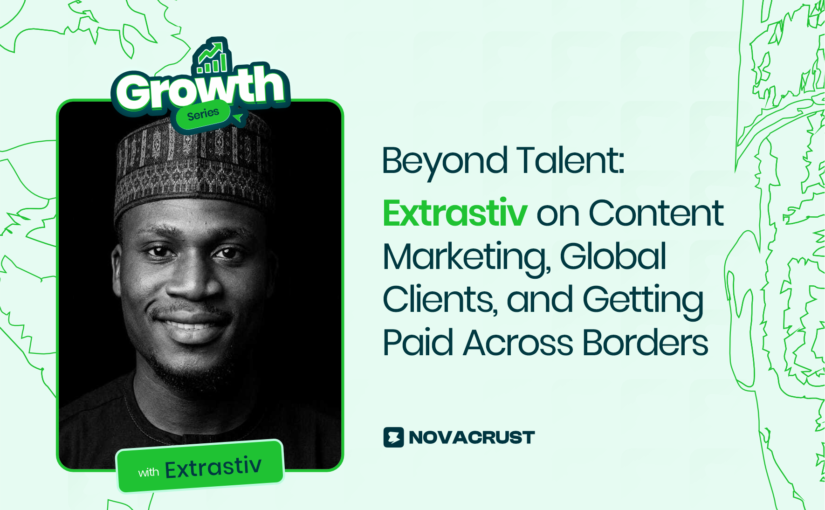
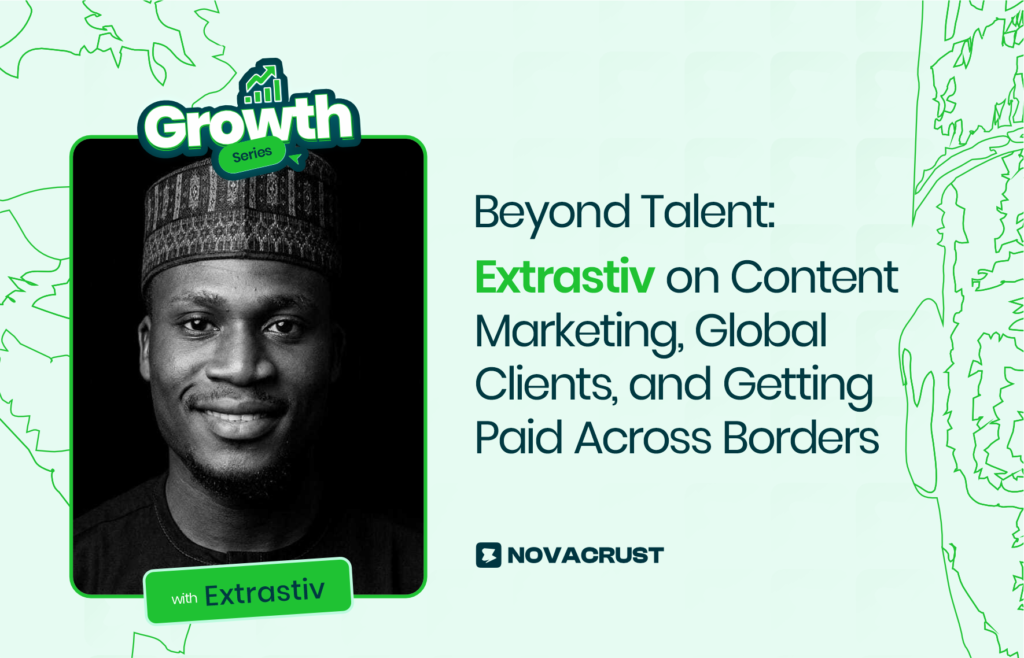
Beyond Talent: Extrastiv on Content Marketing, Global Clients, and Getting Paid Across Borders

For many people, the internet is a place to consume content. For others, it’s a place to build opportunities. For Extrastiv, it became the foundation of an entire career.

What began as hours spent learning digital skills online eventually evolved into a thriving career in content marketing, writing, and education. Today, he works with brands across different industries, teaches aspiring writers how to monetize their skills, and shares the stories of freelancers and entrepreneurs through his newsletters.

But like many African freelancers working with international clients, the journey has involved more than mastering a skill. It has required learning how to build credibility, navigate global opportunities, overcome payment barriers, and stay consistent through periods of uncertainty.

In this conversation, Extrastiv shares the lessons he’s learned from building a career online, the realities of working with international clients, and why reliable payment infrastructure remains one of the most important pieces of the freelance ecosystem.

Can you briefly introduce yourself and tell us what you do?

My name is Extrastiv. I’m a content marketer and writer with over five years of professional experience. I’ve worked with B2B and B2C brands like Storipod, Gamms, Cleva, etc.

Beyond client work, I teach content marketing and run a writing course called Get Paid To Write, where I help writers transition into content marketing and start earning from their skills.

I run two newsletters. One is called CREATORS DIARY, where I profile freelancers, entrepreneurs, and creators by sharing their real stories the wins, the struggles, and the lessons in between. The other is a personal newsletter on Substack called Extrastiv Notes.

How did your journey into the digital or creative space begin?

My journey started from curiosity and survival at the same time. I was constantly online learning different digital skills and trying to understand how people were making money from the internet. Writing stood out to me because I enjoyed communicating ideas and storytelling. What started as learning online eventually became a career path.

What first inspired you to start building your career online?

Freedom and possibility. I saw people building careers online regardless of where they lived, and that opened my mind. As someone growing up in Nigeria, the internet felt like a bridge to opportunities that normally wouldn’t be accessible. I wanted to prove that talent and consistency could create global opportunities.

What were some of the biggest challenges you faced when starting out, especially working internationally?

The first challenge was just being taken seriously. When you’re starting out with no portfolio and no case studies, every pitch is essentially you asking someone to bet on potential.

But beyond visibility and credibility, the more frustrating challenge was infrastructure, specifically getting paid. Working with international clients sounds exciting until you realize that the systems built for receiving global payments aren’t exactly designed with African freelancers in mind. There were limitations, restrictions, and more than a few moments where money I had earned was simply out of reach.

Did you ever face issues receiving payments from international clients? How did that impact your growth?

Yes, several times. I’ve had situations where clients struggled to pay because the available payment options were either unavailable in Nigeria, too expensive, or unreliable.

It affects confidence and workflow because after delivering quality work, the last thing you want is uncertainty around payment. It also slows growth because freelancers need smooth systems to operate professionally.

What was your very first international payment experience like?

It was a mix of excitement and anxiety. The excitement of earning in a foreign currency for the first time is something most freelancers never forget, it feels like a milestone.

But there was also this underlying anxiety about whether the money would actually land, how long it would take, and what fees would eat into it. That first experience taught me that getting the client is only half the job. Knowing how to receive what you’ve earned without friction is just as important.

How did you handle the payment challenges at the time?

I had to rely on different alternatives, ask fellow freelancers for recommendations, and sometimes even use third-party options. It wasn’t always convenient, but it taught me the importance of having reliable financial tools as a freelancer working globally.

In your opinion, how important is having a reliable dollar payment account for freelancers and digital creators?

It’s extremely important. For freelancers and creators, payment infrastructure is not just a convenience, it’s part of the business. A reliable dollar payment account helps you work confidently with international clients, receive payments faster, and operate more professionally without unnecessary delays or limitations.

Was there a particular breakthrough moment that changed your trajectory?

There have been several, but the one I always enjoy sharing is my very first paid writing gig. I got it through Facebook, someone posted that they needed a writer and I responded. The pay was five thousand naira.

By most standards, that’s a small amount. But to me, in that moment, it was proof that this was real. Someone had looked at my words and decided they were worth paying for. That felt enormous. It gave me the morale to keep going, to pitch more, to take the craft seriously, and to start thinking of writing as a legitimate career rather than a side interest.

What skills or mindset helped you grow the most in your career?

Consistency helped me the most. A lot of people underestimate how powerful showing up consistently can be.

I also focused heavily on communication, adaptability, and learning how to market myself not just my skill.

What lessons would you share with African freelancers looking to work with global clients today?

Lead with your thinking, not just your execution. A lot of African freelancers undersell themselves because they’ve been conditioned to compete on price. But global clients aren’t just buying deliverables, they’re buying perspective, strategy, and reliability. Show them you understand their business.

Also, sort out your financial infrastructure early. Don’t wait until you’ve landed a big client to figure out how you’re going to receive the payment. That should be ready before you even send the first pitch.

How do you stay consistent and motivated even during slow or challenging periods?

I remind myself that every career has seasons. Slow periods are usually opportunities to learn, improve systems, and build better positioning.

I also focus less on motivation and more on discipline because consistency is what compounds over time.

What is one honest truth about building a global career that nobody tells young African creators and freelancers?

Talent alone is not enough. You also need visibility, communication skills, patience, and systems.

A lot of people think success online happens quickly, but most sustainable careers are built quietly over time through consistency and resilience.

Novacrust is a platform that makes receiving international payments fast, simple, and secure. How do you think having access to a solution like this could help freelancers like you?

It would remove one of the most consistent friction points in the freelance journey. When I think about what held me back in my early years and what still creates unnecessary stress for many freelancers today, payment infrastructure is near the top of the list.

A platform that makes receiving international payments fast, simple, and secure means freelancers can focus their energy where it belongs: on the work, on the clients, on building their reputation.

It also lowers the barrier to pitching global clients, because you’re no longer privately anxious about whether the payment will actually come through cleanly. That kind of peace of mind is worth a lot.

Would you consider signing up for a platform like Novacrust to make getting paid from international clients easier? Why or why not?

Of course. Any platform that genuinely makes international payments faster, simpler, and more reliable is valuable for freelancers and digital creators.

Smooth payment systems improve trust, workflow, and overall business experience when working with global clients.

Outro

Extrastiv’s journey highlights the evolving reality of building a creative career in today’s digital economy.

Beyond writing skills and content strategy, his story reflects what it truly takes to succeed globally, consistency, positioning, adaptability, and the ability to navigate systems that often determine how far talent can go.

For many African freelancers and creators, his experience is a reminder that opportunity is not only about ability, but also about access, structure, and persistence. And while the path is rarely linear, it remains open to those willing to keep building, learning, and showing up.

Struggling to Get Paid from Abroad? Cynthia Did Too. Here’s How She Made It Work

From unpaid gigs to managing international clients, Cynthia shares the lessons, struggles, and solutions that helped her build a global freelance career

Can you briefly introduce yourself and tell us what you do?

I am Cynthia Ozumba, an Executive Operations Assistant and an Online Business Manager (OBM). I help brands with systems, automation, and coaching.

I work with clients across different parts of the world, offering services like administrative support, virtual assistance, and system optimization.

I started with writing and social media management, but over time, I transitioned into operations and executive support, which is my current focus.

How did your journey into the digital or creative space begin?

My journey began with writing for coaches creating copy for seminars, courses, and marketing campaigns. I realized I could help clients manage their online presence while building my own skills.

From there, I transitioned into social media management and virtual assistance. I noticed I could scale my services and offer more value to clients. Over time, this led me to become an Executive Operations Assistant, managing multiple international clients with diverse needs.

What first inspired you to start building your career online?

I realized that even posting once a week on LinkedIn or Facebook could resonate with people. I would get questions, DMs, and requests for advice.

I thought: Why hide my journey when I can actually build a brand around my experience and knowledge?

So I started sharing my insights, my career path, and what I was learning. My goal was to create a space where people could gain knowledge and experience to succeed in their own online careers.

What were some of the biggest challenges you faced when you were just starting out?

Starting out came with many challenges:

  • Confidence: I struggled to present myself well in interviews, especially with international clients. Sometimes my speech would falter, or I would feel unsure of myself.
  • Positioning: Being Nigerian presented its own hurdles. Many clients and platforms had doubts about hiring talent from Africa, so I had to prove my skills and professionalism.
  • Payment issues: In the early stages of my journey, there were limited options for receiving international payments. I had to manually arrange payments through platforms like Payoneer or bank transfers, which wasn’t always smooth.

Despite these challenges, I stayed consistent, learned quickly, and kept improving.

Was there a particular moment or opportunity that really changed things for you?

Yes. One breakthrough came when a client reached out after seeing my comments on LinkedIn. She needed temporary help because she was about to have her first baby. I took a three-week assignment, and that became my first real international paid experience.

Before this, I had done volunteer work or small local gigs. That opportunity gave me credibility, confidence, and a portfolio that opened doors to other international clients.

Many young Africans want to work online today. From your experience, what do you think is the biggest mistake beginners make?

The biggest mistake beginners make isn’t always a lack of skill it’s:

  • Poor positioning: They know the work but can’t package themselves for clients.
  • Seeking quick money: Many expect high pay without putting in consistent effort.
  • Underestimating perception barriers: Being from Africa, clients may question reliability or skill.

Beginners often focus on the wrong things instead of building their brand, skillset, and visibility.

Have you ever had moments where things were slow or discouraging? How did you push through them?

Absolutely. There were months when I applied for multiple jobs without getting any offers. At times, I faced rejections or limited opportunities.

I pushed through by keeping a mindset of persistence: treating every “no” as data, not failure. I reminded myself of my skills and value, kept learning, and diversified the platforms I applied onUpwork, LinkedIn, Contra, GetMagic, etc.

Have you worked with international clients or global teams before?

Yes, I have worked with clients across different countries including the UK, USA, Germany, Australia, and Canada.

What has that experience been like for you?

Working internationally gave me exposure I couldn’t have gained locally. I’ve learned how to manage people, work across different time zones, and adapt to different communication styles. It has helped me grow professionally and understand how global businesses operate.

One challenge many freelancers face is getting paid by international clients. Have you ever experienced any issues receiving payments from outside your country?

Yes. Early on, payment issues were a major challenge. Platforms were limited, and clients often had difficulty sending money.

How did you handle those payment challenges at the time?

I arranged alternative payment methods manually Payoneer, bank transfers, and later, platforms that simplified receiving USD or crypto payments. I learned to communicate clearly with clients and provide multiple payment options.

In your opinion, how important is it for freelancers and digital creators to have access to a reliable dollar payment account?

It’s crucial. Reliable dollar accounts allow freelancers to receive payments quickly, manage earnings, and work confidently with global clients without worrying about lost or delayed payments.

Do you think payment limitations affect how African freelancers work with global clients?

Absolutely. Payment restrictions limit opportunities, reduce trust, and can discourage talented freelancers from pursuing global work. Having access to platforms that make payments seamless is a game-changer.

Platforms like Novacrust are trying to make international payments easier for freelancers and digital service providers. What are your thoughts on solutions like this?

I think platforms like Novacrust are excellent initiatives. Linking accounts from Upwork, Fiverr, and other platforms allows freelancers to receive international payments easily, even in Nigeria. This reduces barriers, improves trust, and empowers African freelancers to compete globally.

If someone wants to start working with international clients today, what are a few things they should prepare for?

  1. Get a high-income skill: Focus on skills clients need, not what friends suggest.
  2. Optimize your profile: LinkedIn, portfolio, and resume should be professional.
  3. Build a strong portfolio: Clients decide based on what they see, not personal meetings.
  4. Give it time: Treat “no” as data, not failure.
  5. Diversify platforms: Don’t put all eggs in one basket—Upwork, LinkedIn, Contra, GetMagic, etc.
  6. Set boundaries: Protect your time, respect yourself, and gain hands-on experience.

What keeps you grounded when the journey becomes difficult?

My “why.”

I constantly remind myself of the reason I started, the goals I have, and the kind of life I want to build. That purpose keeps me going even when things get difficult.

If you could go back and advise your younger self at the beginning of your career, what would you say?

  • Don’t be afraid to ask for help.
  • Don’t be ashamed of charging your worth.
  • Build confidence and put yourself out there, even for small opportunities.

Finally, what one honest truth would you share with young creators and freelancers in Africa who want to build a global career?

Imagine being awake while your own country is asleep. Opportunities abroad require consistent effort, patience, and resilience. Focus on building skills, positioning yourself well, and creating value. Success doesn’t come overnight, but if you stay persistent and confident, you can compete on a global level.

Cynthia’s journey proves that resilience, skill-building, and strategic action are the keys to success. Start small, optimize your profile, diversify your client base, and never underestimate the power of persistence. Working with international clients is not just a dream it’s achievable for African freelancers with the right approach.