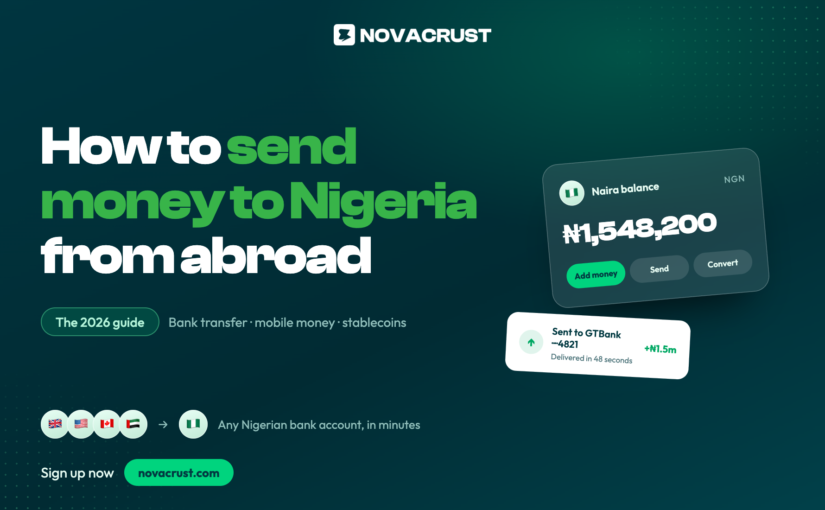
On May 1, 2026, a new Central Bank of Nigeria directive took effect: every international money transfer operator must settle diaspora remittances through naira accounts held with authorized Nigerian banks. Nigerians received $21.8 billion from abroad in 2025, and the CBN wants a bigger share of that flowing through official channels it can track and price fairly, with a stated goal of $1 billion in monthly remittances by the end of 2026.
If you send money to Nigeria regularly, or you’re doing it for the first time, that policy shift changes what “the best way to send money” actually means right now. This guide covers what changed, where transfers quietly lose value, and how the popular options compare.
This is why so many people keep searching:
- how to send money to Nigeria from abroad
- best app to send money to Nigeria
- send money to Nigeria from the US or UK
- cheapest way to send money to a Nigerian bank account
What changed for Nigeria in 2026
Before this year, some transfer operators could pay recipients out in foreign currency or route funds outside formal naira settlement. The CBN’s March 2026 directive closed that gap: as of May 1, every licensed money transfer operator must process inflows, beneficiary payouts, and related settlements through naira accounts at authorized dealer banks. The stated aim is more transparency, better price discovery in the foreign exchange market, and fewer remittances slipping through informal, unregulated routes.
For everyday senders, the practical effect is simple: recipients get paid in naira, at a rate the transfer operator sets, through an accountable banking channel. That makes the exchange rate you’re quoted, and the margin baked into it, the single biggest factor in how much your recipient actually walks away with.
Where a transfer to Nigeria quietly loses value
According to World Bank Remittance Prices Worldwide data, the average cost of sending money from the UK to Nigeria sits around 1.96 percent once fees and exchange rate margins are combined. That number sounds small until you notice it rarely tells the whole story. Four things usually eat into the total:
- A marked-up exchange rate that’s presented as “the rate,” with no separate fee line
- A flat sending fee on top of that already-marked-up rate
- Delays of one to three business days, during which the naira can move against you
- Extra charges for cash pickup versus direct bank or mobile money deposit
We cover the same pattern in more depth in our guide to choosing the best way to send money internationally: whoever quotes the number closest to the real market rate, not the flashiest app, is the one protecting your money.
How the popular options compare
Most people sending money to Nigeria end up choosing between a bank wire, Western Union, LemFi, Chipper Cash, or a Novacrust account. They all get naira into a Nigerian bank account or mobile money wallet eventually. What differs is the rate, the fee, and how long it takes.
| Option | Typical speed | Where it loses money |
|---|---|---|
| Bank wire | 1 to 3 business days | High flat fee plus a weaker exchange rate |
| Western Union | Minutes to hours (cash pickup) | Cash pickup fees stack on top of the rate |
| LemFi | Minutes | Competitive, but rate varies by corridor and volume |
| Chipper Cash | Minutes | Best for smaller, peer-to-peer amounts |
| Novacrust | Minutes | Competitive rate with no cash pickup markup |
Example: sending $500 to a Nigerian bank account
Say the market exchange rate values $500 at a certain naira amount. A transfer with a 4 to 6 percent all-in margin, common across banks and several apps, quietly removes $20 to $30 of that before it lands. Add a flat fee of $5 to $15, and the gap between “what you sent” and “what they received” grows fast, especially if you’re sending every month.
This is also where the exchange rate itself matters beyond the transfer fee. If you’re regularly comparing naira quotes, our breakdown of which app gives the best USD to naira exchange rate walks through how to tell a fair quote from a padded one.
Why freelancers and diaspora senders use Novacrust
A Novacrust account lets you hold US dollars and send to Nigeria, or to 50+ other countries, without stacking a separate bank, card, and remittance app on top of each other. You can:
- Receive USD directly from international clients, Upwork, Fiverr, or a US employer
- Convert to naira at a competitive rate, in the same account
- Send to a Nigerian bank account or mobile money wallet in minutes
If you don’t have a US dollar account set up yet, our guide to opening a USD Account online in minutes covers what you need before your first transfer, no US address required.
Other ways dollars reach Nigeria
A bank transfer isn’t the only route into naira. Two worth knowing:
- Gift cards. If you’re paid in US gift cards, or received one as a gift, selling gift cards for naira in Nigeria turns that value into cash without a wire transfer at all.
- Stablecoins. Some senders convert USDT or USDC to naira directly, skipping the traditional banking rail entirely. Our guide on converting crypto to naira covers how that works end to end.
FAQ: sending money to Nigeria in 2026
Do Nigerians receive remittances in dollars or naira now?
As of May 1, 2026, licensed money transfer operators must settle remittances through naira accounts at authorized Nigerian banks. In practice, that means recipients are paid out in naira rather than foreign currency cash.
What’s the cheapest way to send money to Nigeria?
The cheapest option is usually whichever one quotes an exchange rate closest to the real market rate and charges a transparent, separate fee rather than folding its margin into the rate itself. Direct bank or mobile money deposit is almost always cheaper than cash pickup.
How long does a transfer to a Nigerian bank account take?
Bank wires typically take one to three business days. Apps built for cross-border transfers, including Novacrust, usually settle in minutes once the sender’s funds are confirmed.
Is it safe to send money to Nigeria through an app instead of a bank?
Licensed transfer operators now settle through naira accounts at authorized dealer banks under CBN oversight, so a regulated app is not inherently less safe than a bank wire. Check that any provider you use is licensed for the corridor you’re sending through.
Can I still send money to Nigeria in US dollars?
You can send from a USD account or balance, but under the 2026 rules the recipient is paid out in naira through the receiving bank. Holding dollars in your own account and converting only when you’re ready to send is still a valid way to manage timing.
Final thoughts
The 2026 naira settlement rule makes one thing clearer than before: the exchange rate you’re quoted, not the brand name on the app, decides how much of your money actually reaches Nigeria. With $21.8 billion in diaspora remittances already flowing through official channels in 2025, and the CBN pushing for more, comparing the real rate before you send is worth the extra minute every time.
Sign up to get started on Novacrust here.