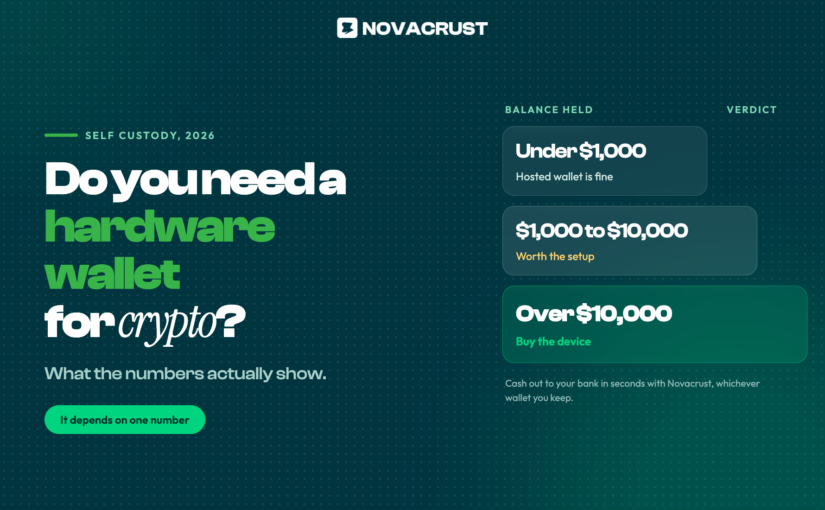
Crypto hacks and scams cost people more than $2.37 billion in the first six months of 2025 alone, a 66% jump from the year before. That number is usually the moment someone starts googling “hardware wallet,” convinced that a $70 USB stick is the only thing standing between them and disaster. It helps, but not in the way most buyers think, and it comes with a tradeoff nobody puts on the box.
What a hardware wallet actually protects you from
A hardware wallet is a small physical device that stores your private keys offline and signs transactions without ever exposing those keys to the internet. Even if your phone or laptop is compromised with malware, the keys never leave the device. That’s the whole pitch, and it’s a real one.
The numbers back it up. Wallets that use hardware key storage with air-gapped signing report incident rates under 5%. Software-only wallets, the kind that live entirely as an app on your phone, sit above 15%. If your threat model is “malware on my device” or “a phishing site tricking me into signing something,” a hardware wallet closes that gap better than almost anything else available.
The tradeoff nobody mentions
Here’s the part the marketing skips: hardware wallets don’t reduce risk, they relocate it. Instead of trusting a company to protect your funds, you’re trusting yourself to never lose a 12 to 24 word recovery phrase, never damage the device beyond recovery, and never mix up which piece of paper it’s written on.
That risk is not hypothetical. Chainalysis estimates that somewhere between 2.3 million and 3.7 million Bitcoin, roughly 11 to 18% of the entire fixed supply, is permanently lost. Not stolen: lost. Forgotten passwords, discarded hard drives, seed phrases nobody could find again. There’s no customer support line for a lost recovery phrase. If it’s gone, the funds are gone with it.
So who actually needs one?
A hardware wallet earns its cost and hassle for a specific kind of user:
- You’re holding a large amount long term. If you’re not touching the funds for months or years, the inconvenience of a hardware device matters less than the security upgrade.
- You’re comfortable being your own bank. No support desk, no password reset, no fraud department. If your phone breaks and your seed phrase is also gone, that’s the whole story.
- You already understand wallet security basics. Our breakdown of custodial versus non-custodial wallets is worth reading first if any of this is new.
For everyone else, especially people buying and selling USDT or USDC regularly to move money, pay for something, or convert to local currency, a hardware wallet adds friction without adding much practical protection. You’d still need to plug it in, confirm each transaction on a small screen, and manage a recovery phrase for funds that don’t sit still long enough to benefit from cold storage.
The middle ground most people actually want
Most of the “hardware wallet or nothing” framing skips the option in between: a custodial platform that handles key security on its own infrastructure while you keep control of when and where your money moves. You lose the do-it-yourself independence, but you also lose the single point of failure that a lost seed phrase represents. There’s no recovery phrase to misplace because there’s no recovery phrase in your hands at all.
That’s the tradeoff worth making for anyone using crypto as a way to receive, hold briefly, and move money rather than as a long-term vault. If you’re new to buying USDT this way, our guide to buying USDT safely covers the basics, and if you’re specifically weighing options while living somewhere without a local exchange, this FAQ on crypto wallet safety in emerging markets answers the questions that come up most.
How to decide in under a minute
Ask yourself three questions:
- Am I holding this for years, or moving it within days or weeks?
- Would I rather manage my own recovery phrase, or never have one to lose?
- Is my main risk a hacked device, or a lost one?
Long-term holder worried about hacks: get a hardware wallet. Everyone else, especially anyone using crypto to send, receive, or convert money regularly: a well-secured custodial platform removes the seed phrase risk entirely, which for most people is the bigger danger day to day.
You can buy and sell USDT, USDC, BTC, ETH, SOL, and more directly on Novacrust without ever generating a seed phrase to lose. See how it works for crypto buyers in Nigeria as one example of how the process looks in practice.
FAQ
Is a hardware wallet 100% safe?
No. It protects against remote hacking very well, but it does nothing to protect against a lost or damaged device with no backup, and it doesn’t stop you from being tricked into signing a malicious transaction if you don’t check what you’re approving.
What happens if I lose my hardware wallet?
As long as you still have your recovery phrase, you can restore your funds to a new device. If you’ve lost both the device and the phrase, the funds are permanently inaccessible. There’s no support team that can reverse this.
Do I need a hardware wallet to use Novacrust?
No. Novacrust handles key security on its own infrastructure, so you can buy, sell, and hold USDT, USDC, and other supported crypto without managing a hardware device or a recovery phrase.
Is a custodial wallet less secure than a hardware wallet?
They protect against different things. A hardware wallet is stronger against remote hacking of an individual device. A well-run custodial platform removes the risk of losing your own keys, which is responsible for a large share of permanently lost crypto industry-wide.
What’s the biggest mistake people make with hardware wallets?
Storing the recovery phrase in only one place, often a photo on their phone, which defeats the purpose of taking keys offline in the first place. If you go the hardware route, the recovery phrase needs its own separate, offline backup.
Sign up to get started on Novacrust here.